
| Discuss this article! |
There are more user comments available, read them here |
| cashman91 (Member) 4 April 2007 17:13 |
|
|
don't expect these to come in a good selection to the main stream until 2009
|
| pollution (Member) 4 April 2007 17:32 |
|
|
Patience....
|
| sssharp (Junior Member) 4 April 2007 17:51 |
|
If its too cheap to make, companies will delay the release to continue the profits of what they have available. I have yet to settle on the lcd, plasma or dlp wave. If this arrives with a good price tag at the 1080p screen it may be a good purchase.
|
| SProdigy (Member) 4 April 2007 19:17 |
|
|
If I'm not mistaken, these are the same shallow promises that were made with OLED.
|
| jookycola (Member) 4 April 2007 19:47 |
|
|
Remember....just becuase it's cheaper to "make" does not mean the savings will transfer to the consumer. They already know your willing to pay $2000 for current flat screen technology, so if they could build something better that's cheaper to make. that fattens their pockets.
|
| cart0181 (Junior Member) 4 April 2007 20:44 |
|
|
@domie
A front projection TV would require a projector unit and a screen of some type which can be as simple as a painted wall. A rear projection TV would be something that looked much like a CRT. I would expect any rear projection TV to be quite large if I'm not mistaken.
As I read it, the real "catch" here is if people want to use this technology they'll have to give up their nifty space-saving flat panels you can just hang on the wall. They did a good job of "neglecting to mention" this in the article. However, I could be wrong here, this is only the second article I've read on this technology. Correct me if I'm wrong here people. Thanks
|
| thejammy (Senior Member) 5 April 2007 3:15 |
|
|
ffs just bought a brand new lcd hd ready tv about month agou...
|
| bobiroc (Member) 5 April 2007 4:54 |
|
|
@cart0181
Laser Televisions will be thin like LCD and Plasma and I actually think they will be even thinner and lighter. Technically LCD and Plasma TVs are Rear Projection because the picture originates from behind the screen. What the were saying is that Laser Technology can both be used for Normal TVs that you put on a stand or hang on the wall (Rear projection) or they can be used in the ceiling mounted projectors that you project onto a screen (Front Projection)
|
| error5 (Senior Member) 5 April 2007 5:41 |
|
Originally posted by bobiroc: @cart0181
Laser Televisions will be thin like LCD and Plasma and I actually think they will be even thinner and lighter. Technically LCD and Plasma TVs are Rear Projection because the picture originates from behind the screen.
Actually Plasmas are Flat Panel displays and not Rear Projection. LCD sets can either be Flat Panel (like the Sony Bravias) or Rear Projection. DLP's and the Sony SXRD's are Rear Projection. On a practical note Rear Projection sets cannot be mounted on the wall - only Flat Panel sets are wall-mountable.
A basic guide fron cnet:
http://www.cnet.com/4520-7874_1-5108443-2.html?tag=arw
http://www.cnet.com/4520-7874_1-5108443-3.html?tag=arw
This message has been edited since posting. Last time this message was edited on 5 April 2007 5:42
|
| bobiroc (Member) 5 April 2007 5:46 |
|
Well I stand corrected. That does make sense though since Plasma and some LCDs are not really "projecting" anything. Just a back light and liquid. Either way I am almost positive that Laser TVs will be thin and wall mountable from other articles I have read on the subject.
P4 3.06 w/HT, 1GB Ram, 40GB HDD for OS, 80 GB HDD for Data
GeForce 6200, SB Audigy 2 Plat. Pioneer DVD-ROM, SONY DVD±RW
Windows XP MCE 2005
"Media Center Computer"
and
AMD Athlon 64 X2 4400+, 2GB Ram, 400GB's of HDD Space, GeForce 6600, DVD-ROM, 16X DL DVD±RW
Windows XP 64 Professional
"My Dual Core Power House"
|
| JvstJim (Inactive) 5 April 2007 11:09 |
|
|
As for price, even though laser may be less costly to produce, the marketplace will eventually determine the price. Manufacturers will charge whatever the consumer is willing to pay and stuff their pockets for all they can get. Only competition will drive down the price as with all other consumables. Marketing 101
|
| robtwilk (Member) 5 April 2007 19:49 |
|
I have been waiting for OLED as well. I read these TVs might easily reach 100" (or maybe that was SED). There were a couple of others that were close to production, but no word since that article I read in Home Theater Magazine.
I own two CRT HDTVs (32" AND 40") and one DLP HDTV (62") as well as a few smaller LCDs. If you sit around waiting for the perfect technology, you'll never have any TV. Start enjoying HDTV today and sort out the next best thing when you're ready to upgrade.
|
| Tashammer (Newbie) 5 April 2007 20:14 |
|
|
i quite like the steam-powered tv set that i currently have. We did have initial problems with the screen fogging up but a windscreen wiper fixed that problem up. Plus it fits in well with the water cooled computer.
i had thought about getting an electric tv set but they change so much that it seems to be buying newtech every year. It's bad enough that they keep changing the plugs and sockets. Do you think that the makers get bored some times?
|
| cart0181 (Junior Member) 5 April 2007 23:03 |
|
|
Rofl @ Tashammer, that's one I've never heard before.
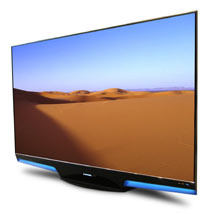
Thanks for comments bobiroc and error5, the picture at the top of this article would lead you to believe it's very flat, but I guess looks can be deceiving.
|
| cd-rw.org (Senior Member) 6 April 2007 1:08 |
|
|
The Laser TV was advertised earlier as a "1000$ 42" 1080p" solution. I beleive in the earlier announcement they reported prototypes being made with Samsung.
The problem is that TV vendors have recently made huge investments in LCD technology and most importantly the production lines. They sure as hell are not going to come out with "Hey, buy our 42" laser for $1000" as it would destroy their LCD panel business.
As it is reported that Laser TV might offer higher visual quality, I am sure that it will be introduced in the very high-end segment - in super sized and expensive televisions, and the Laser would then be the end of rear projection technology.
|
| vietorisz (Junior Member) 6 April 2007 1:36 |
|
|
|
| plazma247 (Junior Member) 8 April 2007 16:12 |
|
Ok im all up for new tech but after spending my childhood sat infront of what i think must of been a grundig radio tron 4000 firing radiation at my head i was pleasntly surprised when i switched over to LCDS all round the head aches went away, ok i largely put this down to the lack of screen reflection.
But is sitting infront of a laser a good idea?
hehe im sure its fine, but just when i thought i had found a potentially non life shortening way to use the pc...
see:
Novalux's info
http://www.novalux.com/display/solidstatergb.php
Pretty good site coving basics of emergin screen technologies.
http://www.oled-display.info
|
| ian23 (Newbie) 9 April 2007 16:20 |
|
|
personally i can't wait to see these laser tv's. i hope it lives up to what they r saying. if i had to pick it would be lcd or dlp tv, im not a fan of plasma.
|
| hastypete (Newbie) 9 April 2007 22:34 |
|
Originally posted by cart0181: @domie
As I read it, the real "catch" here is if people want to use this technology they'll have to give up their nifty space-saving flat panels you can just hang on the wall. They did a good job of "neglecting to mention" this in the article. However, I could be wrong here, this is only the second article I've read on this technology. Correct me if I'm wrong here people. Thanks
They have it down to a bit less than 6 inches. A large LCD or Plasma is not much smaller than that. The nice thing about lasers is that they are much easier to get focused. The optic train is simpler and takes less space.
|
| homer232 (Inactive) 13 April 2007 3:42 |
|
|
The best public place for information would be from Novalux.
<http://www.novalux.com/>
The proclaimed Display Applications are "Pocket Projectors", "Home Theater", and "Digital Cinema".
The Laser Television product they display on their technology pages appear to be as flat as Flat Panels.
-Homer232
|
| cart0181 (Junior Member) 17 April 2007 20:31 |
|
|
Well, I disagree. While Novalux might be a great place to start, they most certainly would not mention the negative points of their own product.
|
| MrCairo (Inactive) 15 June 2007 5:39 |
|
Originally posted by plazma247:
But is sitting infront of a laser a good idea?
hehe im sure its fine, but just when i thought i had found a potentially non life shortening way to use the pc...
see:
Novalux's info
http://www.novalux.com/display/solidstatergb.php
Pretty good site coving basics of emergin screen technologies.
http://www.oled-display.info[/quote]
------------------------------------------------
The lasers are only providing the light source in the needed 3 primary colors. This is now being provided by a high powered (and somewhat hot) lamp....the lasers are much cooler and draw less power and are cheaper to produce. A win - win situation across the board!
This is just a more efficient way of "getting" the light needed, as well as the colors.
It's not like your watching lasers heh
Cheers :)
This message has been edited since posting. Last time this message was edited on 15 June 2007 5:41
|
| briankon (Newbie) 21 January 2008 14:52 |
|
Check out the press release from http://www.qpclasers.com dated 11.30.07. This company is the real deal. To my understanding manufacturing the laser technology for reliability has been the problem in getting laser TV's to market. QPC has not only superior and patented technology, but can also manufacture said technology right now! Mitsubishi bet on the wrong horse... Sony wins by ten lengths
|
| robtwilk (Member) 22 January 2008 19:29 |
|
Quote:
Originally posted by cart0181: @domie
As I read it, the real "catch" here is if people want to use this technology they'll have to give up their nifty space-saving flat panels you can just hang on the wall. They did a good job of "neglecting to mention" this in the article. However, I could be wrong here, this is only the second article I've read on this technology. Correct me if I'm wrong here people. Thanks
They have it down to a bit less than 6 inches. A large LCD or Plasma is not much smaller than that. The nice thing about lasers is that they are much easier to get focused. The optic train is simpler and takes less space.
Where did you learn they have it down to six inches? From what I read they are intended for front or rear projection. Sony's current LCD rear projection TV is not thin and not wall mountable. Where SED and OLED are flat panel.
It sounds to me that the laser provides similar size TVs (maybe slightly thinner), but with better picture, less energy used, and lower heat output. I guess we will all know when (if) they them into production.
|
| solarf (Member) 22 January 2008 21:40 |
|
|
great I waited this long to finally jump in and get a 42" LCD and now this. I hope its affordable.
|
| hastypete (Newbie) 23 January 2008 11:46 |
|
Quote:
Quote:
Originally posted by cart0181: @domie
As I read it, the real "catch" here is if people want to use this technology they'll have to give up their nifty space-saving flat panels you can just hang on the wall. They did a good job of "neglecting to mention" this in the article. However, I could be wrong here, this is only the second article I've read on this technology. Correct me if I'm wrong here people. Thanks
They have it down to a bit less than 6 inches. A large LCD or Plasma is not much smaller than that. The nice thing about lasers is that they are much easier to get focused. The optic train is simpler and takes less space.
Where did you learn they have it down to six inches? From what I read they are intended for front or rear projection. Sony's current LCD rear projection TV is not thin and not wall mountable. Where SED and OLED are flat panel.
It sounds to me that the laser provides similar size TVs (maybe slightly thinner), but with better picture, less energy used, and lower heat output. I guess we will all know when (if) they them into production.
6" is achieved with rear projection the same way as DLP, but without the complex optic train that requires the added depth. Lasers have a unique feature of being focused to infinity. I haven't seen one of these 6" TVs, but I have seen a few demos of DLP and LCD that use lasers as the illumination source. Really vibrant and bright.
|