
AfterDawn: Tech news

Malicious charger can hijack iPhones

Written by James Delahunty @ 04 Jun 2013 9:40 User comments (4)

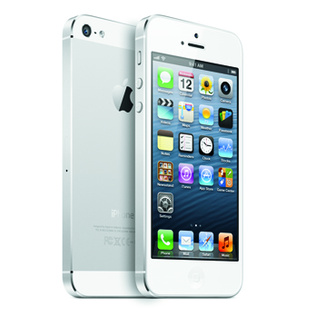
Malicious charger can hijack iPhones Researchers at the Georgia Institute of Technology have developed a bogus charger for Apple's iPhones that can infect it with malicious software within a minute.
The three researchers - Billy Lau, Yeongjin Jang and Chengyu Song - were able to get around all of the built-in defences of the popular smartphones and install whatever code they wanted.

"All users are affected, as our approach requires neither a jailbroken device nor user interaction," they said.

They are due to provide more detailed information on the attack method at the Black Hat USA conference this year.

To create the malicious charger, the researchers used a BeagleBoard barebones system that costs around $45. "This hardware was selected to demonstrate the ease with which innocent-looking, malicious USB chargers can be constructed," wrote the researchers in their conference summary.

Tags: Apple iPhone
Previous Next  

4 user comments

15.6.2013 22:58

wow :o

26.6.2013 06:39

I figured someone was able to do that. I don't have the ability or knowledge, but I knew someone had to think about that. It seems perfectly logical though get you when your defenses are down.

38.6.2013 15:55

You just have to trick people into attaching it to their iPhones.
Come to think of it, that shouldn't be too hard.

49.6.2013 02:35

Can I but license for this ???

I think I am smarter. I charge my phones only through the USB port on the PC. The chargers are still in their original shrink wraps. If in emergency I need to use an external charger I use one for a vanilla voice and text message phone ( 4 20/ 4 years ago) with a mini-usb to micro-usb adapter.

Comments have been disabled for this article.

Latest news

Sony suspends memory card sales because memory chips are simply not available Sony suspends memory card sales because memory chips are simply not available (28 Mar 2026 6:49)
Sony has announced that it is temporarily suspending the sale of memory cards used in mobile phones and digital cameras, among other things. The company states that the reason is problems with the availability of memory chips.
Austria plans to ban social media for under 14 year olds Austria plans to ban social media for under 14 year olds (28 Mar 2026 6:17)
Austria is planning to ban social media for children under 14. The reform aims to protect children from harmful effects and addictions, but at the same time, it is problematic from a privacy perspective.
TP-Link urges users to update their routers - several vulnerabilities patched TP-Link urges users to update their routers - several vulnerabilities patched (26 Mar 2026 1:56)
Serious security vulnerabilities have been discovered in several TP-Link router models, for which patches were released at the end of March 2026. The company urges users to update their router software immediately.
Google: The feared Q-Day is now expected to happen in 2029 Google: The feared Q-Day is now expected to happen in 2029 (25 Mar 2026 4:32)
Google has advanced its estimate of when current forms of encryption will become insecure. The moment is called Q-Day, or Quantum Day, when the computational power of quantum computers will be sufficient to break currently used encryptions.
OpenAI shuts down its AI video service Sora OpenAI shuts down its AI video service Sora (24 Mar 2026 6:28)
OpenAI has decided to shut down Sora, its AI video creator, just months after its release. The decision is due to issues such as copyright problems and the deepfake phenomenon.

News archive