Nowadays, jumping from one computer operating system to another is already a reasonably painless process, as graphical user interfaces have adapted over the decades to be very largely similar to each other.
But sometimes, the biggest "friction" when moving to another operating system is caused by having to give up tools with which one has worked for decades. Hardly all programs are still available for every common operating system.
One such, very beloved small program is the open-source text editor Notepad++, which already has a certain cult status among Windows users.
It was named the world's most used text editor on several occasions in the 2010s, even though it is available only and exclusively for Windows.
Notepad++ for Mac has been made according to Apple's best programming practices, meaning it faithfully follows macOS user interface standards and other Apple-world principles. At the same time, however, its actual editor part is exactly the same as in the Windows version.
The program supports both Intel- and Apple Silicon-based Mac computers. Support for extensions is still under development, so it is not yet a completely perfect port.
According to media sources, two subsidiaries of Chinese Oppo, OnePlus and Realme, have merged.
The information is based on data from a Chinese leaker considered quite reliable, which was published on China's most popular social media service Weibo(in Chinese).
According to the information, the companies will establish a joint "sub-product center" that would coordinate the product launches and apparently also the product development of both brands. The same center would be responsible for coordinating the operations of both brands both in China and abroad.
The head of the center would be OnePlus's China director Li Jie, and his superior would be OnePlus's current head Pete Lau. In addition, the marketing of both companies will be centralized under another, separate unit.
OnePlus has been at the center of wild rumors throughout the beginning of the year, and a significant number of personnel are reported to have left the company in all Western countries. Around the same time, Oppo also re-merged Realme, which previously operated independently, back into Oppo's tighter corporate structure.
The European Commission has issued its preliminary findings from an investigation launched in January 2026, concerning Google's activities in relation to the Android operating system and AI services.
The findings, based on the Digital Markets Act (DMA), suggest that Google must open up Android's key functionalities and interfaces to competing AI services to ensure fair competition and service interoperability.
Currently, Google reserves many deep-level capabilities of Android devices primarily for its own AI products, such as Gemini.
The actions planned by the EU would force Google to allow competing AIs to perform tasks directly within other applications on the phone.
For example, a user could ask their preferred AI to send an email using their favorite app, order food, or share photos with friends, without Google's own services acting as a bottleneck.
One of the most visible changes for consumers would concern the activation of AI services.
The Commission demands that users must be able to easily activate competing AI services using their own wake words.
Valve's anticipated new Steam Controller has finally received its official unveiling. The controller will go on sale on May 4th at 8:00 PM Finnish time, and its price has been confirmed at 99 euros.
The new device is designed to work seamlessly with the entire Steam ecosystem, offering support for traditional PC computers, Steam Deck, and Steam Machine devices.
The controller's most significant technical innovation is its magnetic joysticks utilizing TMR (Tunnel Magnetoresistance) technology. These sticks consume less power and offer a more precise response than traditional Hall sensors. The technology also effectively combats the stick drift issue that plagues many game controllers.
In terms of control, Valve has combined the familiar touchpads from the first Steam Controller with a more traditional controller layout. The device features two precise touchpads, enabling gameplay for games requiring mouse control, such as strategy and simulation games.
Precision is further enhanced by gyroscope support, which can be activated simply by resting a finger on the sticks or the new grip sensor. Additionally, the back of the controller features four programmable extra buttons.
Microsoft's operating system Windows 11 has faced exceptionally harsh criticism from two different directions in recent months: firstly, users and consumer organizations have criticized the company for aggressive sales and subscription prompts added to Windows - and secondly, users have complained about the erosion of very basic things, such as performance and reliability.
Now the company is trying to repair its damaged reputation with a new initiative, known by the codename Windows K2, which aims to restore user trust and make Windows 11 a more stable and pleasant platform.
One of the most prominent points of contention has been Windows 11's so-called "second-stage setup," which can appear to the user months or even years after the device has been put into use. For the user, this manifests as a screen popping up when the computer starts, stating that the computer's setup is "almost complete," even if Windows has been in use for years. The process guides through a series of choices, offering, among other things, "recommended settings" for the browser, linking a phone to the computer, Office subscription options, and advertisements for the Xbox Game Pass service.
One of the most popular AI-based programming tools among developers, Microsoft-owned GitHub Copilot, announced today a complete overhaul of its pricing.
Starting from the beginning of June 2026, GitHub Copilot's billing will shift largely to a model based on actual usage.
In principle, the basic pricing will still be based on a fixed monthly fee. But from now on, each pricing tier will only include a limited number of tokens, the basic units of AI computation.
If the tokens run out during the monthly subscription period, the user must either purchase additional tokens or wait until the current billing cycle ends and a new one begins.
The company explains the change in its blog by saying that within a year, the shift in how AI is used for programming has been so massive that the pricing had to be changed.
Previously, AI was used mainly as an assistant that you asked for instructions or requested to code a specific part of a project. But with the rise of agentic programming, the world is completely different.
In agentic AI programming, you give the AI a description of what the end result should be like and then set it to work independently. And the requests can be for entire, massive web services that AI agents build for hours - or even days - on their own.
The immensely popular online marketplace for used goods, Vinted, is emerging as one of Europe's most valuable startups.
The company's current shareholders sold shares to new buyers in a so-called secondary transaction round, and Vinted's market value was determined to be a staggering 8 billion euros.
Lithuanian Vinted reports that the company's revenue rose to over one billion euros in 2025 - and this figure includes only the commission fees collected by Vinted itself, not the value of products sold through it.
The company operates in 26 countries and is already profitable, meaning the company did not raise any working capital for itself through a share issue this time, but rather allowed existing shareholders to sell shares to new owners (the company is not yet publicly listed).
SpaceX and Cursor, a developer of an AI-based software development environment, have entered into a mega-deal that has turned out to be an even broader power play in the AI market. According to insider sources, Microsoft also considered buying Cursor, but ultimately withdrew from the negotiations before SpaceX secured a multi-billion dollar cooperation agreement and an option for a potential acquisition.
According to reports, Microsoft seriously evaluated acquiring Cursor but did not proceed to a formal offer. There has been much speculation about why Microsoft ultimately did not make a bid for Cursor: the company already has a strong position in developer tools through GitHub Copilot and Visual Studio Code, but on the other hand, Cursor has rapidly grown into one of the most popular AI-based programming environments. One possible obstacle to a Microsoft bid is thought to have been that the deal would likely have come under scrutiny from competition authorities.
After Microsoft bowed out, a cooperation agreement between SpaceX and Cursor was concluded. Under it, SpaceX has two ways to move forward: first, SpaceX will in any case pay Cursor about $10 billion for computing power and collaboration under the agreement - but it also retains the option to buy Cursor outright for about $60 billion.
We recently reported how the U.S. federal police FBI had managed to extract messages from the highly encrypted Signal messaging app from a suspect's phone.
The FBI had managed to get hold of Signal messages sent to the phone owner, even though the phone owner had already deleted the Signal app from their phone.
The trick worked because Apple's iPhones stored notifications received by the phone in a separate database saved on the phone.
So, authorities did not access Signal or its messages directly, but rather the notifications shown to the phone user about new messages - which also included information about the sender and the content of the message.
Following the publicity surrounding the trick, Apple has now changed the iPhone's notification history function, and it is no longer possible to recover the content of notifications marked as destroyed by the receiving app from the history data. And if an app is deleted from the phone, the iPhone's notification history simultaneously destroys all notifications received for that app from its history data.
The global component shortage, which began in the autumn due to the growth of AI companies, and the drastic increase in memory chip prices, are biting ever more severely into companies manufacturing consumer electronics.
Media sources, such as SammyGurureport that South Korean Samsung's mobile phone unit would be turning unprofitable for 2026.
If the forecasts are correct, 2026 would be the first time in the entire company's history that its mobile phone business would be unprofitable on an annual basis.
According to South Korean information(in Korean), the problem is that, for example, memory chip prices continue to rise, and companies selling products to consumers, such as Samsung's mobile phone unit, cannot raise prices charged to consumers at the same pace.
This year, a situation will likely be seen where upcoming mobile phone releases will feature less operating memory (RAM) and storage than before.
Sony is significantly changing the licensing terms for new digitally purchased PS4 and PS5 games.
Going forward, all new digitally purchased games will require the console on which the game is installed to go online at least every 30 days. This was noticed by YouTuber Lance McDonald, who shared his findings on social media(link goes to X/Twitter).
If more than 30 days have passed since the last online license verification for a game, the game cannot be played. Access to the game will return once the console is connected to the internet again and verifies the game's license.
The change will apply to all new digitally purchased games bought through Sony's online store for both PlayStation 4 and PlayStation 5.
The change does not apply to previously purchased digital downloads, nor does it apply to physically purchased games.
Apparently, the change was not meant to be implemented yet, at least a game historian referring to insider sources(X/Twitter link) claims. According to him, Sony apparently accidentally already put the updated digital rights management system into use.
Anthropic has emerged as the new face of the AI boom, as secondary market trading of the company's shares has raised its valuation to a staggering trillion dollars, surpassing competitor OpenAI. The valuation is based on transactions on private trading platforms, such as Forge Global and Hiive, where investors are willing to pay almost three times the price for the company's shares compared to the latest official funding round.
According to Business Insider, secondary market transactions value Anthropic at approximately one trillion dollars (about 853 billion euros), which means the company would be over 100 billion dollars more valuable than OpenAI. On the other hand, official funding rounds are still on a completely different level: Anthropic's latest funding round valued it at approximately 380 billion dollars, and OpenAI's corresponding latest funding round valued the company at 852 billion dollars.
The differences between the valuations of funding rounds and private trading platforms primarily indicate that smaller, private investors are willing to pay significantly more for Anthropic's shares than the large entities participating in funding rounds have paid for them so far.
Microsoft's gaming unit is experiencing new winds, as it has extensively renewed the leadership of its gaming unit.
Within a week, the first concrete changes have been seen regarding what the change in leadership means in practice.
Firstly, a few years ago, the gaming unit changed its name to Microsoft Gaming, but now that name is being abandoned. The original name will return, meaning the entire gaming unit will simply be named Xbox.
Microsoft had already announced how the price of the Xbox Game Pass monthly subscription would be significantly lowered. The company had drastically increased the price of Game Pass last autumn, which has apparently been very poorly received by players.
Now, a significant step back is being taken, as the price of the most expensive Ultimate subscription drops from $29.99/€26.99 euros/month to $22.99/€20.99/month. At the same time, however, future versions of the Call of Duty game series will no longer arrive on Game Pass immediately, but only almost a year after release.
The Dutch central bank, De Nederlandsche Bank(DNB), has begun a transition towards European IT solutions.
The central bank has signed what is described as a major agreement for the gradual migration of its cloud services to the cloud of Schwarz Digits. Schwarz Digits is a subsidiary of Schwarz Group, the parent company of supermarket chain Lidl.
According to Dutch media sources, the country's central bank and the authority regulating the financial sector already publicly expressed their concern last year about how dependent the country's economic actors are on American IT solutions.
Schwarz Digits began building a massive €11 billion data center in Germany at the end of 2025.
Austrian StreamView GmbH, known especially as a manufacturer and distributor of Thomson-branded televisions and streaming devices, has filed for bankruptcy.
According to the bankruptcy application filed in Vienna, the company has debts of approximately 36.6 million euros.
StreamView has become known to Finns especially for its earlier role as the force behind Nokia-branded televisions and media devices, but recently the company has focused on Thomson products, which are widely available across Europe.
StreamView has been responsible for Thomson-branded products in Europe for several years and recently released new Google TV devices, including an updated version of its streaming device.
As reasons for the bankruptcy, the company states the general rise in cost levels, trade barriers, and difficulties with its Chinese partner. The company has announced that it does not intend to submit a restructuring plan, which means it will be simply ending its business operations.
However, the American company Established Inc., which owns the Thomson brand, has sought to reassure the markets. According to the brand owner, it will do everything possible to ensure the continuity of services and support for consumers while it seeks a new partner for the manufacturing and distribution of Thomson devices in Europe.
Google has been by far the world's largest company selling ad inventory for years now.
Of all advertising money spent in the world, over a quarter is estimated to end up as Google's revenue. The figure of which the quarter is taken by Google includes absolutely all ad sales worldwide - including ad space in print newspapers, street advertising, and TV advertising.
But according to estimates, Google is about to lose its top spot, according to an estimate by the analytics company eMarketer. eMarketer's analysis states that Meta's ad revenue is going to surpass Google's by end of this year.
Google would lose its position in the United States and also globally.
According to their estimate, Meta's ad revenue level for 2026 would be 243 billion dollars (appx. 207 billion euros) and Google's corresponding figure would be approximately 240 billion dollars (appx. 205 billion euros).
The gap would be widening significantly in Meta's favor in the coming years, as the same estimate predicts 316 billion dollars in ad revenue for Meta by 2028, with Google reaching 298 billion dollars in ad revenue.
Helsinki-based Distance Technologies and car manufacturer Kiahave announced a collaboration that brings a new generation of lensless XR technology into the future of cars.
The Kia Vision Meta Turismo concept car on display at Milan Design Week is the first car to use the panoramic head-up display (HUD) developed by Distance.
Distance Technologies is a Finnish technology company whose founding team includes former executives and experts from Varjo, known for its virtual headsets. The company's goal is to turn transparent surfaces such as windshields, windows and helmet visors into intelligent user interfaces that provide a sense of depth. The company's computational optics make it possible to blend digital content into the physical environment without the user needing to wear separate VR or AR glasses.
Unlike current head-up displays, which usually appear to the driver only as a small, flat layer of information on the surface of the glass, Distance's solution spans the entire width of the windshield from edge to edge.
OpenAI has released the new GPT-5.5 language model, marking a shift from mere conversational intelligence toward an independently operating AI agent.
According to the company's statement, the new model understands users' goals faster than before and can take responsibility for entire work processes.
GPT-5.5 excels especially at writing and debugging programming code, research based on information retrieval, and moving between different pieces of software and tools.
A user can give the model a complex and even unstructured task, and the AI will be able to plan the work steps itself, use the necessary tools, and navigate through the different stages until the task is completed.
Although the model's intelligence has risen to a new level, OpenAI says its speed matches that of the GPT-5.4 version.
The Social Insurance Institution of Finland, known as Kela, has suffered a massive technical failure starting in the early hours of Thursday, April 23, 2026.
Kela is a government agency responsible for settling benefits under national social security programs, including pensions, unemployment benefits, and student grants, making its digital infrastructure critical for millions of residents. The outage has effectively paralyzed almost all of the agency's customer services, including its online portal, telephone services, and remote appointment systems.
Kela's official website is currently offline, replaced by a temporary emergency site to provide basic information. The primary digital service portal, OmaKela, is also completely inaccessible, preventing users from submitting new benefit applications or checking the status of their payments. According to the agency, remote customer service remains impossible while the systems are down.
Despite the severity of the situation, Kela's IT Director Jukka Melanen has stated that there are currently no indications that the outage was caused by a distributed denial-of-service (DDoS) attack or any other form of cyber interference. The agency's IT department is working closely with its technical partners to identify the root cause and restore services as quickly as possible.
The European Commission has issued its preliminary findings, according to which search engine giant Google must open its search data for use by third parties.
The proposed measures are based on the EU's Digital Markets Act (DMA), and their goal is to dismantle Google's dominant position in the market. The Commission demands that Google must share data, such as search result rankings, search queries, and click and view counts, on fair and equitable terms.
According to the proposal, the recipients of the data would not only be traditional competing search engines but also AI-powered chatbots that utilize search functionalities.
The Commission believes that access to this information is critical for other players to optimize their own services and offer a real challenge to Google.
Commission Vice-President Henna Virkkunen emphasized that search engines must be able to innovate and keep up with users' changing needs, especially now that AI services are becoming increasingly integrated into searches.
Google has announced that it will fight against the proposals.
The hated so-called Chat Control bill was supposed to fade into the mists of history when the privacy-infringing parts of the legislative initiative failed in the spring of 2026 in a European Union vote.
The core of the bill is that all message encryption should be banned throughout the entire European Union.
This means WhatsApp messages could no longer be encrypted in such a way that they could be deemed secure. The same would apply to emails, Signal, and any other message traffic.
The initiative is justified by its supporters, like practically all other ideas that strongly infringe on people's fundamental rights, with the so-called "think of the children...!" argument.
Samsung and furniture giant IKEAhave announced a major collaboration that makes building a smart home more affordable and straightforward than before.
Samsung's SmartThings platform will from now on directly support 25 new IKEA devices that use the Matter-over-Thread standard. IKEA released a bunch of Matter-compatible smart devices at the end of last year.
In practice, this means that consumers can connect IKEA's popular smart bulbs, sockets and sensors directly to Samsung's smart home hub without needing IKEA's own Dirigera bridge.
Previously, cross-using these two systems often required both manufacturers' own hubs, which increased both costs and technical complexity.
Technically, the change relies heavily on the Matter-over-Thread combination, which is one of the most significant developments in the smart home world in years.
Matter is, so to speak, a common language between manufacturers that ensures compatibility between devices from different brands, while Thread is a low-power mesh networking technology designed specifically for the needs of small smart home devices.
Amazon is deepening its collaboration with the rapidly growing AI company Anthropic through a 25-billion-dollar investment and a cloud services commitment worth over 100 billion dollars.
Amazon will immediately invest 5 billion dollars in Anthropic and has committed to investing an additional 20 billion dollars in the company if predefined commercial and technical targets are met. The new funding comes on top of two previous 4-billion-dollar rounds in 2023 and 2024, bringing Amazon's total potential investment from 8 billion to 33 billion dollars - if all targets are achieved.
In return, Anthropic commits to using Amazon's cloud services and, in particular, the company's custom Trainium chips to train and run its AI models over the next ten years. As part of the capacity agreement, Anthropic secures up to 5 gigawatts of current and future chip capacity - a scale that the companies compare to the electricity production of five large nuclear power plants.
Over the past six months, Anthropic has faced what is often called a positive problem, as the popularity of its AI solutions, especially among enterprise users, has exploded thanks to the growing success of Claude Code. Anthropic has been forced to tighten usage limits even for paying customers to ensure its server capacity can keep up with demand.
Apple has elected the company's next CEO. Tim Cook, Apple's current CEO and successor to Steve Jobs, will become the company's executive chairman.
Apple's upcoming new CEO is John Ternus who has worked for Apple since 2001 and is currently the senior vice president of Hardware Engineering.
In company's official press release, Tim Cook described Mr. Ternus like this:
John Ternus has the mind of an engineer, the soul of an innovator, and the heart to lead with integrity and with honor. He is a visionary whose contributions to Apple over 25 years are already too numerous to count, and he is without question the right person to lead Apple into the future. I could not be more confident in his abilities and his character, and I look forward to working closely with him on this transition and in my new role as executive chairman.
During Tim Cook's CEO era, Apple has grown into one of the most valuable companies in the world.
Companies offering AI solutions have for years distributed the computing power required by AI to users almost for free, incurring huge losses themselves. Now it appears that all the biggest companies in the industry are tightening their policies and making users actually pay the true price for the AI resources used.
Now, the latest to join the ranks is Microsoft-owned GitHub. Its AI assistant, GitHub Copilot, was in many ways the first significant, modern AI product and was released long before ChatGPT.
GitHub stated that the explosive growth of so-called agentic programming has made its fixed monthly pricing model impossible (i.e., significantly unprofitable).
The company is immediately suspending the opening of all new GitHub Copilot accounts for individual users. The change affects all common price tiers, meaning GitHub Copilot Pro, Pro+, and Student are all frozen for new users for the time being.
For example, the current Mac Studios, which are sold in configurations equipped with M3 Ultra and M4 Max processors, are sold out in many places and delivery times are becoming very long, even if you order directly through Apple's online store. In addition, several configurations cannot be ordered at all at the moment. Previously, similar situations only occurred when the launch of the next device generation was just around the corner. According to Gurman, however, the information now suggests that the component shortage is simply limiting Apple's ability to manufacture and deliver devices.
According to Gurman, the next Mac Studio, which will likely be based on the M5-generation chips, was originally scheduled to appear in mid-summer 2026. Now the release is expected around October instead. The delay is explained in particular by the poor availability of RAM and SSDs, which has hit the entire technology industry hard. Mac Studio has become especially popular among users who run AI models locally and need significantly more memory and storage in their computers - precisely the components that are now in critically short supply.
WhatsApp is preparing a significant structural change for regular users. A new WhatsApp Plus subscription service has been revealed through the app's beta testing, and it is currently being tested with a limited group of users. It is an optional paid version that is heading towards an official release.
Although the feature is still in trial use, it reveals Meta's strategy: WhatsApp is following in the footsteps of its competitors, such as Telegram and Snapchat, by introducing a "freemium" model. Previously, Meta has introduced a paid version for Instagram and Facebook.
Based on the beta versions, WhatsApp Plus does not change the basic use of the app, but adds a layer on top of it that is aimed especially at power users and those who value personalization.
Key benefits include, among other things, the ability to pin up to 20 conversations to the top of the chat list instead of the current three. The test version has shown 18 new theme colors and 14 different app icons, with which the look of the app can be changed from green to, for example, purple or black and white. The package includes new ringtones and special stickers whose animations are displayed full-screen also for the message recipient.
In movie theaters, IMAX has been a kind of industry top standard. Dedicated moviegoers have known for decades that if you want to see a film on a massive screen, in all its glory, you should head to an IMAX theater.
But there is only a relatively small number of IMAX theaters worldwide.
And this, of course, creates the problem that if two blockbuster films are coming out, at the same time, that would benefit from an IMAX-level viewing experience, there's not enough IMAX theaters available.
And this is exactly what's happening this year. Disney would have wanted the Avengers: Doomsday film to be released in IMAX theaters, but the screens are already largely booked worldwide for Dune: Part Three, arriving in theaters on December 18.
Annoyed by the situation, Disney is establishing its own competitor for IMAX certification. The certification, going by the name Infinity Vision, would be granted to movie theaters that can offer "massive screens, with the sharpest and clearest colors and the best possible sound reproduction".
According to Kotaku, who reported on the matter, more detailed information about the new Infinity Vision certification has not yet been released. But Disney plans to get Infinity Vision certification for 75 movie theaters in the United States and 300 theaters worldwide.
Companies have also joined the bandwagon - especially those involved in software development. The end of 2025 is generally considered a major turning point in software development, when Claude Code made such a huge leap in AI-assisted programming that it managed to win over even those coders who had previously been skeptical of AI's programming skills.
But the hype has hidden an unpleasant truth that AI companies have barely dared to speak aloud.
Almost all current AI services are, in fact, loss-making businesses for the companies offering them. This means that consumers are currently able to use AI solutions that they might not be able to afford - or be willing to pay for.
Information about this financially unsustainable situation is hidden in companies' financial figures. And digging out precise data is made more difficult by the fact that the industry's largest independent players, OpenAI and Anthropic, are not publicly listed companies.
An essential part of business culture is that only a small portion of founded companies survive. The rest go bankrupt or their business just quietly shuts down.
Now these companies, whose business never really took off, have come up with a completely new trick to make a nice slice of money for their owners (or debtors).
Financial magazine Forbesreports(paywall) how defunct companies have started selling their former employees' email messages, Slack messages, and Teams messages as training material for AI companies' language models.
Apparently, AI companies are very interested in paying quite a nice sum of money for real, company-internal discussions. Presumably, this is because there is very little public material available from real working life that could be used for training language models.
According to Forbes, actors have already emerged in the market who help in shutting down a company - and at the same time also help sell the old company-internal messages to the highest-paying AI company. According to information, payments for company message collections range between $10,000 and $100,000, depending on the size of the message history and the number of employees.
Google has decided to bring badly behaving websites under better control and has announced a new change affecting visibility in its search engine.
Starting June 15, Google will automatically reduce the visibility in its search results of sites that "hijack" the user's browser back button for themselves.
The practice is quite common on even slightly dubious sites. It works so that when you try to go back from the site - for example to the search engine results - tapping the back button instead opens the site's front page, a prompt asking "are you really leaving our site", or perhaps an advertisement.
Google describes the problem in its own blog as follows:
When a user clicks the "back" button in the browser, they have a clear expectation: they want to return to the previous page. Back button hijacking breaks this fundamental expectation. It occurs when a site interferes with a user's browser navigation and prevents them from using their back button to immediately get back to the page they came from. Instead, users might be sent to pages they never visited before, be presented with unsolicited recommendations or ads, or are otherwise just prevented from normally browsing the web.
Anyone who has ever done a clean install of Windows on their computer knows that it is not a particularly smooth or fast-moving process.
But the update released for Windows 11 in April 2026 speeds up the installation of Windows significantly compared to before.
The trick is done simply by allowing the user, during the Windows installation, to choose that Windows updates will be installed only after the computer is already up and running.
Until now, the installation process has always required that the latest software and security updates are downloaded at the same time during installation - and installed as part of the Windows installation.
According to Windows Central, which reported on the matter (link in English), Microsoft nevertheless reminds users of the risks involved(link goes to X/Twitter): for example, security updates will not be up to date immediately when the computer is taken into use if installed this way.
Security consultant Paul Mooresays he bypassed the app's protections in under two minutes. According to him, the app's technical implementation contains elementary design flaws that make it an easy target for any technically savvy user.
Moore's analysis reveals that the app's trust model is based on local files that the user can edit themselves. Although the app is open source - something Commission President Ursula von der Leyen presented as a guarantee of transparency - this appears to have backfired by exposing its flimsy architecture.
According to Moore, the app stores the PIN code on the device, but it is not tied to the user's actual identity vault. By deleting certain values from the app's configuration file, an attacker can set a new PIN code and still gain access to the previous credentials.
Google has released the fourth beta version of Android 17, which is according to the company the last planned beta for Android 17.
The release of the fourth beta version signifies the operating system's development moving into the finalization phase: platform APIs are now locked, the biggest new features are already included, and all that remains is bug fixing before the stable version, which is expected to arrive in the summer for Pixel phones and later for other manufacturers.
Android 17 Beta 4 is available for all supported Pixel devices, starting from the Pixel 6 series and extending to the latest models. All foldable Pixel phones and the Pixel Tablet are also supported.
Unlike earlier betas, Android 17 Beta 4 no longer brings visible major updates to the user interface or features. The most significant changes for users came earlier: a revamped messaging system, support for large screens, improvements to privacy indicators, and several security updates. And now, with all functionalities locked down, the fourth beta allows app developers to start testing their applications in an environment that very closely resembles the final Android 17.
Microsoft has decided to discontinue its lighter Outlook Lite email app for Android. The app will stop functioning completely on May 25, 2026.
After that date, even an installed app will no longer fetch new messages, nor will its core functions be usable. Users must switch on Android to the full Outlook app or to alternative email programs, such as the open-source Thunderbird.
Like many other companies, Microsoft developed lighter versions of its apps in the 2010s (thus, the "lite"), aimed primarily at consumers using inexpensive and low-powered phones. But over the years, even budget phones have become powerful enough that demand for stripped-down, lightweight versions of apps has dwindled year by year. That said, Outlook Lite did manage to accumulate over 10 million downloads in the Google Play Store, so there was clearly demand for it at one time.
According to Microsoft's official announcement, the phase-out of Outlook Lite will proceed in two stages: no new users have been accepted for Outlook Lite since October 2025 - and now the app will be discontinued for existing users as of May. The change will not affect users' email accounts or their contents; account data will remain on the servers as normal.
The ban imposed by the U.S. communications authority, the FCC, applied to all new routers intended for consumers.
The ban is absolute, meaning it makes no difference if the company manufacturing the routers is itself American; even such routers have been prohibited since the decision came into force.
Thus, the FCC's ban did not target only China or other countries considered competitors of the United States, but applies to every country in the world: routers manufactured in Canada, Europe or, say, Taiwan are all prohibited.
Manufacturers can, however, apply for an exemption for their own products, in which case the exemption request is evaluated by the FCC.
Now the first router manufacturer has received such an exemption: the American company Netgear received an exemption granted by the FCC and Homeland Security(PDF) on March 14, 2026, for its own products, even though they are not manufactured in the United States.
A sequel to the iconic Spaceballs movie, has been awaited for almost 40 years.
Spaceballs, which parodies Star Wars - with permission - has garnered cult status for decades, and a sequel has been rumored for years now. And of course, the original film did allude to a sequel, albeit as a joke.
Now, however, the sequel is finally coming, as Spaceballs: The New One will premiere in a year, on April 23, 2027. So the name did not turn out to be the originally planned Spaceballs: The Search for More Money.
A small teaser for the upcoming film has already been released, in which the director of the original film, the legendary Mel Brooks, talks a little about the upcoming film - though not an awful lot..
Allbirds rose to become one of the most well-known environmentally friendly shoe brands in the late 2010s. The company chose the corporate form of a public benefit corporation and recorded environmental protection as the company's mission. In US public benefit corporations, the tasks recorded in the articles of association are also legally binding on the company, meaning Allbirds was legally required to develop environmental protection in its operations.
The ethical shoe company's message worked excellently in the market, and the company was listed on the stock exchange in 2021. Unfortunately, the life after the IPO wasn't all that successful, as the company's stock price plummeted almost immediately after the IPO and never again rose close to its valuation level at the time of the IPO. The company's co-founder/CEO left the firm in 2024.
In March 2026, the company then made a perplexing decision and sold its entire shoe brand to AAmerican Exchange Group, which owns several fashion brands. After that, Allbirds remained listed on the stock exchange, but without any business operations.
The law came into force for mobile phones in 2025, and as a result, Apple switched to using the USB-C standard in its iPhones already in 2024. The requirement was an excellent example of the legislation's "stickiness," as even though there was no similar requirement in other countries around the world, Apple voluntarily adopted USB-C elsewhere as well.
Now, based on the same law, the next phase is being entered, as from April 28, 2026, all laptops must have a charging capability using a USB-C connector.
Manufacturers are still allowed to offer other charging options in their computers, but the computer must also be able to be charged with a standard USB-C charger. If the computer supports any kind of fast charging technology, it must also support the standard USB PD fast charging technology.
In practice, the change means that, for example, on a business trip, you no longer need to take more than one USB PD standard-compliant charger, as the same charger can be used to charge both a mobile phone and a computer.
The European Commission has announced that the age verification app is now technically ready. The app is part of the EU's broader effort to protect minors online and provides a way to verify age without revealing the user's identity.
European Commission president Ursula von der Leyen and executive vice president Henna Virkkunenprovided more information about the app today. The app was first heard about last summer. In a few countries, testing of the first version of the app had already begun last year.
The app is a direct response to the requirements of the Digital Services Act(DSA). In recent months, the Commission has tightened its grip especially on large adult entertainment websites and social media platforms, such as TikTok and Meta, accusing them of insufficient age verification and addictive design.
One of the app's key technical features is the so-called zero-knowledge proof. According to Virkkunen, this means that the user retains full control over their data.
Google has made its desktop application for Windows widely available. The application, Google app for Desktop, brings the search giant's AI services directly to the Windows desktop without the user needing to open a separate browser.
Unlike normally with Google's new innovations, the application is immediately available in all countries - although its user interface currently only works in English. The application works on both Windows 10 and Windows 11.
The core idea of the application is to bring the entire operating system under one search - strongly reminiscent of macOS'sSpotlight. The keyboard shortcut alt + spacebar opens a small floating search bar on the screen, through which one can search simultaneously from multiple sources. From the same search field, one can, of course, perform web searches using Google, but in addition, the search can also find files on the computer's hard drive, applications installed on the computer, and information stored on the user's own Google Drive cloud storage.
Blackmagic Design released a new version of its flagship video editor, DaVinci Resolve. The public beta version of the upcoming v21 is an interesting one, as it also caters quite a lot of tools for photographers now.
The new Photo tab brings advanced "node-based" tools, familiar from the video side, to photographers. This means that Hollywood-level color processing can now be applied directly to images. The Photo tab also includes full support for RAW images, albums, and direct camera connection (tethering) with Sony and Canon cameras.
These features seem like an open attack against Adobe Lightroom, as noted by many people on social media since the announcement.
Another significant thing about the version 21 is that it brings tons of new AI tools for video editing. To mention some, AI Face Age Transformer allows aging or rejuvenating faces with a slider and AI CineFocus is an AI-powered post-capture focus adjustment.
AI UltraSharpen and Motion Deblur improve low-resolution footage and remove motion blur. This means that a potentially failed clip can be subsequently improved with the help of AI.
In addition, DaVinci Resolve includes an AI Speech Generator, meaning speech can be created from text. The program can clone the user's own voice based on just a 10-second sample.
In addition, the update brings numerous improvements to graphics tools and audio, such as Fairlight folders to facilitate track management. All new features and the beta download link can be found on Blackmagic Design's website.
Sony's next-generation game console, the PlayStation 6 - codenamed "Orion" - has been the subject of several leaks this week, which have begun to reveal upcoming details about the PS6. The leaks are quite consistent with each other, so they can be considered relatively reliable.
According to the information, the PS6 is indeed scheduled to launch already in the fall of 2027, even though it was recently speculated that due to the component crisis, the release of the PlayStation 6 might be delayed by several years. The internals of the upcoming console are most clearly presented by the Moore's Law Is Dead YouTube channel, considered a fairly reliable leaker, as well as Kepler_L2.
At the core of the PlayStation 6 is said to be a partially customized AMD Orion system-on-chip, manufactured using TSMC's 3 nm process. At the same time, the console's power consumption has reportedly been improved, and according to claims, the PS6's total power draw would be limited to 160 watts (the PS5's figures are about 200-220 watts). This would also reduce the console's physical size and make cooling easier. On the graphics side, the Orion chip would be based on AMD's upcoming RDNA 5 architecture, offering computing power of about 34-40 teraflops (PS5: 10.28 teraflops and PS5 Pro: 16.7 teraflops).
One of the world's largest hotel accommodation booking sites, Booking.com, has fallen victim to a data breach.
The site has already sent a warning to some of its customers that their personal data has ended up in the hands of the attackers. However, the company emphasizes that, among other things, credit card details did not leak in connection with the data breach.
According to The Guardianreporting, the company has not revealed how large a share of its customers the breach affects - nor what specific customer data has fallen into unauthorized hands.
Although Booking.com is a subsidiary of the American company Booking Holdings, Booking.com's head office is located in Amsterdam. Because of the location of its headquarters, the company's obligation to report data breaches is very clearly defined under EU legislation. The company informed the Dutch authorities about the breach only 22 days after it occurred, and therefore it will have to pay a fine for the delayed notification.
According to the company statement, the PIN codes for upcoming hotel night reservations have been changed for all customers whose data was involved in the breach.
The pioneer of robot vacuums, iRobot, significantly updated its product line during 2025. The company's Roombas received LiDAR light radars for the first time, and at the same time, the smartphone application intended for controlling the robots was significantly updated (actually, several times).
From the new product line, we put one of the most interesting cases to a long test, the Roomba Plus 505 Combo, christened with a confusing name monster, which, to avoid any confusion, also bears the name Roomba 505 Combo+.
This is a robot vacuum that mops floors with rotating mop pads, intelligently avoids obstacles with the help of a camera, empties its own dustbin, and washes its own mops. In other words, a direct answer to the currently most popular category of robot vacuums.
As is our custom, we put the new product to a user test lasting about six months, where the robot was the only tool responsible for the cleanliness of the apartment's floors throughout our test period. Conveniently, the test also fell in the middle of the Nordic winter, meaning that grit, slush, and various other dirt were carried indoors with shoes, hindering Roomba's work.
For the past few years, there have been warnings online that software should always be downloaded from trusted sources - and preferably from the developers' own websites.
But even this advice doesn't always help.
The official website for HWMonitor and CPU-Z, hugely popular programs among PC enthusiasts, was successfully hijacked. Both programs are developed by the same company, CPUID, and both programs are available for download through the same site.
The perpetrators who hijacked the site did not cause any easily noticeable damage to the sites; instead, they only changed the official download links for both programs to point to fake download files containing malware. The issue came to light when users who had downloaded the programs started complaining on social media about how antivirus software completely freaked out over recently downloaded CPU-Z or HWMonitor. Some users also contacted CPUID directly.
CPUID managed to rectify the situation six hours after the site's download links were changed to point to installation files containing malware. However, users who downloaded either program from its official site between April 9, 2026, and April 10, 2026, also received malware on their computers as a bonus with the program. According to the company's statement(X/Twitter), the incident was caused by a vulnerability in CPUID's API interface, which attackers successfully exploited.
Microsoft has started removing its Copilot AI brand from Windows applications.
The company has, in recent years, pushed AI into almost all possible applications - including utilities shipped with Windows. At the same time, every single update that even slightly smelled of AI has been branded with the company's Copilot brand.
Now, a clear rollback has begun, and the first results are already visible. According to Windows Central, Copilot branding and Copilot logos have already been removed from a recent experimental version of Windows 11, at least from Notepad.
However, the AI functionalities have not disappeared; they have only been renamed. So, Notepad's AI-assisted writing mode, previously branded with the Copilot logo, is now simply named the "Writing Tools" menu.
On the other hand, significant updates are apparently coming to Windows applications already this year, as the company has formed a new team whose task is to lighten Windows applications. The team leader states that the majority of Windows applications will be implemented with so-called native code, focusing on the lightness and speed of the applications.
Most people are likely well aware that Signal is one of the most strongly encrypted instant messaging apps available.
Signal has even added so-called quantum-resistant encryptionto its app, designed to prevent message encryption from being broken by future quantum computers.
Naturally, this creates challenges for authorities, as all communication on Signal is end-to-end encrypted. Put simply, this means that Signal messages cannot be accessed on any device other than the intended recipient's phone running the Signal app.
404 Mediareports(paywalled) on a case where the United States federal police, the FBI, managed to obtain part of a suspect's Signal message history.
The individual was suspected of vandalizing property belonging to the United States immigration authority, ICE. He was arrested and authorities gained access to his iPhone. However, the suspect had deleted the Signal app entirely from the phone, along with all of its message history.
Despite this, the FBI managed to recover the suspect's received messages in a rather unexpected way.
Chrome's desktop version has received two desired new features: vertical tabs and an improved immersive reading mode.
According to Google, this is one of the biggest user interface changes in Chrome's history, as the traditional horizontal orientation of tabs has been in use since the browser's early days. At the same time, Chrome is catching up with other browsers, as vertical tabs, which are placed on the side, have already arrived in most of its competitors.
Vertical tabs offer an alternative to the traditional tab bar. In the new view, all open tabs are listed on the left side of the browser window, allowing website titles to be seen better - even when many tabs are open. This particularly eases the workflow for users who use many tabs simultaneously. The view can also be condensed into mere icons, so that the side tabs do not consume as much browser screen real estate.
Enabling the feature is simple: the user only needs to right-click the top of the browser window and select "Show tabs vertically" from the menu. Returning to the traditional horizontal tab bar is done in the same way.
The second update is an "immersive" reading mode, which is not a new function per se, but an improved version of the reading mode already present in Chrome. The new function expands the reading mode to the size of the entire browser window, removing extra visual elements from web pages and focusing solely on text. Reading mode can be activated either from the right-click menu or from a separate reading mode icon found in the address bar.
The US space agency NASA has noticed that space has garnered a great deal of interest from people following the Artemis II moon mission.
The internet has indeed been full of derivative works created from images published by NASA.
But NASA wanted to make life a bit easier for space fans and released a collection of the best images taken during the Artemis II moon mission, in a format suitable for phone wallpaper.
Among the ready-made, free wallpapers is, for example, the delightful "earthset," where Earth slowly disappears behind the Moon.
Better known for its cars, part of the VAG group, Skoda has developed an invention that we perhaps didn't even realize we needed - but which seems ingenious.
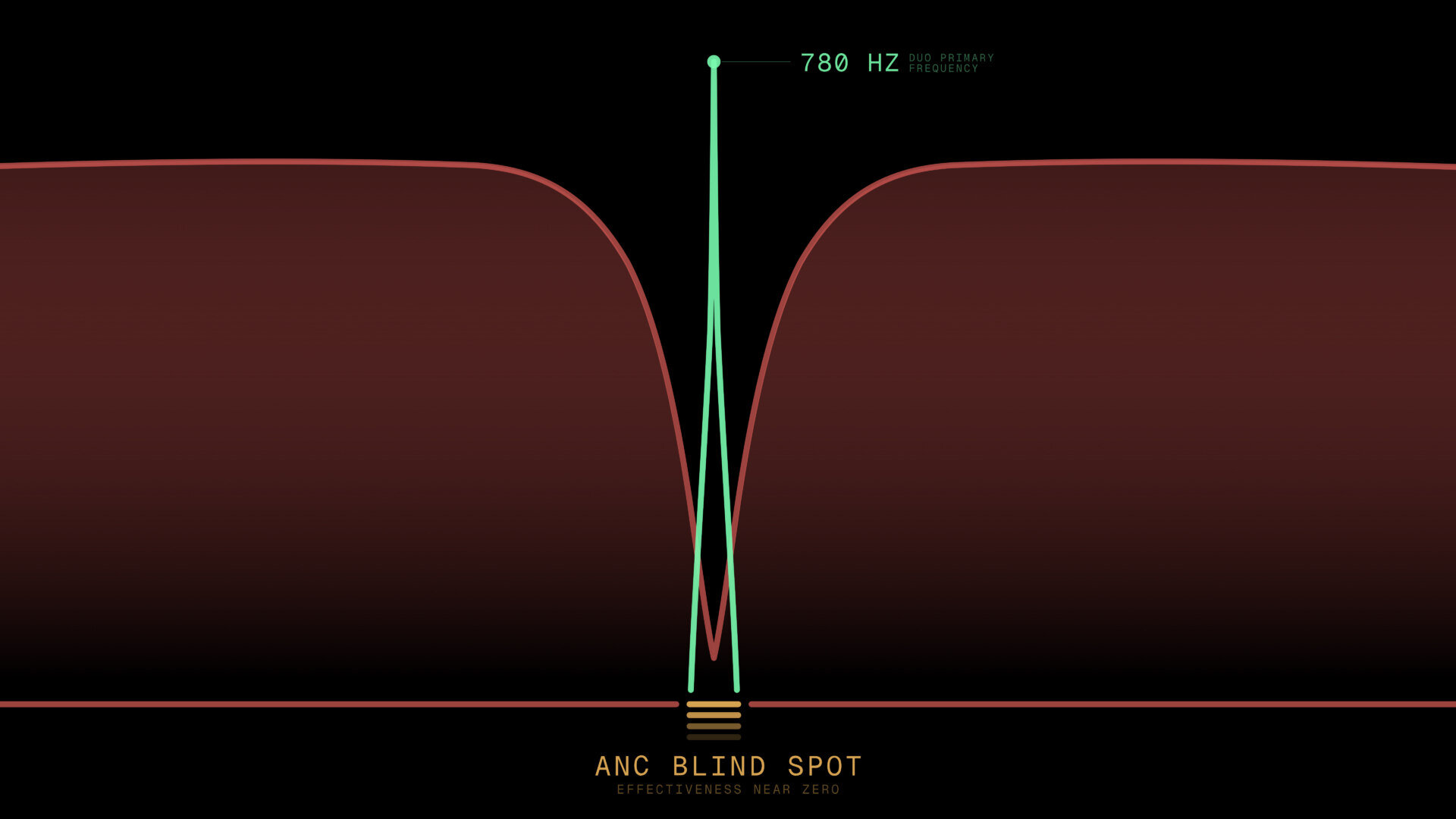
Skoda's engineers have developed a bicycle bell which rings in such a way that it manages to bypass the algorithms of noise-cancelling headphones used by pedestrians.
Nowadays, there is a huge number of pedestrians using noise-cancelling headphones in traffic, who probably follow car traffic, but not so much cyclists. And in many countries pedestrians and cyclists have traditionally been made to use the same pathways.
This, of course, leads to the problem that when a cyclist tries to warn a pedestrian with their bell, the pedestrian using noise-cancelling headphones may not hear the bell's sound at all.
Instead of just making the bell louder, the company's engineers decided to make it smarter instead. Researchers found that virtually all noise-cancelling headphones let sounds through in a specific frequency range (between 750 Hz and 780 Hz).
YouTube has introduced two new experimental features for its Premium users, designed to make consuming content on mobile devices easier. The most notable addition is On-the-Go, which transforms the user interface to allow safer management of videos and podcasts even when on the move.
Many people listen to podcasts or other programs from YouTube during a walk or commute. Until now, managing the video has required precision, as the interface buttons have been small and surrounded by distracting elements, such as comments.
The new On-the-Go mode is specifically designed to bring relief to such situations. Its simplified mode offers large and easy-to-hit buttons for playback, rewinding, and pausing.
On Android phones, YouTube can automatically suggest turning on the mode if the device's motion sensors detect that the user has been moving (for example, walking) for at least 60 seconds.
In addition, unnecessary visual elements, such as comments, are hidden so that the user can focus on listening and easier control.
The feature can also be turned on manually via video settings. Google states that the feature is only available for Android.
Another new experiment is Auto Speed. It is an AI-based function that dynamically adjusts video playback speed according to the content.
Almost all electronics companies have been struggling due to the memory crisis that began in autumn 2025. Companies have been forced to cut their margins, downgrade the specs of their upcoming products - and gradually pass on sharply increased costs to consumers.
The surge in prices of memory chips and NAND flash used in SSDs is largely driven by AI companies, which are racing to build data centers around the world. In the process, they are effectively buying up all available memory chips on the market - at any price.
Naturally, there are also winners in this otherwise grim development. One of the biggest beneficiaries is Korean conglomerate Samsung, and particularly its electronics manufacturing arm, Samsung Electronics. For consumers, Samsung Electronics is best known for its smartphones and televisions - businesses that are also being hit hard by rising component costs.
But at the same time, Samsung Electronics is also the world's largest manufacturer of memory chips. The company itself has directly contributed to the current price surge by raising its own memory prices amid virtually unlimited demand.
The data centers are thus located quite close to each other, which may facilitate maintenance and the connection between the two data centers for data transfer. According to the press release, another reason is the availability of clean and reliable energy in the region and in Finland generally.
The investment for the Lahti data center is one billion euros. A similar sum will also be invested in the Kouvola data center, meaning TikTok is investing a total of 2 billion euros in Finland. Few individual companies have invested such large sums in Finland in such a short time. Lahti and Kouvola together form the backbone of TikTok's European infrastructure.
"Both investments are part of Project Clover, our 12 billion euro European data protection initiative, which provides industry-leading protection for the data of over 200 million European users. As part of the project, we have established a dedicated European data protection entity with enhanced technical, operational, and administrative safeguards," TikTok's press release states.
In a way, a historical moment is approaching, as Linux will most likely discontinue support for the 80486 processors by the end of this year.
The Registerreported around Easter how changes have already been accepted into the Linux 7.1 codebase, which will remove support for the 486 processor family from the Linux kernel (kernel).
The change does not affect a very large audience, and Linux's lead maintainer Linus Torvalds has himself stated that 486 support is no longer "very relevant" in the 2020s.
Intel unveiled the 80486 processor family in 1989, and it dominated the PC market for several years until its successor, the Pentium, was unveiled. Intel itself manufactured 486-based processors until 2007.
The 486 was also a significant processor for PC technology, in that during its era, Intel saw the emergence of the first serious competitors manufacturing so-called clone x86 processors - including companies like AMD and Cyrix.
Three well-known American YouTubers have sued Apple, accusing the company of unauthorized use of their own videos for training Apple's AI models. The lawsuit was filed by h3h3 Productions, MrShortGameGolf, and Golfholics.
The creators who filed the lawsuit want the court to handle the case as a class action lawsuit, meaning other content creators on YouTube whose videos Apple has (allegedly) used as training material for its AI models could join.
According to MacRumors, the content creators accuse Apple of violating the U.S. DMCA law. According to the creators, Apple illegally collected (scraped) millions upon millions of YouTube videos, which it then used to train its AI. Based on court documents, Apple collected data from the so-called Panda-70M dataset, which contains links to videos, their subtitles, and verbal descriptions of each video's content.
Apple published an AI research paper (Scalable Text and Image Conditioned Video Generation) in late 2024, where the Panda-70M dataset was used to train a video generation model. According to the content creators(PDF), their created content appears in the said material over 500 times. Although the research description states that only video links were used, the content creators believe that instead of just links, Apple would have downloaded the videos and utilized the content of the videos themselves - which in turn violates both YouTube's terms of service and U.S. copyright laws.
Microsoft has started automatically updating computers using the soon-outdated Windows 11 version.
The mandatory update applies to all computers using Windows 11 24H2, i.e., the major version of Windows released in the autumn of 2024. According toBleeping Computer, only computers used by businesses and managed by IT support are currently exempt from the mandatory update.
The official support period for Windows 11 version 24H2 ends in October 2026, after which no security updates will be released for it.
Computers being force-updated are updated to the latest major Windows update, 25H2, which was released in autumn 2025. For the user, the update appears so that Windows simply states there are updates ready to be installed - and the user can choose whether to install the update immediately or only during the next restart. No other options are offered.
Microsoft, obviously, wants to avoid a situation where (once again) outdated Windows computers are left hanging in the real world, possibly connected to the internet, for which security updates are no longer released. Such PCs would eventually become ticking time bombs, risking the security of the entire internet.
Strict age limit enforcement is expanding globally and it is gradually becoming part of operating systems. Apple began requiring age verification from all iPhone users in Britain earlier this year, and the practice has now expanded to two new countries: Singapore and South Korea.
The age must be genuinely verified, meaning simply faking the birth date is not enough - nor is the good old adult entertainment sites' "are you an adult?" query.
In Britain, a nationwide digital method to verify age is not widely used yet, the age can be verified in several different ways. If an Apple user account has existed for at least 18 years, no special tricks are needed when setting up a new iPhone.
But if the user account is not old enough, user's age must be proven by other means. These methods include entering a credit card issued in Britain during phone setup (a minor cannot obtain a credit card acting as a 'main card' in Britain) or some method of age verification according to the recently introduced PASS scheme. The last option offered is scanning and sending a passport or driving license to Apple for verification.
A much-desired update is coming to Steam, the world's largest PC game marketplace, owned by Valve.
Steam will start showing an estimate of how well each game would perform on the specific computer you are logged into the Steam marketplace with.
The estimate is based on real performance statistics from other users who have already played the game, and the computer configurations used by those players. In other words: you will directly see how fast the game runs on your own computer, because it is very likely that someone has already played the game with exactly the same hardware you are using.
According to Steam's latest change history, the collected game performance data is anonymized, meaning no individual player can be identified from it. Smoothness is simply described by the fps number, which indicates how many times per second the computer in use can update the image displayed on the screen with that particular game.
The feature is currently in beta testing and focuses on players using the SteamOS operating system.
Microsoft has recently given strong hints that Windows 11's problems and pain points are finally being seriously addressed.
As one clear step, Microsoft has established a completely new team, which focuses on renewing a large number of key Windows core applications - and they are intended to be implemented entirely as native applications. This refers to the fact that nowadays - in both Windows and most other operating systems - a large portion of applications are implemented as so-called PWA applications, meaning, to put it very simply, they are solutions built with web technologies, wrapped as apps.
The advantage of native applications over PWA applications is that they demand much less PC resources like RAM, and partly also better consistency in the user interface's appearance and usability. Apple has also been criticized for the fact that an increasing number of Mac's core applications are implemented using (usually Electron) PWA technology.
The team will be led by a name perhaps vaguely familiar to many tech enthusiasts, Rudy Huyn. Huyn rose to fame during the Windows Phone era, when the biggest problem with Windows phones was the lack of many important applications. App giants were not interested in developing new versions of their apps for Windows Phone, so Huyn - usually without permission - made them himself. His creations on Windows Phone included an unofficial Tinder app for Windows Phone and an unofficial Windows Phone version of Secret.
Google's popular photo service, Google Photos, is finally coming directly to Samsung TVs.
Photos integrates directly into Samsung TV's entire user interface, meaning it's not just another app. At the same time, Google Photos replaces Microsoft'sOneDrive integration, which was previously on Samsung TVs and will now be removed from Samsung TVs.
Just like on a mobile phone, Google Photos also offers Memories highlights of old photos and moments through the TV. Users can browse their automatically updated memories, view them full-screen, or see selections in a widget view. Freely browsing the entire photo library is not yet possible; the emphasis is on Google's automatically selected highlights.
The installation process has been made easy: in the Google Photos section of the TV, the user is shown a QR code, which is then scanned with a phone camera - and immediately linked to the user's Google account. After this, the user enters a verification code and allows access to their photos. Individual people, pets, or dates can be hidden from memories if, for example, one does not want former partners to appear on the TV's home screen at regular intervals.
In Italy, a court has issued a decision that could have huge implications for streaming services across Europe.
According to the court's decision(in Italian), Netflix's price increases in Italy between 2017 and 2024 were illegal, as they were not justified in any way.
According to the court, price increases made without any specified and explained reason are illegal, as they violate Italian consumer protection law. Netflix does not define any specific reason in its terms of service on the basis of which it can raise prices, but rather generally reserves the right to increase its prices in its terms of service. According to the court, this is not permissible; instead, the reasons for price increases must be clearly stated in the contract - for example, by describing that they are based on inflation or a similar, understandable reason.
Behind the decision is a lawsuit filed by the Italian consumer organization Movimento Consumatori, which demanded the annulment of Netflix's price increases and compensation for customers. The court ordered that the company must refund customers for unduly collected fees, the amount of which can in individual cases reach up to 500 euros for Premium subscribers and approximately 250 euros for Standard subscribers. The refunds apply to both current and former customers who have paid increased prices during the period in question.
Penguin Random House has filed a lawsuit against AI company OpenAI, alleging that the company's ChatGPT has infringed the company's copyrights by reproducing content from a popular German children's book series.
According to The Guardian, the lawsuit was filed in Germany last week and targets OpenAI's Irish European subsidiary.
According to Penguin Random House, ChatGPT, with user prompts, is capable of generating stories, images, and even cover designs that are almost indistinguishable from the original works of the German children's author Ingo Siegner'sCoconut, the Little Dragon(in German Der kleine Drache Kokosnuss) book series. The publisher states that ChatGPT was also able to copy the texts from the back covers of the books - and when asked, provided instructions on how to make money from copies of Siegner's books produced by ChatGPT, by publishing them on various self-publishing platforms. According to Penguin Random House, OpenAI has used the works of the author it represents (Siegner) as training material without permission.
Swiss-based Proton, known for strong encryption and privacy protection, has expanded its product range.
The company is now challenging the dominance of Microsoft Teams with its new Proton Meet video conferencing service. As with Proton Mail, Proton Meet is also promised to be end-to-end encrypted (end-to-end encryption) and that no meeting data will be collected by Proton.
Proton Meet meetings can be joined without a Proton user account, and conferences work not only with a separate application but also in a browser and on mobile.
Using Proton Meet is free, as long as meetings last a maximum of one hour and there are a maximum of 50 participants. Larger numbers require a paid Proton subscription from the organizer.
The product launch is clearly timed at the right moment, when Europe is actively considering breaking its dependency on American technology. Often, the transition is easiest to make one piece, product, and service at a time.
American IT giant Oracle has laid off up to 30,000 of its employees around the world in a rather brutal manner.
In countries where advance notice of dismissals is not required, the company simply sent an email at six in the morning to all employees being laid off, informing them of their termination.
The sender of the messages was only "Oracle Leadership", meaning Oracle's management, without the name of any single leader. According to news sources, the company did not inform even the supervisors or HR of those being laid off about the upcoming terminations, meaning they came as a complete surprise before morning coffee on Tuesday, March 31, 2026.
According to the Times of India, the majority of the layoffs affected the United States and India.
Those being laid off were apparently offered a severance package, but on the condition that the employee immediately signs an agreement accepting their termination.


 Nowadays, jumping from one computer operating system to another is already a reasonably painless process, as graphical user interfaces have adapted over the decades to be very largely similar to each other.
 According to media sources, two subsidiaries of Chinese Oppo, OnePlus and Realme, have merged.
 The European Commission has issued its preliminary findings from an investigation launched in January 2026, concerning Google's activities in relation to the Android operating system and AI services.