
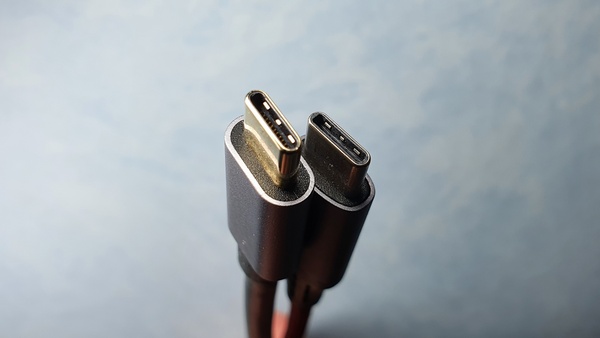
The European Union approved legislation in 2022 which made USB-C a mandatory charging connector in all mobile phones sold in Europe.
The law came into force for mobile phones in 2025, and as a result, Apple switched to using the USB-C standard in its iPhones already in 2024. The requirement was an excellent example of the legislation's "stickiness," as even though there was no similar requirement in other countries around the world, Apple voluntarily adopted USB-C elsewhere as well.
Now, based on the same law, the next phase is being entered, as from April 28, 2026, all laptops must have a charging capability using a USB-C connector.
Manufacturers are still allowed to offer other charging options in their computers, but the computer must also be able to be charged with a standard USB-C charger. If the computer supports any kind of fast charging technology, it must also support the standard USB PD fast charging technology.
In practice, the change means that, for example, on a business trip, you no longer need to take more than one USB PD standard-compliant charger, as the same charger can be used to charge both a mobile phone and a computer.
Since it is a standard, it also means that chargers from all manufacturers will be cross-compatible. So, you can charge a Lenovo laptop with an Apple charger - and vice versa.
However, the requirement does not apply to all laptops currently on sale, but rather to new models that are introduced for sale only after April 28, 2026. This means, for example, a new computer introduced in March 2026 can still be sold, even years from now, even if it does not have a USB-C charging port.
In practice, this means that stores will still be selling new computers for a couple of years that do not have a USB-C charging option.
The change also means that it is no longer mandatory to supply a charger with computers. However, whether a charger is included with the computer or not must be clearly stated in the device's description and packaging labels.
This legislation is also very likely to be quite "sticky," meaning it is probable that in the future, all laptops sold worldwide will use a USB-C charging connector.
More detailed information about the legislation can be found on the European Union's page on the topic (PDF).
Now, based on the same law, the next phase is being entered, as from April 28, 2026, all laptops must have a charging capability using a USB-C connector.
Manufacturers are still allowed to offer other charging options in their computers, but the computer must also be able to be charged with a standard USB-C charger. If the computer supports any kind of fast charging technology, it must also support the standard USB PD fast charging technology.
In practice, the change means that, for example, on a business trip, you no longer need to take more than one USB PD standard-compliant charger, as the same charger can be used to charge both a mobile phone and a computer.
Since it is a standard, it also means that chargers from all manufacturers will be cross-compatible. So, you can charge a Lenovo laptop with an Apple charger - and vice versa.
However, the requirement does not apply to all laptops currently on sale, but rather to new models that are introduced for sale only after April 28, 2026. This means, for example, a new computer introduced in March 2026 can still be sold, even years from now, even if it does not have a USB-C charging port.
In practice, this means that stores will still be selling new computers for a couple of years that do not have a USB-C charging option.
The change also means that it is no longer mandatory to supply a charger with computers. However, whether a charger is included with the computer or not must be clearly stated in the device's description and packaging labels.
This legislation is also very likely to be quite "sticky," meaning it is probable that in the future, all laptops sold worldwide will use a USB-C charging connector.
More detailed information about the legislation can be found on the European Union's page on the topic (PDF).