Media outlets reported a couple of days ago that media giant Warner Bros. Discovery (WBD) was up for sale and that several purchase offers had been submitted. Now, the winner of that bidding process has been confirmed.
Netflix will acquire Warner Bros for $82.7 billion.
The current WBD television channels were excluded from the deal and will be separated into their own Discovery Global company. Discovery Global will become an independent, publicly listed company. Only after the split will the remaining parts of the entity transfer to Netflix ownership. The estimated timeline for completion is set for the third quarter of 2026.
As part of the acquisition, Netflix will gain the legendary Warner Bros. film studio, the rights to Warner Bros films, DC Entertainment, and of course, HBO. In HBO's case, the acquisition includes the HBO Max streaming service, all HBO content, and the HBO premium television channel.
This means Netflix will also become a company that operates a traditional premium TV channel (HBO) -- unless Netflix later decides to sell or outsource the TV channel.
Netflix states in its announcement that beloved and iconic series and films such as Harry Potter and Stranger Things will be available under the same roof once the acquisition is finalized.
Google has issued an urgent warning to all Android users.
The warning applies to all Android devices, regardless of whether the manufacturer is Samsung, OnePlus, Xiaomi, or Honor.
The flaw, identified as CVE-2025-48593, affects Android versions starting from Android 13 and includes the very latest Android 16. Its preliminary severity score is set at 9.8 out of 10.
According to Google, the vulnerability allows attackers to target any Android device and make it execute malicious code of their choice. The exploit doesn't require elevated privileges, meaning the malicious code can run freely within the system once executed.
As the cybersecurity site GBHackersdescribes, the attacker can potentially gain full control over the victim's phone or tablet.
Google informed all Android manufacturers about the vulnerability a month before publicly disclosing it, so device makers would have time to respond and release security patches for their devices.
Robotic vacuum development has been interesting to follow over the past few years. The leap in progress began around 2018, when tighter competition between Chinese manufacturers and long-time market leader iRobot started producing real innovations.
First came self-emptying dustbins. Then smarter maps, rotating mop plates, self-cleaning mops, obstacle avoidance, and more recently the ability to climb over thresholds.
So in that context, the new model from the industry giant Roborock feels in many ways a logical continuation of the ongoing development.
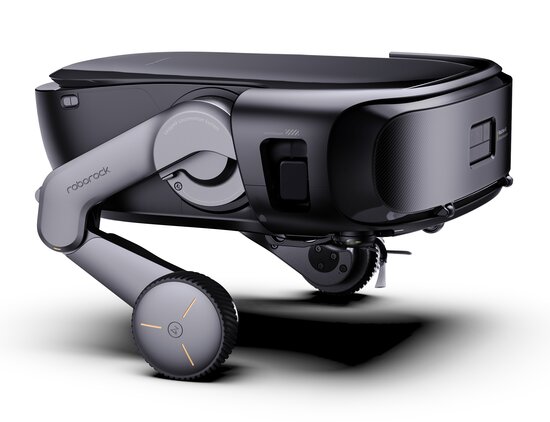
We got our hands on the spring 2025 release, the Roborock Saros Z70 robot vacuum, whose most unusual characteristic is the built-in arm.
Yes. An arm.
The robo uses its emerging hand as a cleaning aid - essentially to move forgotten socks and toys out of the way of the cleaning path.
But is the Roborock actually a good vacuum - or a jaw-dropping tech demo? We subjected the Saros Z70 to our usual multi-month test, where the robot was tasked with cleaning a very ordinary Nordic home for about three months. During that time it was the only floor-cleaning tool in the residence.
So let's see how the Saros Z70 ultimately fared...
TiVo was once a synonumous for digital recording of linear television programs, especially in the United States.
But times have changed, as streaming services have become a commonplace and virtually all traditional TV broadcasters have started offering their shows through one of the many streaming providers.
According toCord Cutters, TiVo has removed all its hardware from its website - even all references to such devices.
TiVo's fortunes have dwindled as cable TV subscriber figures have dropped across the United States. Company's final physical device was TiVo Edge, launched back in 2021 that merged streaming services and live TV recording into one device.
Virtually all modern TVs have some sort of app support built-in with them, so, external device like TiVo apparently seemed like a hassle for most potential consumers.
And that is also the very route TiVo, as a company, is taking, as it focuses on selling its own operating system for TV manufacturers. The very same OS was at the core of the company's own hardware products, too. Company has made such deals already with HiSense and TCL in the U.S.
This week, the world of activity tracking was rocked by major news. The American company Strava, arguably the most famous sports app developer globally, has sued American sports watch maker Garmin.
Strava accuses(paywall) Garmin of violating its patents and is demanding that the court immediately block sales of all Garmin-made smartwatches as well as devices like bike computers.
At the heart of the dispute are two of Strava's software patents.
One concerns route sections, or segments, while the other covers so-called heatmaps.
Segments are a highly popular feature among Strava users, where, for instance, a specific stretch of a park becomes its own "section." In Strava, you can automatically track how well you performed on that stretch compared to others who have run along the same route.
Surprisingly, Garmin has had a similar feature in its Connect app since 2014 - though its implementation was so confusing that it was rarely used. Instead, Strava and Garmin later jointly developed the segment feature now found in Strava, launching it a year later.
Ruuvi Innovations has for years been a favorite among hobbyists experimenting with small-scale home automation.
The company's affordable and straightforward RuuviTag sensors have been so easy to use that even everyday consumers have swapped out their home thermometers for them.
Now, the company is expanding into indoor air monitoring. The new Ruuvi Air station includes the familiar temperature, air pressure, and humidity measurements found in its earlier small sensor tags.
But the standout new feature in Ruuvi Air is its comprehensive air quality tracking. The device measures carbon dioxide levels, airborne particulate matter, and the so-called VOC index. The VOC index reflects how the human sense of smell perceives the intensity of odors compared to earlier conditions.
The best part of Ruuvi Air (as with other Ruuvi products) is that the data is available free of charge - and forever. The clean mobile app is also free and presents even the new metrics in a simple, easy-to-understand format.
WhatsApp has gained yet another AI-powered feature.
The latest version, now rolling out to users as an update, introduces support for message translation between different languages.
Using it is simple: press and hold on a message, then select Translate from the menu that appears.
Unfortunately, language support is still limited, and many smaller languages aren't available on either iPhone or Android. On Android, translations are supported between six languages: English, Spanish, Hindi, Portuguese, Russian, and Arabic.
On iPhone, the feature works with a wider range of languages, since WhatsApp taps into Apple's built-in translation tool. On Android, the first time you use the feature, WhatsApp will prompt you to download the required language packs locally.
Translations are processed directly on the user's device, meaning messages aren't sent over the internet to third-party servers as they are with many other translation services.
According to WhatsApp's support page, the translation feature is not yet available in the web version of WhatsApp on computers or tablets.
The Venu line has long been one of Garmin's best-sellers, praised as an all-rounder smartwatch that blends fitness smarts with an everyday-friendly design. We highlighted that balance in our review of last year's Garmin Venu 3, which earned strong marks as a versatile watch that didn't lean too heavily into the "sport watch" aesthetic.
With the Garmin Venu 4, Garmin is doubling down on wellness tracking. The biggest upgrade comes on the software side: users can now log lifestyle details directly into the watch, such as coffee consumption or alcohol intake. These records feed into Garmin's health metrics, allowing the device to provide more nuanced insights into how daily habits influence factors like stress levels and heart rate variability.
Garmin Venu 4, 45 mm version
Sleep tracking has also been refined. The Venu 4 can now better assess how closely a user's sleep schedule aligns with their natural circadian rhythm - and suggest adjustments if necessary.
One of the most controversial – and also most disliked – companies in the tech world is undoubtedly the Italian firm Bending Spoons.
The name might not mean much to the average consumer, but over the years the company has adopted a very particular growth strategy.
Bending Spoons buys well-known, often older, consumer-focused tech companies built around a single product. Typically, its shopping cart has included beloved mobile apps that the original owners failed to effectively monetize.
Its past acquisitions include the note-taking app Evernote, the digital publishing platform Issuu – used by newspapers in Finland as well - and the file-sharing service WeTransfer.
What has fueled user anger is the company's strategy of squeezing as much profit as possible out of these acquisitions. In the case of Evernote, for instance, it dramatically raised subscription prices, cut features for free users, and laid off most of the development team.
That same playbook has been repeated across several of its other deals.
Nintendo has zero tolerance for piracy on its consoles, and the Japanese giant is well known for relentlessly taking piracy-enabling sites and companies to court.
And with rather good results.
Now, Nintendo has scored another win in its battle against piracy: a U.S. court has ruled(PDF) that a well-known site selling so-called mods must pay millions in damages.
Modded Hardware sold physical devices - "mods" - that allowed the Nintendo Switch to run games other than Nintendo's originals. The most infamous product on the site was the MIG Switch, which let users dump full images of Switch games onto a memory card and play them directly from it.
While the MIG Switch and similar products could technically be used for backing up and playing legally owned games, the court sided with Nintendo, concluding that the main audience for such devices are those who use them to play pirated titles.
The court stated, in essence:
Defendant's conduct has caused NOA significant and irreparable harm. For example, the MIG Devices, Mod Chips, Hacked Consoles, and Circumvention Services allow members of the public to create, distribute, and play pirated Nintendo games on a massive scale. Thus, the MIG devices, Mod Chips, Hacked Consoles, and Circumvention Services harm NOA's goodwill, detract from NOA's consumer base, and enable widespread illegal and difficult to detect copying.
Netflix is venturing down a somewhat unexpected path. The company is set to introduce traditional, linear TV broadcasts within its app -- across all of its supported platforms.
This move stems from a partnership deal between Netflix and French media group TF1. Under the agreement, starting summer 2026, viewers will be able to watch TF1's TV channels live through Netflix -- much like how users can watch live TV content on many of the traditional broadcasters' own apps.
The collaboration also extends into streaming: Netflix users will have access to shows and series from TF1's streaming platform, TF1+, as if they were part of Netflix's own library.
Notably, the deal won't increase Netflix's pricing in France. Instead, TF1's content will simply become part of the broader offering on Netflix France. TF1's channels are free and ad-supported, focused primarily on entertainment and news within French-speaking markets.
A step toward content consolidation?
While the shift may seem small, it could signal a larger transformation in the media landscape. Until now, every media brand has largely sought to build and maintain its own apps and distribution channels. This approach comes with steep costs -- delivering proper streaming coverage demands development and support across Android, iOS, web, and a wide array of smart TV platforms.
Today Google unveiled the final, stable build of Android 16, now available for smartphones, tablets, and other Android-powered devices.
As expected, the update is landing first on Google's own Pixel phones as well as the Pixel Tablet. At the same time, support for the oldest Pixel models is ending, with Android 16 available starting from the Pixel 6 series onward.
Arguably the most notable and user-facing change in Android 16 is the forced bundling of notifications. In practical terms, this means that if an app floods your device with alerts - say, for every single comment on your latest viral post - those notifications will no longer overwhelm your notification shade. Instead, they'll be grouped into a single expandable notification cluster.
Visually, Android 16 doesn't look all that different from Android 15. That's because the complete visual overhaul, dubbed Material 3 Expressive, is slated for release later this year as a follow-up update.
Pixel phone owners should already see the update available automatically via the software update menu. The one exception? Those running the Android 16 QPR1 beta builds. These users will need to roll back to Android 15 before upgrading to the stable Android 16 release. You can also find details on which other manufacturers' devices are slated to receive Android 16.
Time flies. Our site has shrunk quite a lot since the peak years, but but we're still here, after all these years.
So, yeah, 26 years ago today, our site officially launched - back in 1999. Since those days, lots of things have changed - in technology, culture, our personal lives and Internet. But our site is still here, having survived all these years - good times and the bad ones.
I wont go over our history and our roller-coaster years now, as I've done so back in 2019, extensively when our site turned 20 years old.
Again, I'd like to thank all of you who have supported our site over all these years. Thank you, everybody!
Hidden within the Commission's press release was an almost offhand mention of a new app planned for age verification across the European Union.
Details were scarce - so we dug in. We reached out to multiple public agencies to uncover more about this app and how it's expected to work.
Our investigation ultimately led us to Finnish authorities, who were able to shed some light on the matter.
In Finland, the initiative is being driven by the Office of the Data Protection Ombudsman, which is responsible for overseeing the processing of personal data in the country. The office confirmed to AfterDawn that an age verification solution is indeed headed to Finland.
The solution will come in the form of a smartphone app, slated for official release in June 2025 and set to be rolled out across the country in October.
European Union's new directive promoting sustainable consumer electronics, known as Ecodesign, comes into effect in June 2025. Among other things, it mandates that smartphones must receive software updates for a minimum of five years.
European Union's new Ecodesign legislation, aimed at improving repairability and extending the lifespan of electronics, partially takes effect on June 20, 2025.
Perhaps the most significant shake-up in the new rules targets budget smartphones, but the law will also ripple through the higher-end device market.
Only in recent years have Android manufacturers started gradually extending their software update commitments--that is, how many major Android version upgrades a phone receives during its lifecycle and how many years of security updates are guaranteed.
For cheaper phones, say, phones under €300, most brands have so far promised just two Android updates - with security patches for only two or three years. Some manufacturers have even launched phones in recent years with zero guaranteed Android upgrades and just two years of security updates.