

United States banned all foreign robot vacuums
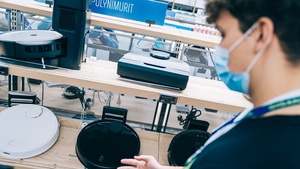 The U.S. communications authority FCC has expanded its list of prohibited devices, maintained in the name of national security, to cover so-called "advanced robotic devices". The decision surprisingly also extends to robot vacuum cleaners, although the agency has not named specific brands or models.
Behind the FCC's decision (PDF) is a concern that networked devices equipped with sensors and mapping technology could pose a new type of cyber and intelligence risk to critical U.S. infrastructure. Previously, the FCC banned all routers manufactured outside the United States, as well as all drones manufactured abroad.
According to the FCC, the networked features of advanced robotic systems create broad vulnerabilities and attack vectors and are capable of collecting real-world data for malicious actors. The agency's updated policy states that reliance on robotic devices manufactured outside the United States could open opportunities for citizen espionage, enhance the capabilities of foreign intelligence services, or even enable the remote hijacking of robots. The regulation broadly targets autonomous electronic devices with their own sensors and intelligent navigation - this group includes, in addition to robot vacuum cleaners, for example, robotic lawnmowers, delivery robots, and devices used in warehouse logistics.
 Earlier this year, an interesting lawsuit was launched, where search engine giant Google sued small company called SerpApi.
 WhatsApp is significantly expanding its calling features by finally bringing audio and video calls to the instant messenger's browser version, WhatsApp Web. Until now, users have had to install a separate desktop application to make or receive WhatsApp calls on a computer. With this update, calls will now be possible directly from a web browser without additional software, which facilitates use especially on workstations and shared computers where installing applications is not possible or desirable.