

Do US cable operators have the vision to partner with Netflix?
 Cable television operators in the US find themselves in an increasingly difficult position with respect to Netflix streaming video. On one hand it is the chief competition for their legacy pay TV business. On the other hand it arguably the biggest driver of increasingly higher speed Internet subscriptions, accounting for around a third of US Internet traffic.
Netflix has already established partnerships with Virgin Media in the UK and Com Hem in Sweden. Among the terms of these deals each company provides a Netflix TiVo app for their customers. At a Goldman Sachs conference last month Netflix CFO David Wells also expressed interest in forming similar partnerships with US pay TV providers.
Now the Wall Street Journal is reporting negotiations with multiple cable companies (paywalled content) including Comcast and Suddenlink Communications to establish those partnerships. According to their sources there are still significant issues to be resolved in negotiations between the parties. Perhaps the most important, at least for consumers, is the Netflix demand to integrate technology to improve streaming quality into broadband provider networks. Presumably this would involve some kind of caching on ISP networks which would allow both higher bitrate streams and lower bandwidth utilization by Netflix servers.
 A major focus of Windows 8 is convincing users to login using a Microsoft account (formerly Live ID) rather than a traditional local account. A Microsoft account is a sort of portal to access various cloud services including 25GB of free storage via SkyDrive which is accessible directly through various apps in the new modern UI.
 You are likely already aware of the World Conference on International Telecommunications (WCIT) which opened in Dubai on Monday. This two week conference is where a review of the International Telecommunications Rules established by a 1988 treaty is being conducted by representatives of the 178 International Telecommunications Union (ITU) members who are party to it.
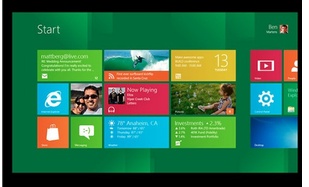 You may not realize that Microsoft has actually been a proponent of the tablet PC for more than a decade. In fact as early as 2002 they were releasing a tablet PC version of Windows. For numerous reasons previous generations of the Windows tablet PC simply didn't work for most people. The interface wasn't particularly tablet friendly, the operating system was too power hungry, and PC hardware really wasn't suitable in a variety of ways.
 Microsoft is a company very much used to the market changing around them rather than the other way around. As happens so often for companies in that position, their executives didn't realize they were out of step with the market until they saw a major competitor (Apple in this case) leading the market in another direction entirely. Like most companies finding themselves in that position they immediately dedicated themselves to major changes in their product line.
 Late last week I announced a new guide for preparing Blu-ray assets to be used in a new series of AfterDawn guides for authoring Blu-ray discs. Today I'm pleased to announce that the first of those guides is finally available.
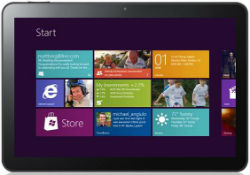 In last week's installment of our series on mobile devices and the companies who make them looked at Microsoft's efforts to launch an ARM-powered Windows 8 platform (Windows RT) and its synergy with Windows Phone 8. Of course those are only two pieces of the Windows 8 puzzle. The other piece, and arguably the biggest one financially, is the standard x86 version of the OS; the one officially called Windows 8.
 Several months ago I contacted Valery Koval, the owner of a small software company called DVD-Logic. I was hoping to get extended access to one of his company's programs so I could write a guide for using it. Plus I really wanted an excuse to play around with it. DVD-Logic sells an entire line of very impressive Blu-ray authoring software, including two different menu creation programs. In fact one of those programs was what prompted me to get in touch with him.
 In the first two installments in this series examining the mobile device market we have looked at Apple and Amazon. This time around we'll be talking about a company who currently only competes in the smartphone market but whose tablets are perhaps the most anticipated product to come along since the original iPad. That company is Microsoft and obviously the tablets are the numerous models which will launch with (and following) Windows 8.
 In the first installment of our look at the major mobile device players we dissected Apple, who were really the first company to create a combined device/content store ecosystem. Already a growing force in the content market, last year Amazon entered the market with the Kindle Fire, a generally unimpressive piece of hardware that was mostly a BlackBerry Playbook with the serial numbers filed off.
 The end of the year is drawing closer, accompanied as always by the Christmas shopping season. In addition to the millions of tablets and smartphones being sold this also means a bumper crop of the latest devices from the biggest names in mobile computing.
 When Google
 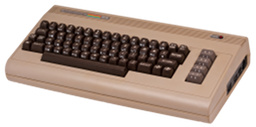 Jack Tramiel, founder of the company behind the Commodore 64, died on Sunday. He was 83 years old.
 If there was any question about