
News written by Jari Ketola (November, 2003)
Written by Jari Ketola @ 30 Nov 2003 12:24
A group representing Canadian songwriters has asked the Supreme Court to rule that Internet Service Providers have to pay them royalties for music files. The ISPs would have to pay an annual royalty regardles of the nature of the music files transferred through their systems.
Should the demands of Society of Composers, Authors, and Music Publishers of Canada (SOCAN) be agreed to by the court, it could result in increase in Internet service fees paid by Canadian consumers. It would also open the door for other copyright holders, like movie studios and software manufacturers, to demand similar royalty payments to compensate on piracy.
The fees proposed by SOCAN are 25 cents per subscriber per year plus 10 per cent of any gross profit made by ISPs through the sale of advertising.
"This is the big case for the Internet. This will set the position on how we are going to treat Internet service providers, whether they are going to be seen as people who are responsible in some way for content that goes through their services," said Mark Perry, a professor of law and a professor of computer science at the University of Western Ontario.
Source:
CTV

Written by Jari Ketola @ 25 Nov 2003 1:42
A group of more than a dozen small film companies sued the Motion Picture Association of America (MPAA) yesterday over the DVD screener ban imposed by MPAA. The ban prohibits MPAA members from distributing review DVDs or VHS tapes, or so called screeners, to anyone else besides the Academy of Motion Picture Arts and Sciences, which hands out the Oscars.

The small studios feel that the ban will limit the chances of smaller films receiving nominations or awards. That in turn will result in decreased funding for smaller studios. MPAA imposed the ban because it considers screeners to be one of the top sources for illegal movie copies. Small budget films, however, are rarely pirated, and could hence be distributed as DVD screeners in the future. But the ban doesn't make a difference between big budget blockbuster movies and small budget independent movies.
The lawsuit seeks at least $25 million in damages, and asks the court to rule that MPAA is using its position to restrict trade through unlawful and unreasonable agreements with its members.
Read more...
Written by Jari Ketola @ 22 Nov 2003 3:39
Internet service provider SBC Communications and RIAA have attended a hearing to debate the legitimacy of subpoenas handed out by RIAA. RIAA asked the court to dismiss SBC's case entirely, while SBC requested a summary judgement, which would give them a victory in the case without going to a full trial.
SBC sued RIAA in September for requesting for details of their customers. According to SBC the subpoena process is unconstitutional. The case is pretty much identical to the one Verizon brought against RIAA, and lost.
This time, however, the situation is somewhat different, because there's now factual evidence on how RIAA has used (or abused) the DMCA subpoena system.
Judge Susan Illston heard both sides, but did not make a ruling immediately. She did, however, make a statement that could be seen to favour RIAA. Illston might not let SBC to try their case in California, but transfer the case to Washington D.C., where Verizon lost its case against RIAA.
Sources:
News.com
San Francisco Chronicle
Written by Jari Ketola @ 22 Nov 2003 3:21
A study named The Global Music Industry from Informa Media Group predicts that music industry revenues will keep dropping for a year before picking up and reaching $32bn by the year 2008.
A somewhat surprising assessment in the study is that the now promising online music sales will not be the driving force behind the growth. The growth will be based on better copy protection schemes and getting a handle on online file-sharing piracy.
Informa does believe that online music sales will grow, but it estimates that by 2008 only 5.7 per cent of all music sales will consist of digital sales. Online sales in total would represent a total of 12 per cent.
"The music industry is in a bad way at the moment but the continued fall in the value of music sales is certainly not irreversible. The success of the new download services proves there is a viable market for legitimate digital sales, but the music companies must act decisively to stop the growth of the illegal services and the widespread copying of CDs," author of the report, Simon Dyson, said in a statement.
Source:
silicon.com
Written by Jari Ketola @ 22 Nov 2003 2:44
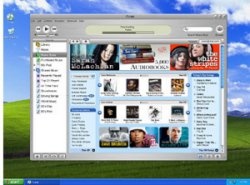
Jon Lech Johansen has released an open source software for saving DRM locked iTunes files to decrypted format. The software does not decrypt the DRM itself, but rather dumps the decrypted stream from memory while it's being played in iTunes. The program is called QuickTime for Windows AAC memory dumper.

This "security hole" is well known and can be used to bypass any type of protection, since data has to be in fully decrypted form before it is passed on to the sound output. These types of holes are known as the analog hole -- no matter what you do, it's always there. If everything else fails, you can always record the analog output signal from the computer.
It remains to be seen whether or not Apple will start releasing new versions of iTunes that requires for the memory dumper to be updated each time.
Jon Lech Johansen, aka DVD Jon is best known for his work with DeCSS, which allowed Linux users to view CSS protected DVDs.
Source:
The Register
Written by Jari Ketola @ 20 Nov 2003 12:23
America Online announced on Wednesday that it has acquired Singingfish, a company providing technology for searching video and audio content on the Internet.
AOL will incorporate Singingfish to their AOL search to allow their users to do searches for audio and video. With the number of broadband subscribers increasing, there's alot of demand for multimedia content.
In addition to being able to provide more interesting content, AOL will be able to boost its advertising income with Singingfish. For example keyword based advertisement spots on multimedia search engines are something entertainment stores are interested in. Singingfish technology is also lisenced to, for instance, Microsoft and RealNetworks.
Source:
News.com
Written by Jari Ketola @ 18 Nov 2003 12:55
Even though the music industry has little to gain from P2P piracy, there's still some aspects to it they find worth paying for. One of them is P2P search and download statistics.

Major labels, such as Warner Bros., Disney and Atlantic Records buy P2P usage statistics from BigChampagne, a company that has been monitoring for instance Kazaa since 2000. BigChampagne monitors, for instance, how many times their customers' artists show up on search strings, how often their songs are shared and how many times they are downloaded. The record labels can use the statistics for instance to determine which artists are popular in certain areas, and direct their marketing accordingly.
BigChampagne doesn't record the user names of people sharing files, but does use the IP addresses to analyze the geographic location of the users. Gathering statistics always involves the question of privacy, but P2P users sharing and downloading copyrighted material are hardly in the position to complain.
Source:
Yahoo.com
Written by Jari Ketola @ 14 Nov 2003 6:21
According to I.T. Vibe and others, MP3.com has sent email to its customers stating that CNET Networks has acquired certain assets of MP3.com, and as of December 2nd, 2003 MP3.com website will no longer be available in its current form.

Here's the email in full:
CNET Networks, Inc announced today that it has acquired certain assets of MP3.com, Inc. Please be advised that on Tuesday, December 2, 2003 at 12:00 PM PST the MP3.com website will no longer be accessible in its current form.
CNET Networks, Inc. plans to introduce a new MP3 music service in the near future. If you would like to receive email updates on this service, including an invitation to a special members-only preview, please sign up here. MP3.com is not transferring your personal information to CNET Networks, Inc. or any other third party.
On behalf of all of us at MP3.com we thank you for your patronage and continued support. It has been a privilege to host one of the largest and most diverse collections of music in the world. MP3.com wishes to express its sincere thanks to each of you for making us your premier destination for music online.
Sincerely,
MP3.com
Although no official press release has been made yet by either MP3.com or CNET, this definitely is a major move. Is CNET planning on opening a music store of their own or are they perhaps going for a different kind of MP3 music service. Time will tell.
Read more...
Written by Jari Ketola @ 14 Nov 2003 6:20
The case around mp3s4free.net, the Australian web site linking to MP3 files, escalates, as the record labels involved in the lawsuit are expanding the case to involve three people from ISP Com-Cen -- two directors, and an employee.
The employee, Chris Takoushis, arranged the deal between Com-Cen and the Web site. "An employee of a company can be brought into proceedings if they knew what the company was doing was illegal," said Michael Speck, General Manager of Music Industry Piracy Investigations.
The claims and demands made by the industry are outright ridiculous. Can you sue someone for renting an apartment for a music pirate? Hell no! The music industry needs to get a grip on reality, and stop shooting their lawsuit shotgun in public.
Read all about the farse at:
ZDNet Australia
Written by Jari Ketola @ 13 Nov 2003 3:30
Researchers from Princeton University, New Jersey, and Hewlett-Packard Laboratories in Palo Alto, California, have managed to develop a polymer-based memory unit, which can potentially be turned in to an inexpensive, plastic memory chip, which could store a megabit of data per square millimetre.
The invention is based on a known, conducting polymer called PEDOT, which is already used in anti-static coating of camera film. The researchers noticed, however, that when subject to high currencies, PEDOT turns into an insulator. In essence, when you have a material whose electrical properties can be altered with a current, you have a potential memory chip at hand.
"The beauty of the device is that it combines the best of silicon technology - diodes - with the capability to form a fuse, which does not exist in silicon," says Vladimir Bulovic, who works on organic electronics at the Massachusetts Institute of Technology.
When PEDOT turns into an insulator, it cannot be turned back to conducting material. That makes it a Write Once, Read Many (WORM) memory. PEDOT memory devices would hence be writeable only once, just like CD-Rs. Polymer based devices are easy and inexpensive to manufacture, so the fact that the memory cannot be re-used, should be irrelevant. A possible application for such a device would be, for example, a "permanent" digital film for digital cameras. Instead of transferring data on your PC and removing them from your camera, you would just swap the memory card to a new, blank one.
Read more...
Written by Jari Ketola @ 13 Nov 2003 2:41
A bill introduced in the U.S. Senate today would send P2P pirates, who swap movie and music files ahead of release date, to jail for up to five years. The bill was sponsored by Sens. Dianne Feinstein (D-California) and John Cornyn (R-Texas).

The bill is aimed at stopping distribution of pirated copies of movies and CDs, before the movie has opened in theatres or the CD hit the store shelves. By turning the offences to felonies with five-year maximun sentence for first time offenders, the supporters of the bill hope to make people think more than twice, before they share such material. In addition to the jail sentence, offenders would, of course, have to pay for damages as well.
Source:
AVN Online
Written by Jari Ketola @ 12 Nov 2003 1:52
Philips Research has demonstrated DVD+R recording at 16X speed in a laboratory environment. It is the first time such recording speeds have been obtained, and the recording speed is close to theoretical maximum for polycarbonate discs. When writing at 16X speeds the disc is rotating at 10800 rpm, which translates to linear velocity of 200kmph (125mph). As one can imagine, vibrations at those speeds are serious, to say the least.
 A bald guy adjusting laser optics |
A key aspect in realizing higher recording speeds is the development of a suitable 'writing strategy' - the timing and power of the laser pulses in such a way that marks (representing digital zeros and ones) of the correct length are created in the organic dye that forms the active layer of recordable DVDs. Doing this well becomes increasingly difficult at higher recording speeds, because the available time to heat up and cool down the dye at the position of a mark becomes ever shorter. Especially avoiding that post-heating partly erases a written mark when a neighbouring mark is written is a challenging task. Philips has developed an efficient write strategy that not only results in accurate recording results, but in addition needs only a limited number of parameters to realize it, allowing disc-drive manufacturers to implement the algorithm in a straightforward manner.
Read more...
Written by Jari Ketola @ 12 Nov 2003 9:41
Pioneer Electronics has announced the DVR-A07 DVD/CD writer with support for both -R and +R DVD recordable formats.

The DVR-A07 is the world's first 8x8 dual format writer, meaning it is capable of writing at 8x speed on DVD-R discs whose standard is being ratified in the DVD Forum and +R discs that are designed for this recording speed. The new drive also records high-speed DVD-RW and +RW discs at up to 4x speed, and CD-R and CD-RW discs at up to 24x speed. By supporting the DVD Forum's DVD-R and DVD-RW disc formats as well as the +R and +RW formats, Pioneer is helping to eliminate format confusion, which has become a growing problem for potential buyers.
"With the launch of the industry's first "8x8" dual format writer, Pioneer is once again putting the needs of the user at the top of our priority list," said Andy Parsons, senior vice president of industrial video and mass storage sales and marketing at Pioneer Electronics (USA) Inc. "The DVR-A07 will save users valuable time by writing DVD and CD discs as fast as recordable DVD technology allows at this point. It also lets users focus on writing DVDs instead of worrying about which disc format they need to buy."
Read more...
Written by Jari Ketola @ 07 Nov 2003 1:01
Napster online music store and Pennsylvania State University have announced a deal that allows university students to access the Napster service for free. The deal is a part of the ongoing efforts by universities to find legal alternatives to Kazaa and other peer-to-peer services.

In the first stage about 18,000 students will have access to a limiter Napster service, where they can listen to streaming music or download tethered music files, ie. files protected with DRM so that they can only be played back on a limited number of computers, and for limited time. In order to burn music on CDs, students will have to pay the full price of 99 cents per song. Later the service will be expanded to cover all students and staff. The service will be funded through the existing, $160 per semester IT fee the students must pay.
Napster, as well as the entire music industry hopes, that by introducing students to legal methods of acquiring music they will carry on the habit when they leave their universities, and continue purchasing songs online instead of downloading them. Then again, by the time current students graduate, the online music scene might be completely different from what is is today.
Read more...
Written by Jari Ketola @ 06 Nov 2003 3:47
Digital video recorder company TiVo has reached a customer base of one million with help from DirecTV. DirecTV provides satellite TV receivers with built in TiVo technology. Other manufacturers, such as Pioneer and Toshiba have also bundled some of their DVD player models with TiVo.
TiVO allows users to pause live TV and digitally record TV shows on a hard disk drive. Digital video recorders, or DVRs are gaining in popularity as consumers are finding the added value services interesting and worth paying for.
You can find discussions related to DVR, PVR (Personal Video Recorder), and other interesting topics at our Digital TV discussion forum. We've also just opened a Home Theater PC forum, so if you're interested in making a HTPC of your own, you might find it also worth checking out!
Source:
MSNBC
Written by Jari Ketola @ 06 Nov 2003 2:40
According to research group NPD more than a million households deleted all digital music files on their PCs in August. NPD says that the increased "intrest" in deleting files is mostly thanks to RIAA's anti-piracy campaign.
NPD has tracked deletions since May 2003. Back then 606,000 households deleted files, when in August the number of households reached 1,4 million.
Another study by NPD showed, as could be expected, that the public image of the recording industry has suffered from aggressive methods used by the RIAA in hunting down private file sharers.
One could, however, question the numbers shown in the study. Would you admit to having pirated files on your computer, if a stranger, allegedly from a research company, called you up and asked about them? Especially with all the publicity around the RIAA lawsuits. Doubtfully.
Source:
Usatoday
Written by Jari Ketola @ 04 Nov 2003 8:05
MusicMatch, the makers of MusicMatch Jukebox, have instructed their users to remove Apple iTunes software completely.
iTunes makes itself the default application to use with Apple iPod, the portable music player. So far Apple has bundled MusicMatch's software with iPod for Windows users to use. That will probably change in the near future, after Apple has ironed out all the major glitches from the iTunes software, and is able to provide a Windows 9x -version as well.
MusicMatch justifies the instructions to remove iTunes by saying that "If you install iTunes, you will not be given a choice between Musicmatch Jukebox and iTunes - Apple makes this choice for you." MusicMatch also launched its own MP3 download service in September, and is in direct competition with Apple.
Apparently both MusicMatch and iTunes work on the same computer, but iTunes makes itself the default (and only) application for iPod.
Source:
The Register
Written by Jari Ketola @ 03 Nov 2003 11:13
Microsoft and IBM today announced that the next Xbox will use IBM's processors instead of Intel's. No exact details have been announced, but IBM PowerPC processor technology has been licensed for use in both Xbox consoles and services based around the console.
The next generation Xbox will now contain different graphics chip and CPU from the current unit -- this summer Microsoft and ATI inked a deal which makes ATI the provider for graphics chips on the next Xbox. The agreement was a huge blow on Nvidia, and this latest deal must be equally devastating to Intel.
"We plan to deliver unprecedented and unparalleled entertainment experiences to consumers while creating new engines of growth for the technology and entertainment industries," said Robbie Bach, senior vice-president of Microsoft's home and entertainment division.
It is more than likely that the new Xbox will be much more than just a gaming console. The same, however, can be said about the next Playstation as well.
Source:
Financial Times
Written by Jari Ketola @ 01 Nov 2003 12:58
MIT's idea to provide legal music to their students at low cost have failed. The LAMP (Library Access to Music Project) aimed to provide music to students without paying too much royalties while remaining a legal service. Music was delivered via analog cable TV and the songs played were selected in turn by the students. Labels are entitled to royalties in on-demand services only if the music is transferred digitally.
MIT relied on Loudeye to provide the content and licenses. It seems there was a mis-communication somewhere between the two parties, because Loudeye only has licenses to sell the encoded music files to its customers -- licenses for playing and delivering the content must be agreed on with the record labels and the final customer, which in this case was MIT.
MIT has removed songs from at least Vivendi Universal and Harry Fox Agency from the service which was opened on Monday. They are currently in the process of negotiating directly with record labels and publishers.
Source:
Ars Technica