

April Fool's pranks are used to teach AI on how to detect fake news
 April Fool's Day pranks might either annoy or amuse the observer, depending on your attitude towards "real journalists" going crazy for one day. But at least there's a solid benefit out of all this: Researchers at Lancaster University are teaching an AI algorithm to detect fake news from real ones - and they're teaching the AI with April Fool's Day pranks and variety of other hoaxes.
The soon-to-be-released paper from Lancaster University, dubbed as "Fool's Errand: Looking at April Fools Hoaxes as Disinformation through the Lens of Deception and Humour" has found that April Fool's pranks from news organizations and companies (via their press releases) can be used to teach AI on how to determine if the article is "fake" or not.
Some of the characteristics that help AI to find out if the article is a prank or not, include:
- April Fool's stories are generally shorter in length
- they also use more unique words than real articles
- they're easier to read than real articles
- they tend to use more first-person pronouns than real articles
According to researchers, fake news articles that weren't April Fool's pranks, but confirmed fabrications, shared quite a lot of similarities to April Fool's articles and, thus, helped AI to learn the differences between fabrications are real articles.
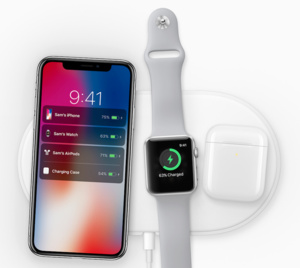 Apple has been working on a wireless power source for its wirelessly charging products for year and a half, but now the fight to get the product to the market is over. However, not in a way we expected.
 YouTube TV, Google's answer to cable TV, was originally founded in February of 2017, but now just over two years ago it has officially been expanded to cover the entire United States.