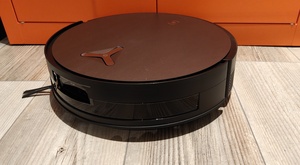
It's already been seven years since we reviewed the first robot vacuum that featured a separate dust container built into its charging dock. Since then, self-emptying robot vacuums have become the industry standard: practically every robot vacuum priced above €500 can now empty its own small internal dustbin into a larger dust bag located inside the charging dock.
Back then, the solution felt ingenious - and it still does. The usability of robot vacuums drops dramatically if users constantly have to manually empty the robot's tiny onboard dustbin.
But even then, we complained about one particularly silly design choice... Why on earth does the larger dock-mounted dust container rely on disposable dust bags, when traditional canister vacuum cleaners largely abandoned them sometime in the early 2010s? Buying dust bags is already irritating enough with conventional vacuums, but with robot vacuums it can eventually become nearly impossible as models age and compatible dust bags may only be available from questionable Chinese online stores.
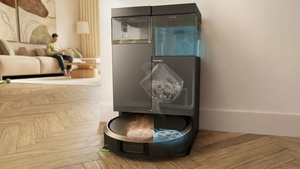
Now, that rather ridiculous problem finally has a solution. We got our hands on Ecovacs' new flagship robot vacuum, the Ecovacs Deebot X11 Omnicyclone, launched around the turn of 2025/2026, where the dock's dust bag has been replaced by a fixed large-capacity dustbin.
Google is expanding the role of its Gemini AI assistant towards more independent, agent-like operations.
At its I/O 2026 developer conference, the company introduced a series of updates aimed at transforming Gemini from a passive question-and-answer tool into a constantly working digital assistant in the background. New features include the Daily Brief agent, which provides daily summaries, and the 24/7 personal AI agent Gemini Spark.
The task of Daily Brief is to serve as a kind of morning starting point, compiling a personalized status overview for the user. The agent automatically reads connected applications in the background, such as Gmail and Google Calendar, and based on these, quickly forms a scannable summary of urgent messages, upcoming events, and, for example, tracking information for incoming packages. Daily Brief is not limited to mere summarization but also aims to prioritize content according to the user's goals and suggest next steps. The user can guide the agent by providing feedback on the summaries it produces. Daily Brief will initially be available only in the United States and is limited to Google AI Plus, Pro, and Ultra subscribers.
The popularity of programming languages is measured by TIOBE, which has once again updated its listing.
The latest May 2026 listing does not contain huge surprises, as Python continues as the completely dominant number one, as it has for a long time.
Even after Python, the listing is very similar from month to month, meaning C, C++, and Java also remain firmly in the top four - although this time C++ has dropped a couple of places from a year ago, allowing C and Java to overtake it.
The biggest change was seen in the rise of the R language, which climbed as many as four places from a year ago, to position 8. According to TIOBE's assessment, R and Python are capturing the statistical computing market, and other programming languages used in statistics are losing their positions.
TIOBE's listing of the ten most popular programming languages in May 2026:
Python
C
Java
C++
C#
JavaScript
Visual Basic
R
SQL
Delphi/Object Pascal
TIOBE's listing is based on publicly known skill distribution of people who program for a living, available courses, and third-party sources. The full TIOBE listing can be found here.
Read more...
A couple of years ago, the first big change in 30 years occurred on PC keyboards.
At the beginning of 2024, Microsoft mandated device manufacturers to add to the right side of the keyboard's spacebar a separate Copilot key.
As the name suggests, the key automatically opens the Copilot AI assistant in Windows and most Microsoft applications.
The key has been a quite universally hated change, because especially on laptops, manufacturers completely removed one of the previously used keys and slapped the Copilot key in its place. Most often, the right-hand Ctrl key was removed from the keyboard.
Even if one doesn't use Copilot for anything, the key has still sat on the keyboard unnecessarily. Linuxissa, the key's function could easily be changed to one's liking, and even in Windows, it has been possible in some cases with Microsoft's own PowerToys tool.
But now Microsoft has clearly listened to users, and the key's function can henceforth be changed directly from Windows settings back to the right-hand Ctrl key or the so-called Menu key, which has been the other option for several device manufacturers, in place of which the Copilot key was installed.
Microsoft has recently started an ambitious project known as K2, in which the company aims to fix all of Windows' most annoying shortcomings and features.
But other things are happening too, as according to information, the company is currently testing a new change to Windows that would significantly speed up program launches.
The feature, known as "Low Latency Profile", would give a significantly larger amount of the user's computer's processor power than before to the program that is currently starting up, for about 1 - 3 seconds.
According to preliminary information obtained by Windows Central, the feature would speed up the launch of the heaviest applications by up to 40% compared to the current state.
Elon Musk has lost his high-profile lawsuit against AI company OpenAI and its leadership in California.
The court jury found that Musk filed his lawsuit too late, causing all of the billionaire's claims to lapse due to statutes of limitations. The decision removes a significant legal threat to OpenAI's stock market listing, which is expected to happen as early as this year.
In the lawsuit that began in 2024, Musk demanded that OpenAI's transformation into a for-profit company be reversed and that its key leaders, including CEO Sam Altman and former chairman of the board Greg Brockman, be removed from the company's leadership. According to Musk, Altman and the other founders violated the company's original non-profit mission, which aimed to develop AI for the benefit of all humanity. Musk had donated a total of approximately 38 million dollars to OpenAI and claimed that his charitable funds had been practically "stolen" when operations were shifted to a for-profit structure.
According to international media reports, however, the jury focused primarily on a technical but crucial question when making its decision: when had Musk's alleged damages occurred, and had the lawsuit been filed within the legally required timeframe. OpenAI's lawyers largely built their defense on the statute of limitations argument, aiming to show that all damages claimed by Musk had arisen before 2021-2022, by which time the deadlines for Musk's claims would have already expired under California law. The jury found this interpretation credible and reached a verdict after only about two hours of deliberation.
Google has changed Gemini's usage limits starting May 17, 2026.
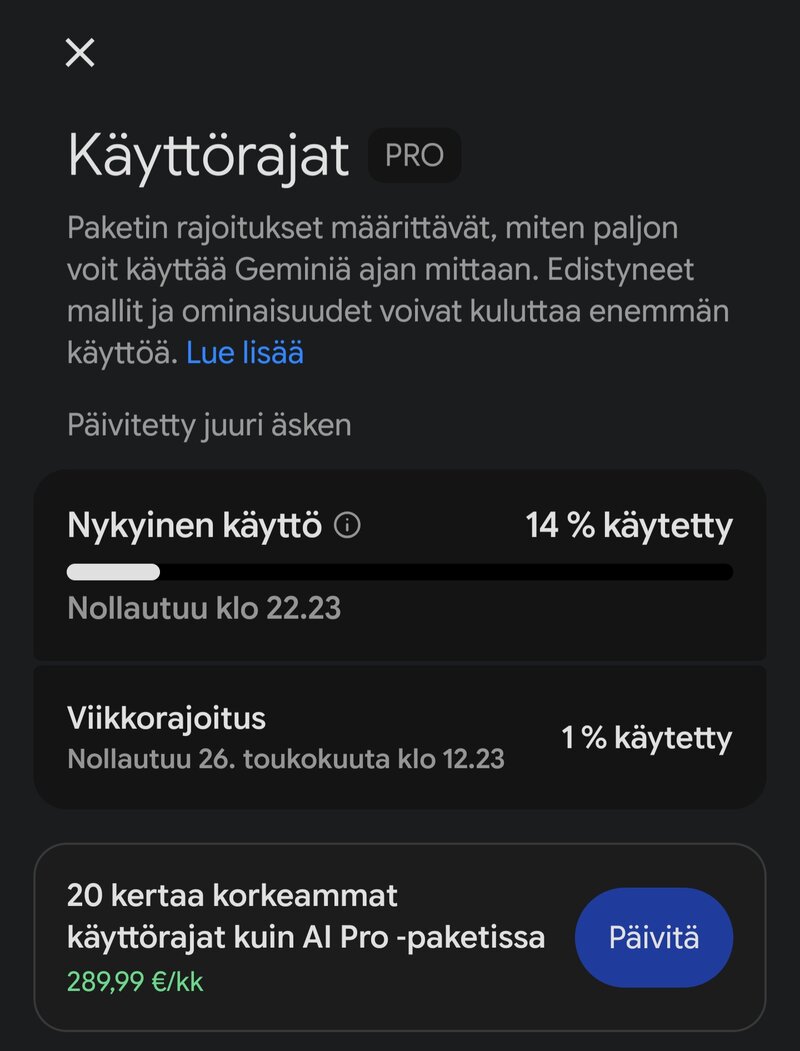
With the change, users are required to update the Gemini mobile app to the latest version on both Android and iOS devices to ensure the best user experience. Along with the update, Gemini's user interface has also been revamped, and personal usage limits can now be easily viewed directly in the app's settings.
Your own usage can be easily seen in the settings
However, the new restrictions only apply to users over 18, meaning that for minors, the usage limits remain unchanged.
The biggest change concerns how the consumption of the AI service is measured. Google is abandoning traditional fixed message limits and moving to compute-power-based usage restrictions that reset every five hours until a broader weekly limit is reached.
When calculating usage consumption, the complexity of the prompt, the features used, and the overall length of the conversation are taken into account. For the consumer, this means that complex and long conversations can exhaust the five-hour quota significantly faster than before.
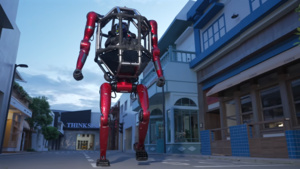
Chinese robotics company Unitree Robotics has taken a step into the world of science fiction films by presenting what it calls the world's first mass-produced human-controlled mecha-robot.
The giant robot named GD01 takes the company's development work from previous robot dogs and humanoids towards heavier, human-transported machines.
The device's price tag is as striking as its appearance, as the robot's prices start from over $650,000 (appx. 600,000 euros).
In a video released by Unitree, the company's founder and CEO Wang Xingxing climbs into the robot's cockpit himself. The video also shows the robot walking without a human.
According to the company, the presented material is genuine and real-time without video accelerations.
Weighing approximately 500 kilograms with its driver, the GD01 stands out with its transformability. The robot can move in urban environments and on streets walking on two legs, but if necessary, it can transform into a quadrupedal mode.
Read more...
Google is currently testing a change that could significantly reduce the free cloud storage new users receive.
The company has quietly moved to a model where a new Google account by default receives only 5 gigabytes of storage instead of the previous 15 gigabytes - the full 15 gigabytes can only be accessed if the user links their phone number to the account. The change first emerged through user observations. A Reddit user shared a screenshot of the account creation view, where Google offered a basic quota of 5 gigabytes and the option to increase it to 15 gigabytes if a phone number was linked to the account. Small text stated that the number is used to ensure that the additional storage is granted only once per person.
Google's own help pages also indicate the policy change. Previously, the company's support pages unequivocally stated that a Google account includes 15 gigabytes of free cloud storage, shared between Gmail, Drive, and Photos services. After mid-March 2026, the text has been changed to promise "up to 15 GB" for free. The change in wording on the page is in line with the new account creation view, where the user is offered two clear options: accept the basic 5 gigabyte quota or link a phone number and get the full 15 gigabytes.
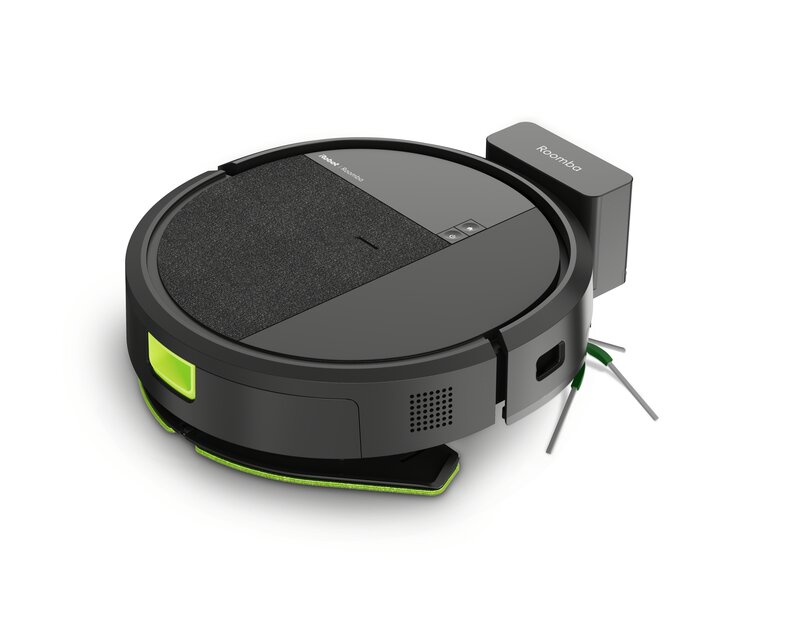
iRobot has simultaneously unveiled no less than nine new robot vacuums, covering the entire market spectrum from the most affordable to the premium end.
The 2026 model range represents the company's most significant technological leap in years, as the size of the devices has been reduced by a quarter while suction power has been elevated to a new level.
All models utilize LiDAR technology, which significantly speeds up home mapping and navigation compared to previous camera-based solutions.
Roomba 115 Combo
The entry-level of the collection is the Roomba 115 Combo - and its biggest selling point is its exceptional low profile, as at only 7.89 centimeters tall, it is lower than, for example, the Ecovacs T50 Pro model and Dreame's flagship X60 Ultra.
Despite its small size, the 115 offers a suction power of 15,000 Pascals, which is more than double that seen in iRobot's 2025 models, such as the 7,000 Pascals in the Roomba 505+ model.
Read more...
Instagram has released a new Instants app to more countries, including most of Europe.
The app's basic idea is to share everyday moments without the typical social media polishing or careful consideration. The app is designed to be fast, opening directly to camera mode so that a photo can be snapped and sent with a single tap.
Photos taken through Instants cannot be edited at all before sending. The app has no filters or other editing tools. Another key feature is the disappearing nature of the content, as the recipient can view each photo only once, and they must be opened within 24 hours of sending, after which they disappear for good.
It is a new, standalone app, but it is tightly tied to Instagram.
Shared moments appear in Instagram messages. Photos sent by others can also be viewed through the Instants app, meaning the user can choose which app they use to view messages.
Content can only be sent to followers who follow the user back. Before opening the photo, the recipient sees a small preview image of it.
However, the user can manage their own sent content, as the app includes an archive function where their sent photos can be viewed later.
Googlehas unveiled a completely new computer category, named Googlebook.
According to the company, this is the most significant change in the laptop sector since the launch of Chromebooks over 15 years ago.
While Chromebooks were originally built around cloud services, Googlebook has been designed from the ground up with the company's Gemini AI at its core. Google describes the new device not as a traditional operating system, but as an "intelligence system".
Googlebook combines Android ecosystem applications and the familiar web browser from the ChromeOS world into a seamless whole.
AI is deeply integrated into the device's usage, and one of the most prominent innovations is the Magic Pointer feature. It brings Gemini AI directly to the mouse cursor: by waving the mouse, the user receives contextual suggestions about things visible on the screen.
For example, pointing to a date in an email allows for the creation of a calendar entry with a single click, and selecting two images enables the AI to instantly visualize them together.
Another key software innovation is "Create your Widget," which allows users to create customized widgets for their desktop using only text prompts.
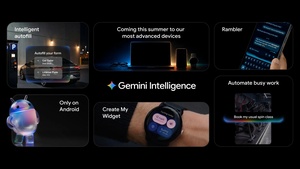
Google's new Gemini Intelligence platform was one of the most interesting novelties released at today's Android I/O event.
Gemini Intelligence is an AI layer integrated into the operating system that sees what is happening on the screen and can control all applications found on the phone. This means it can be used to create independently operating agents for various purposes.
A prime example of this could be an agent that, just before waking up, reads all notifications, emails, and instant messages that arrived on the phone during the night - and creates a summary of them, gathering the truly important things from the flood of notifications. The same agent could also be configured to make calendar entries automatically if the incoming messages contained something clearly belonging to the calendar and worth remembering later.
So, with Gemini Intelligence, Google aims to change the way mobile phones are used, where the user regularly performs some repetitive routines between different applications - by automating them into self-operating background agents. What's also interesting about the feature is that the agent can also automatically react to what is visible on the screen, meaning it doesn't need to receive a "trigger" from any notification or event for it to initiate a desired process in the background. Processes can also involve the automatic use of several, even dozens, of different applications by the AI.
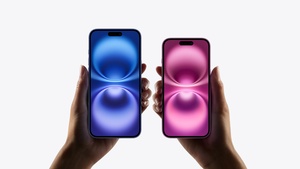
Google and Apple have together improved support for RCS messages. Now, even RCS messages sent between iPhone and Android travel end-to-end encrypted.
The update arrived for iPhones today in the released iOS 26.5 update, and thanks to the update, most "basic" messages now also travel fully encrypted. RCS technology began replacing traditional text messages on Android a few years ago, and by the end of 2024, Apple also started supporting this standard.
Apple still uses its own iMessage communication by default for communication between iPhones, but in communication between different operating systems, we are now entering the RCS era. In the Android world, RCS messages have gradually replaced text messages almost entirely, provided that both parties in the conversation have at least a somewhat modern Android phone.
However, the use of RCS messages also requires that the participants' own operators support it - meaning that mere operating system support is not enough for using RCS.
Generally speaking, ad-funded websites want as many visitors as possible to their pages.
But after a certain scale, some sites want to know much more about their visitors, and merely visiting the site itself is no longer enough.
The reason for this is, of course, money, as "large enough" sites can effectively utilize additional information about their readers for better-targeted ads - and higher ad revenue. The best-known examples are likely Meta's services, which strongly push visitors to log in or download an app instead of just a quick visit.
Now, the internet's largest discussion forum, Reddit, appears to be taking steps in the same direction.
For example, technology publications Ars Technica and Futurism both recently noticed that Reddit no longer allows all users to access its websites.
The block affects some mobile users who have landed on a Reddit page using their browser. A notification appears stating that to view the content, the official Reddit mobile app must be installed on the phone.
The popular video service TikTok has released a paid subscription option, which allows users to browse the app completely without ads, The Sun reports. The distribution of the new subscription, named TikTok Ad-Free, began today, but according to the company, the feature will become available to users gradually.
The price for the new ad-free subscription in Britain has been set at £3.99 (appx. €4.6 / $5.4) per month. The subscription is aimed exclusively at adults, as its age limit has been set at 18 years. The feature can be found and activated directly through the TikTok app's settings menu.
In exchange for the monthly fee, users will get rid of in-app advertisements completely. Additionally, the data of users who choose this subscription model will not be used for ad targeting.
It is noteworthy, however, that the payment does not bring any other new features, privileges, or additional content compared to regular free users; it is purely about removing ads.
Switching to the paid version is entirely voluntary. The basic use of the app will continue to remain unchanged and completely free for users who accept the display of targeted advertising in their feed.
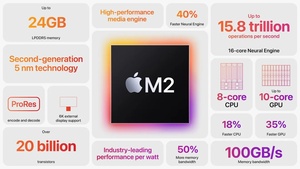
Apple may be returning as a client to its old partner Intel in chip manufacturing. According to several sources, the companies have signed a preliminary agreement under which Intel would begin manufacturing some of the processors used in Apple's devices. The news was first reported by Bloomberg, and the existence of the agreement has since been confirmed by sources including The Wall Street Journal and Engadget.
The agreement is the result of negotiations lasting over a year, which have gradually progressed towards concrete cooperation. According to sources, this is a so-called foundry model: Apple designs its own Arm-architecture-based chips, and Intel manufactures them on its own production lines, similar to how Taiwanese TSMC does for current Apple Silicon chips. It is not yet clear which products Intel-manufactured chips would end up in, but estimates suggest that it could initially be for more affordable M-series chips, and later possibly also for iPhone chipsets.
In recent years, Apple has relied almost entirely on Taiwanese TSMC's manufacturing processes for the production of all its own chipsets. However, the company has repeatedly emphasized its desire to diversify its supply chain so that it is not so tied to one supplier - and potential problems with that company. In its latest earnings release, CEO Tim Cook stated that the availability of iPhone 17 models was limited because Apple did not receive enough A19 and A19 Pro chips from TSMC. The fierce demand from AI servers and clients like Nvidia has tied up a significant portion of TSMC's capacity, which has weakened Apple's negotiating position and increased the need for alternative manufacturers.
Google is discontinuing a popular method for backing up photos from a computer to Google Photos via the Google Drive desktop application. The change particularly affects power users and photographers who have utilized the Drive app for automatically transferring large photo and video libraries to the cloud.
Until now, the Google Drive desktop application has offered a dual role: it has synced files to Google Drive and simultaneously been able to upload photos and videos directly to Google Photos. Users could select folders on their computer for the app to monitor, after which the content would automatically transfer to the cloud in the background without separate actions. This has been particularly useful for those who transfer images from DSLRs and other standalone cameras first to a PC and then to their Google Photos library.
Google's support pages and emails sent to users state that the Google Photos integration in the Google Drive desktop application will be removed in two phases. The first change takes effect on June 15, when new folders for backup can no longer be configured for Google Photos via the Drive app.
European taxi company Yango, part of Russian Yandex group, has been convicted of unauthorized transfer of customer data to Russia.
The decision was issued jointly by the Finnish Office of the Data Protection Ombudsman and the data protection authorities of Norway and the Netherlands.
In a press release, the Finland's Office of the Data Protection Ombudsman states that the penalty fee has been imposed on MLU B.V., registered in the Netherlands, which was responsible for processing Yango's personal data in Europe. MLU is part of the Yandex group.
The investigation originally began already in 2023, when both the Norwegian and Finnish data protection authorities started to investigate whether Yango's customer data was being transferred to Russia and whether customers' personal data was adequately protected.
The investigation revealed that Yango's customer data was transferred to Russia without the safeguards required by the EU's General Data Protection Regulation (GDPR). According to the authorities, MLU could not guarantee that Russian authorities would not have access to its customers' personal data.
Discreet, completely screenless activity trackers have become hugely popular, especially in the United States, but also in Europe. At the forefront of the trend has been the American Whoop, whose products have their own cult-like fanbase, but others, like Polar and Amazfit have also introduced their own, similar activity trackers.
Now advertising giant Google wants its own slice of that market and the company released a new, screenless Fitbit Air activity tracker. Like its competitors, Fitbit Air focuses on collecting health and wellness data as discreetly as possible, without screen notifications and visual clutter. The device automatically recognizes exercise activities and everything else worth tracking, meaning running or cycling sessions are not started or stopped, but the device deduces everything itself with its built-in sensors.
At the same time, Google discards the traditional Fitbit app and replaces it with the new Google Health mobile app, to which Fitbit Air also connects.
Fitbit Air weighs 12 grams with the strap (without the strap, the device weighs only 5.2 grams) and is promised water resistance up to 50 meters deep. The battery is promised to last for a week while continuously monitoring the user's health, sleep, and activity.
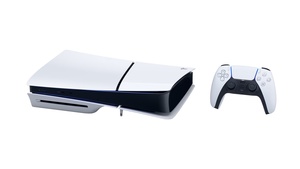
The findings showed that both PS4 and PS5 games required the console on which the game is installed to go online. At the time, this was interpreted to mean that the console would have to be connected to the internet at least once every 30 days or the game license would be revoked.
Now Sony has clarified the matter in a response it gave to GameSpot.
According to the company, games purchased digitally from the online store do indeed require a subsequent online verification even after the purchase.
But the check is carried out only once after the purchase. Apparently, the console should go online once, and this visit must take place within the first month from the purchase date, but after the end of the cancellation period for the game purchase - at least according to gaming media IGN.
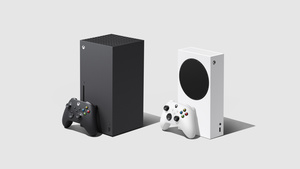
Over the past couple of months, some strange things have been coming out of Microsoft's gaming division. And specifically in a positive sense.
The leadership of the gaming division was completely replaced with new faces over the winter and after that things have started to happen, quite a lot in fact.
Then in April, the leadership of the gaming division explained how players and games are being put back at the center of everything as the next steps for Xbox and Microsoft's entire gaming business are planned. In the same shake-up, the Microsoft Gaming unit was renamed back to simply Xbox - and Xbox Game Pass prices were lowered.
And now the rapid moves continue, as the head of the Xbox division, Asha Sharma, said this week(link goes to X/Twitter) that Microsoft's AI assistant Copilot will be completely removed from the Xbox platform and its development for Xbox will be discontinued immediately.
The world's most popular browser, Google's own Chrome, is now automatically downloading a huge additional file to every computer it's installed on.
The four-gigabyte weights.bin file automatically downloads to the computer and places itself in the same directory path where Chrome is installed.
This file is essentially the weight file for Gemini Nano, Google's own AI's local model, which tells the local AI model how it should function and what it can do.
So, in simple terms: a local Google AI model, running on the user's computer, is downloaded to (almost) every single computer with the Chrome browser installed.
It should be noted in this context that almost all: if the computer is too slow, has too little memory, or is otherwise incompatible with Gemini Nano, the local AI model will not be downloaded.
The issue was first noticed by The Privacy Guy, who wrote about it on his blog after first figuring out what was going on.
Chrome will henceforth use local AI to perform the browser's AI functions, such as suggesting what to write on social media or which tabs should be grouped together.
Microsoft has, over the past decade, delved into its history and released as open source some of the company's most important early products.
Previously, the giant has released as open source, among others, MS-DOS 4, released in 1988 and developed in cooperation with IBM, as well as the company's very first product, Altair BASIC.
Now the company has released a version of its DOS operating system that offers a glimpse into the events that ultimately led to the creation of the MS-DOS operating system, which grew into Microsoft's empire.
Microsoft, at the turn of the 1970s and 1980s, was still a relatively small technology company. However, it had managed to secure a deal with the gigantic IBM to supply an operating system for IBM's soon-to-be-released, entirely new Personal Computer concept, which would use the 8086 processor.
Microsoft simply didn't have such an operating system in existence.
But another software company did: Tim Paterson had developed the 86-DOS operating system (formerly known as QDOS), which already ran on the 8086 processor, albeit in a different configuration than what IBM would later release.
Google is expanding YouTube's picture-in-picture function, or PiP mode, to all users worldwide. The feature has existed for years, but its use has been limited until now: previously it has only worked for American users - or elsewhere in the world through a paid YouTube Premium subscription.
Now the picture-in-picture function will be automatically enabled for all YouTube users, in all countries - meaning also for those using the free version of YouTube. According to the company, the feature will be rolled out in phases, "over the coming months".
However, the change does not make PiP mode completely identical for everyone, as the available features will continue to depend on the subscription type. Free users can only use the PiP feature when watching "long form" videos. This covers, for example, vlogs, documentaries and most other types of long videos - but music videos and YouTube Shorts are excluded.
Paying Premium subscribers will continue to get full benefit from picture-in-picture mode. They can use PiP mode for watching all kinds of videos, including music videos, allowing, for example, a single music video or a music video playlist to continue in the background, even if the user switches to other apps on their phone.


 It's already been seven years since we reviewed the first robot vacuum that featured a separate dust container built into its charging dock. Since then, self-emptying robot vacuums have become the industry standard: practically every robot vacuum priced above €500 can now empty its own small internal dustbin into a larger dust bag located inside the charging dock.
 Google is expanding the role of its Gemini AI assistant towards more independent, agent-like operations.
 The popularity of programming languages is measured by TIOBE, which has once again updated its listing.
 A couple of years ago, the first big change in 30 years occurred on PC keyboards.
 Microsoft has recently started an ambitious project known as K2, in which the company aims to fix all of Windows' most annoying shortcomings and features.
 Elon Musk has lost his high-profile lawsuit against AI company OpenAI and its leadership in California.
 Chinese robotics company Unitree Robotics has taken a step into the world of science fiction films by presenting what it calls the world's first mass-produced human-controlled
  Google is currently testing a change that could significantly reduce the free cloud storage new users receive.
 iRobot has simultaneously unveiled no less than nine new robot vacuums, covering the entire market spectrum from the most affordable to the premium end.
 Instagram has released a new Instants app to more countries, including most of Europe.
 Google
  Google's new Gemini Intelligence platform was one of the most interesting novelties released at today's Android I/O event.
 Google and Apple have together improved support for RCS messages. Now, even RCS messages sent between iPhone and Android travel end-to-end encrypted.
 Generally speaking, ad-funded websites want as many visitors as possible to their pages.
 The popular video service TikTok has released a paid subscription option, which allows users to browse the app completely without ads,
  Apple may be returning as a client to its old partner Intel in chip manufacturing. According to several sources, the companies have signed a preliminary agreement under which Intel would begin manufacturing some of the processors used in Apple's devices. The news was first reported by Bloomberg, and the existence of the agreement has since been confirmed by sources including The Wall Street Journal and Engadget.
 Google is discontinuing a popular method for backing up photos from a computer to Google Photos via the Google Drive desktop application. The change particularly affects power users and photographers who have utilized the Drive app for automatically transferring large photo and video libraries to the cloud.
 European taxi company Yango, part of Russian Yandex group, has been convicted of unauthorized transfer of customer data to Russia.
 Discreet, completely screenless activity trackers have become hugely popular, especially in the United States, but also in Europe. At the forefront of the trend has been the American Whoop, whose products have their own cult-like fanbase, but others, like Polar and Amazfit have also introduced their own, similar activity trackers.
 We reported a couple of weeks ago on how
  Over the past couple of months, some strange things have been coming out of Microsoft's gaming division. And specifically in a positive sense.
 The world's most popular browser, Google's own Chrome, is now automatically downloading a huge additional file to every computer it's installed on.
 Microsoft has, over the past decade, delved into its history and released as open source some of the company's most important early products.
 Google is expanding YouTube's picture-in-picture function, or PiP mode, to all users worldwide. The feature has existed for years, but its use has been limited until now: previously it has only worked for American users - or elsewhere in the world through a paid YouTube Premium subscription.