AT&T Mobility CEO Ralph de la Vega has announced today that the company will reduce the amount it subsidizes for new phones.
The move will help the company "raise revenue," says the exec.
In addition to not giving back to the consumer, AT&T will follow Verizon's lead and create shared data plans for multiple devices and families who prefer to share a "bucket" of data, minutes and texts.
"We need to...allow customers to connect those tablets to some of the existing data plans that they have to be able to share them in a way that will drive more revenue for us, but also give a good deal to customers," says de la Vega.
The company also plans to "keep 2012 smartphone sales limited to 2011 levels to cut down on upgrade costs" including subsidies on new devices. "You can take it to the bank that our thrust is to lower that in every case we can."
What this means for consumers is higher prices up front, even when you sign up for a new two-year contract.
Chinese retailers have started to list a miniature Android 4.0 computer for $74 a pop. Inside the plastic case - slightly larger than a USB thumb drive - is an AllWinner A10 single-core 1.5GHz ARM CPU, 512MB of RAM and a Mali 400 GPU.
It has a female HDMI port for connecting to a HDTV, and can output in 1080p. It has 4GB of flash storage and will take a microSD card up to 32GB in capacity. It has WiFi 802.11b/g connectivity built-in, and can connect with a 2.4G wireless keyboard + fly mouse. It also has a USB 2.0/OTG port and USB 2.0 Host port.
Similar micro-computers have been showing up in recent years. The FXI Tech Cotton Candy will start shipping next month. It plugs directly into a HDMI port of a TV, has a dual-core processor and double the RAM. It will sell for $79.
Microsoft has shown off another large change to the upcoming Windows 8's desktop user interface.
The company has removed the popular Aero Glass UI that was first shown off with Vista and then in Windows 7.
By dropping Aero, Windows 8 will have visual changes including "flattening surfaces, removing reflections, and scaling back distracting gradients."
In response to questions about whether it will be tough for users to learn the new OS, which has some stark changes from past OS, the company does not seem to be worried: "We will help people get off on the right foot and we have confidence that people will quickly find the new paradigms to be second-nature."
Windows 8 Release Preview launches next month and the final release of the OS is expected to launch in late October.
If you watch Netflix video on your PC or Mac, you might have already noticed that Netflix has made some changes to its web video player.
The changes were made to refresh the look of existing features, and add some new functionality. Some of its new features include...
The size of the controls now scales, making it easier to use the player on large screens, for example if you connect your computer to your TV
Similarly, the player will scale down to smaller windows, which is useful if you want to watch something while working in another window. Also, the video now stretches to the full window in the browser
Full screen mode now has all the features of browser mode so you can view season/episode information and change to the next episode when watching a TV show
Pausing the video now shows more information about the title
The "Back to Browse" option has been moved up to the top-left of the screen too, after previously sitting at the bottom right. Controls have been consolidated into one line using the new player.
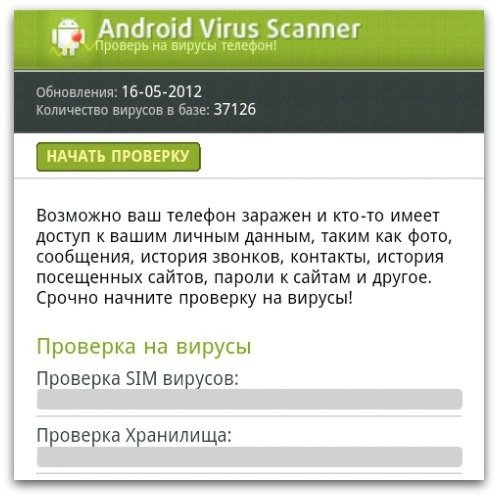
Most people reading this page will have seen some form of fake anti-virus utility running on a Windows PC at one point or another. Now, Sophos's Graham Cluley is showing how the same tactics are being used for Android, particularly in Russia.
One particular source, in Ukraine, is responsible for a bunch of malicious websites. Some of them offer fake updates for real apps, such as Skype and Opera, while others prompt the user with fake virus scans, and fake results.
In both cases, the user may be duped into installing a fake anti-virus utility on the Android handset. Just like with Windows, the software attempts to look like a real, honest anti-malware utility. One of the variants even uses Kaspersy's own icon for the Android app.
Once installed, it attempts to send premium SMS messages to generate revenue, and also will attempt to download and install other malicious software to the handset.
A hacker by the name of "Nyre" has claimed responsibility for the recent DDoS attack on The Pirate Bay.
The torrenttracker went down temporarily on Wednesday following a lash out at Anonymous for their DDoS attack on Virgin Media, one of the ISPs blocking access to the Pirate Bay.
Nyre took credit by posting on Pastebin: "I am highly against Anonymous. I do not support Anonymous anymore. I sometimes help the feds. The Pirate Bay was a press-release website for Anonymous, then I had a idea, why not take it down? Why not make it impossible for Anonymous? Get on your knees, Anonymous. I am a one-man army. I am not a hacker. I am a security killer."
It is unclear what Nyre used for the attack, but it is clear he has some sort of large botnet at his disposal.
Virgin Media's main website in the UK was forced down for some time last week. A group initially claimed responsibility for it on Twitter, and hinted that it was revenge for blocking the Pirate Bay.
It accuses Facebook of improper tracking activities, namely the continued tracking of users' Internet habits even when they were signed out of the service. The class action suit is seeking damages on behalf of all users of Facebook in the United States.
It consolidates 21 related cases filed in more than a dozen states in 2011 and early 2012. It is seeking $10,000 in damages for each U.S. user of the service, or about $15 billion.
"It's not a pipe dream," attorney Billy Murphy of Baltimore, Maryland, told AFP. "The only way you are going to stop companies from disregarding the privacy rights of the American people is to take some of their money. That's the only thing that gets their attention."
Facebook stands accused of mis-using data uploaded to the service by privacy and consumer rights groups. It has already settled a case with the U.S. Federal Trade Commission (FTC) for supplying user data to third parties in violation of its own Privacy Policy.
It must submit to independent audits for twenty years as a result.
21-year-old Gareth Crosskey has been sentenced to one-year in prison for hacking into an American's Facebook account.
Crosskey plead guilty to two counts of breaching the UK's Computer Misuse Act of 1990.
The UK citizen was accused of hacking into the account on January 12, 2011. It remains unclear why he hacked the account and what relationship there was between the two.
After the crime, the victim contacted the FBI who eventually traced the source back to the UK. U.S. agents then passed the case onto the Metropolitan Police Central e-crime Unit (PCeU).
The official charges were one count of using a computer to gain unauthorised access to a program/data and one count of performing unauthorised acts with intent to impair operation of, or prevent/hinder access to, a computer.
"The PCeU are working to detect and bring before the courts those responsible for this type of offence. Today's result should act as a deterrant to any individuals thinking of participating in this type of criminal activity," added PCeU spokesperson (via ZDet). "By taking swift action, PCeU officers were able to quickly detain Crosskey thereby preventing further disruption to the victim."
The world's largest mobile operator - with over 660 million subscribers - does not offer the iPhone officially, like its two smaller competitors China Unicom and China Telecom do. They also miss other smartphones, such as the Samsung Galaxy S II, because of its 3G network, which is different from every other 3G network in the world.
China Mobile chairman Xi Guohua has confirmed that the carrier is in talks with Apple, however. "We've been actively talking to Apple on how we can cooperate,"he said.
"I can't give you too many details, but I'd like to repeat that both sides do hope to boost our cooperation."
Over 15 million of China Mobile's subscribers use iPhone's that they sourced elsewhere, but they will only work on the provider's slower 2G network. The Chinese government tapped China Mobile to develop the country's own 3G network first, and the result was the TD-SCDMA standard, which is not used anywhere else.
This has had a negative long-term effect on China Mobile, because it has to heavily subsidize handsets that have chipsets which support the TD-SCDMA network. Meanwhile, its two smaller competitors have 3G networks that use the same bands and standards as the rest of the world, allowing them to offer popular smartphones. China Mobile still retains a 67 percent market share, but it is declining.
According to Microsoft themselves, Windows Phone has just surpassed the iPhone in the world's largest market.
The software giant says the mobile operating system has taken 7 percent market share in the nation, beating out Apple's popular device at 6 percent.
Adds Michel van der Bel, Microsoft's Chief Operating Officer for the Greater China Region (via Cnet): "We've only just begun," with smartphone and tablet sales. Additionally, the company is looking to increase business sales.
While the figure is certainly a small victory, the company has Android to worry about. The popular OS is on 69 percent of smartphones in the nation leaving all competitors in the dust.
Microsoft's joint venture with Nokia has been a minor success in the U.S. but has fared poorly in other large markets like the UK.
Every three years it must take requests for temporary loopholes to the Digital Millennium Copyright Act (DMCA). The last time it consulted the public, it OK'd the jailbreaking of phones in order to break free from a carrier, decrypting a DVD to copy clips for use in documentaries or for educational reasons, and also the breaking of DRM on e-books so that the blind could enable read-aloud features.
Those exemptions are set to expire now, unless the Copyright Office decides to uphold them. On top of that decision, the Copyright Office is being asked to make exemptions that would allow the public to break the copy protection to DVDs in order to make backup copies or format-shift.
The DMCA does allow for fair use of content, but at the same time it outlaws the circumvention of copy protection mechanisms in order to make a copy.
It is also being asked to consider proposals to exempt the practise of jailbreaking mobile phones, games consoles and tablet PCs, so that users can have total control over their devices.
Predictably, the motion picture industry is completely against exemptions that would allow the decrypting of DVD content. "If we didn't have access controls, there might be the same kind of mass piracy we've seen with unprotected music,"Clarissa Weirick, the general counsel of Warner Brothers Home Entertainment, said.
The regional administrative court of Lazio has ruled to uphold a €900,000 fine against Apple Italy, Apple Italy Retail and Apple International Sales for misleading Italians about extended warranty, the Financial Times is reporting.
In Italy, sellers of electronics products are required to provide a two-year warranty by law. The country's competition authority fined Apple in December for allegedly duping customers into paying for an extended warranty that overlapped the two year warranty they were legally entitled to in the first place.
Specifically, Apple was fined €400,000 for failing to inform the customers that they had a two-year warranty, and a further €500,000 for selling overlapping warranty.
According to Apple's Italian website, any extended warranty purchased by customers in the country is in addition to the two-year warranty they have already.
Apple must now pay the €900,000 fine, or it can choose to appeal to the Council of State, Italy?s highest administrative court. For the sake of 900k, why bother?
Sprint hopes to boost subscribers with new trade-in offer.
It said it will offer at least $100 credit toward an iPhone 4S to customers who trade in an iPhone from a competing provider. The new customer would have to sign up to a minimum two year contract with Spring to quality for the credit.
Sprint CEO Dan Hesse said in April that the carrier will continue to offer unlimited data for the next generation iPhone.
It has moved to capitalize on decisions by Verizon and AT&T to scrap unlimited data plans, which has not gone down well with their customers. Sprint does not expect to make a profit from carrying the iPhone until 2015, according to Hesse, who signed a deal worth $15.5 billion over the next four years to bring the Apple handset to Sprint.
"We believe in the long term,"Hesse said. "And over time we will make more money on iPhone customers than we will on other customers."
Just like in years past, Microsoft has brought the promotion back in time for the summer.
Students in the U.S. who purchase a Windows-based PC for $699 or more at certain retailers will receive a free 4GB Xbox 360 gaming console.
The promotion starts on Sunday in America and on May 18th in Canada. Canadian students get a slightly better deal, only needing to buy a $599 PC.
American retailers included in the deal are Best Buy, Dell.com, Fry's Electronics, HPDirect.com, Microsoft Stores, and NewEgg.com. For Canada, Best Buy, Dell.ca, Future Shop, Staples and The Source are included companies.
In addition, if you wait until June 2nd, you can purchase the PC, get a $15 upgrade to the new Windows 8 and get the free console to take best advantage of all of Microsoft's deals.
The search giant revealed its next major improvement to search this week, the Knowledge Graph. For Google users, this means a new side-panel with information that may make retrieving information far more easy than it ever has been using Google, or any other search service.
Google summed it up by saying its search engine can now recognise "things, not strings." When you enter a string of text into Google's search engine, it will try to get results based on the words in the string that you enter. It's algorithms can help to promote the most relevant or most popular results to the top of the list, but it is far from perfect.
With the Knowledge Graph, Google recognises "things", such as the Taj Mahal. When searching Taj Mahal with Google, it simply probes results based on the words, it does not recognise or care that the Taj Mahal is a "thing" in reality. On top of that, it cannot differentiate the Taj Mahal monument from the casino in Atlantic City, or from the Grammy-award winning musician with the same name.
With the Knowledge Graph, Google will offer you the ability to specify if you want search results about the musician, and not the monument.


 AT&T Mobility CEO Ralph de la Vega has announced today that the company will reduce the amount it subsidizes for new phones.
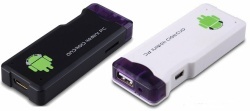 Miniature Android 4.0 PC goes on sale.