News written by Petteri Pyyny (October, 2003)
Written by Petteri Pyyny @ 29 Oct 2003 1:35
 Napster 2.0, a legal online digital music store from Roxio, was launched officially today in the U.S. The new service follows the path of Apple's iTunes in its pricing and its DRM-capabilities.
As most of Napster's specs were announced earlier this month, bundled with massive hype and creative advertising, the launch itself didn't contain real surprises. Napster is, like iTunes, based on a separate application, not on a browser-UI like Buy.com's service. Singles cost $0.99 and full albums cost $9.95. Napster also features a $9.99 a month service level that allows unlimited listening of tracks, but doesn't contain download rights or CD burning rights.
Application itself includes integrated CD burning (not a big surprise, considering that they need to protect the files), audio player and all the usual bells and whistles -- official screenshots are available from here.
As of now, Napster 2 has an impressive music catalog, total of 500,000 titles, which gives it somewhat of an edge over most of the competitors in this rather crowded market. Files are encoded and protected using Microsoft's WMA format.
Read more...
Written by Petteri Pyyny @ 28 Oct 2003 12:33
 World's largest mobile phone manufacturer, Finnish Nokia, released a new phone today in Nice, France, called Nokia 7700. Well, normally we don't do mobile phone news, but this one is pretty interesting in terms of digital video as well.
In addition of sporting 640x320 touchscreen, 65k colors, EDGE, 64MB internal memory, Symbian OS with Series 90 UI, FM radio, etc it has an ability, with an add-on, to receive DVB-H digital TV broadcasts. Phone also includes "Movie channel" concept, which delivers latest movie trailers on weekly basis to 7700.
More information:
Nokia.com
Written by Petteri Pyyny @ 28 Oct 2003 12:08
China has planned for years to develop its own alternative to DVD-Video format, in order to avoid paying patent royalties to Western electronics companies. Now it seems that they're finally getting the specs ready.
According to Chinese sources, China's Ministry of Information Industry will announce the final specifications of Enhanced Versatile Disc or EVD in November. Chinese government launched the EVD project in 1999 and the working group includes all major Chinese DVD player manufacturers and various other Chinese technology companies. China plans to submit the specifications to international standards committees as well, in order to get the standard more widely accepted outside China.
The technical specifications currently available are rather vague, but according to them the picture quality will be roughly 5 times better than in DVD-Video. EVD is supposed to be compatible with HDTV specifications and therefore it would make sense that its resolution would be compatible with HDTV resolutions, including those of 1920x1080 (compared to DVD-Video's max of 720x576 in PAL countries and 720x480 in NTSC countries).
Read more...
Written by Petteri Pyyny @ 27 Oct 2003 12:56
 DVD Forum, the governing body of DVD specifications, including the DVD-Video specs, has apparently decided to stick with the current DVD disc capacity and technology with its new DVD-Video specs.
Most of the industry analysts were betting that DVD Forum would choose to use either existing 8.5GB red-laser discs with MPEG-4 video encoding or new 25GB blue-laser discs with existing MPEG-2 video encoding. But no. Instead the new DVD-Video specs, dubbed as 'Enhanced DVD', will use the same video encoding as current DVD-Video discs and the same disc size as current DVD-Video discs.
The only new data that will be added to the new specification over the old one relates to online content and authorization systems. Basically the next-generation 'Enhanced DVD'-capable DVD players would be able to connect directly to Internet and use online sites that the DVD disc relates to, to deliver further content to user. So, in theory, this is aimed to replace now-used DVD-ROM sections of DVD-Video discs, to allow stand-alone DVD players to access that kind of data as well. Other part most likely relates to online content as well: discs will be able to carry authentication data that can be, most likely, used to purchase content or movie-related products by using the DVD itself as an authentication device when accessing to beforementioned online content.
Read more...
Written by Petteri Pyyny @ 24 Oct 2003 2:58
 Two big intellectual property associations, RIAA and MPAA, have taken very different approaches to combat ever-growing online piracy. While RIAA keeps sueing its potential customers, MPAA tries to change people's attitudes (and trying to come up with watermarks, "creative" laws, etc).
MPAA's latest attempt to do something about P2P piracy is to educate schoolchildren about P2P and legal issues surrounding it. It has paid $100,000 (which seems ridiculously small amount compared to the size of the movie industry) to gets its anti-piracy ideas to 900,000 American schoolkids in grades 5 to 9. Organization called Junior Achievement will implement the campaign using volunteer teachers from the business sector.
In addition to scaring heck out of schoolkids by telling them that "if you haven't paid for it, you've stolen it", MPAA also has launched a nationwide campaign to show anti-piracy commercials in 5,000 movie theatres in the U.S.
Some copyright law experts are worried about the picture MPAA is trying to create for students, because U.S. copyright laws include "fair use" clauses that allow making copies for personal and educational use and this important exemption might (most likely will) get ignored when MPAA tells kids how the American copyright laws work (or should work from MPAA's point-of-view).
Read more...
Written by Petteri Pyyny @ 23 Oct 2003 3:41
MPAA and Academy of Motion Picture Art have managed to reach a compromise over the MPAA's decision to ban Oscar screeners that has infuriated tons of industry insiders.
According to the deal, MPAA member studios wont send out any DVD screeners (screener is a DVD or VHS pre-release of a movie on DVD or VHS that hasn't been released for rental distribution yet), but will send out watermarked VHS screeners instead. These screeners will be sent out only to Academy members, i.e. for all of those eligible to vote for Oscars, but leaves out other award institutions, such as Golden Globes.
Each Academy member will have to sign a contract where he/she agrees that the screener wont be taken out of their homes and that the tape would be watermarked in a way that copies made from it could be tracked back to the individual who "leaked" the copy. If anyone gets caught of "leaking" a screener copy, they would get expelled from the Academy.
In addition to MPAA member companies, New Line Cinema and DreamWorks Pictures have agreed to arrangement. According to both, Academy and MPAA, this will be a one-year experiment to see what kind of effects it has on overall movie piracy.
Read more...
Written by Petteri Pyyny @ 23 Oct 2003 3:23
Third U.S. Circuit Court of Appeals in Philadelphia has upheld Copyright Office's earlier decision that traditional radio stations have to pay royalties for streaming their traditional radio broadcasts over the Net (process is called simulcasting).
Historically, American radio stations have had weird exception from royalties -- they don't have to pay anything for artists or record labels (they pay for songwriters though) for playing their music on radio, unlike most other radio stations in the world. And to complicate this issue, American Net radio stations have to pay such royalties. Now, the court fight was about this exemption rule and about applying it to simulcasting. Radio stations argued that their material that they air through radio-waves, is exempt from royalties even if broadcasted over the Net. This obviously puts smaller, Net-only broadcasters in losing side as they need to cough up to RIAA every time they play music on their station, while benemoths such as Clear Channel (world's largest radio station owner) don't have such costs involved.
"The DMCA's silence on AM/FM webcasting gives us no affirmative grounds to believe that Congress intended to expand the protections contemplated," the Philadelphia appeals decision reads. "The exemptions the (DMCA) afforded to radio broadcasters were specifically intended to protect only traditional radio broadcasting, and did not contemplate protecting AM/FM webcasting."
Read more...
Written by Petteri Pyyny @ 22 Oct 2003 4:27
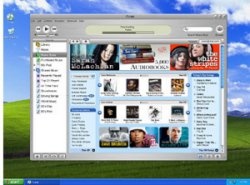 Apple has released rather rapidly a new version of its iTunes for Windows multimedia player, after being publicly criticized for releasing a version with couple of major bugs in it.
The changelog includes fixes for problems that appeared using Windows 2000 Pro, where installing iTunes, in some occassions, caused computer to fail on restart. Also, problems with older third-party CD/DVD burning tools have been addressed.
Company already ships the improved version, iTunes for Windows v4.1.1, from its website and plans to notify users of the older version during the next week about the update.
Source: News.com
Written by Petteri Pyyny @ 22 Oct 2003 2:06
 RealNetworks announced that it is planning to launch its digital music store, Rhapsody, in Europe during the second quarter of year 2004.
Currently, legal European digital music scene is rather empty, only major player in the arena is Peter Gabriel's OD2, but according to industry rumours, most of the major players, including Apple and Roxio, are in talks with record labels in order to launch their services in Europe next year.
According to Real's spokeswoman, company plans to follow its subscription-plus-fee-per-song pricing method that it uses in States, in Europe as well.
Source: Reuters via Yahoo!
Written by Petteri Pyyny @ 21 Oct 2003 3:45
According to Digital Entertainment Group, American and Canadian have bought over 2 billion DVD-Video discs since format's launch back in 1997. This year alone, studios have sold over 640 million DVDs (three first quarters of the year 2003) and anticipate to reach nearly billion shipped movies this year alone. Last year, DVD sales exceeded 685 million units in North America.
DVD as a format has managed to break virtually all the records in the consumer electronics ever made. Currently it seems that over half of the U.S. households will have a DVD player by the end of this year, as currently there are over 73 million DVD players in the U.S.
Source: BusinessWire
Written by Petteri Pyyny @ 21 Oct 2003 3:24
Four Japanese major consumer electronics, Sony, Sharp, Pioneer and Kenwood, have developed a prototype of an A/V equipment that's directly connected to a online music store, with no need for PCs in between. Companies have set up a joint venture, called Any Music, to develop the concept.
Devices are supposed to become available in Japan by the early next year and they include a small LCD screen for navigation and an Ethernet port for Net connections. Music purchased from a Japanese online store LabelGate, can be copied from the stereo equipment to portable devices, minidiscs and other storage media,
Companies have no plans to launch the devices overseas, but according to Any Music CEO, their target is to create the system as a worldwide standard for seamless Net integration for home entertainment equipment.
Source: Yahoo!
Written by Petteri Pyyny @ 20 Oct 2003 2:59
Influential Los Angeles Film Critics Association has announced that they wont hold their annual awards this year at all, unless MPAA repeals its decision to ban movie screeners for critics and voters of Academy Awards.
"The ban on screeners seriously inhibits our ability to work as professionals and compromises the integrity and fairness of the evaluative process," the group said in a statement.
Group says that MPAA's decision to ban screeners (DVD or VHS releases of recently-released movies distributed to critics and Oscar voters) in fear of piracy, makes critics' work "almost physically impossible" due sheer amount of movie releases between mid-November and Christmas.
MPAA's decision has sparked tons of protests from influential Hollywood directors, actors, lobby groups and union reps. It is rumored that MPAA is holding private negotiations with major movie studios in order to solve the conflict.
Source: E!
Written by Petteri Pyyny @ 17 Oct 2003 5:02
 RIAA is preparing to launch its second wave of lawsuits very soon and has now sent out official warnings to 204 alleged P2P users, stating that they should either agree to settle their cases or get sued in near future.
RIAA launched its first wave of lawsuits in September, sueing 261 P2P users at that time. Now, RIAA has had some time to learn from its previous mistakes (that include sueing 12-year-olds, etc) and has propably raised the threshold a bit as well, focusing more on large-scale file sharers.
"In light of the comments we have heard, we want to go the extra mile and offer illegal file sharers an additional chance to work this out short of legal action," RIAA's president Cary Sharman said.
Letter that RIAA has sent to alleged P2P, simply reminds the recipients that "ignorance of the law is not a defense" and that destroying the MP3s from their HDDs would be considered as destroying the evidence, which is illegal as well. They also state that recipients should reply within 10 days or RIAA will proceed with legal actions.
Read more...
Written by Petteri Pyyny @ 17 Oct 2003 3:26
 Heavy machinery company Caterpillar has sued Disney to block its upcoming DVD cartoon sequel, George of the Jungle 2. Sounds weird? It gets better..
Apparently, according to Caterpillar, Disney uses Caterpillar's trademark without Caterpillar's permission in the movie and the whole movie portrays Caterpillar as an "evil attacking army" that tries to destroy the jungle.
Caterpillar wants to block the U.S. release of the movie, wants Disney to modify the movie in order to remove any links between the movie and Caterpillars and re-release the movie after those modifications have been done. Disney claims that movie has been released already in 12 countries outside U.S. and they haven't heard any single complain about the Caterpillar issue.
According to Disney, company has already sent out 2.2 million copies to over 35,000 retailers in the U.S. and recalling those copies would cost over a million dollars, plus an additional 9 million dollars for already-spent marketing dollars.
Chief U.S. District Judge Joe B. McDade is going to make his decision before movie's U.S. premiere on next week.
More information:
AP/Miami Herald
SFGate.com
Written by Petteri Pyyny @ 16 Oct 2003 4:21
 Federal Communications Commission, an American government organization that controls much of the broadcasting and telephone rules in the United States, is condidering so-called "broadcast flag" to digital TV broadcasts and requirements for computers and consumer electronics to obey such flag.
Basically, entertainment industry wants to make it impossible to simply copy digital TV broadcasting material -- that is normally being sent in MPEG-2 format that can be transferred pretty much directly to DVDRs -- in high quality capture to PC and then distributed over the Net. Therefor, industry wants FCC to rule that broadcasters could set a "flag" to those shows that they don't allow being copied and that all electronics manufacturers would have to implement features to their products that would make them to obey this flag.
In real life, this would mean that next generation "Tivos" wouldn't be able to record shows or movies that broadcasters think is too valuable for them to allow users to time-shift or record -- even for personal purposes. Obviously, technology companies oppose this ruling and claim -- very reasonably, actually -- that if, or when, someone hacks the copy protection, FCC would then require them to change their products again to implement further copy protection methods, until those get cracked as well. Consumer groups oppose the idea as well, since it kinda kills the idea of digital VCR totally -- system can't determine whether user is going to store the movie/show only for watching it after his/her holiday or does the user have plans to distribute the recording over the P2P networks.
Read more...
Written by Petteri Pyyny @ 14 Oct 2003 4:17
The west coast branch of Writers Guild of America has officially announced that it opposes the MPAA's decision to ban all Oscar screeners.
According to the president of WGA West, screeners have become an important method for small films to gain audience. And now MPAA's plan to ban screeners -- that are preview DVD or VHS versions of movies that haven't been officially released on DVD/VHS for retail channels yet -- in Academy Awards' promotions "tilts the playing field from small films to large".
Last week, several high-profile Hollywood authors signed a petition in opposition to the ban of screeners. MPAA's official opinion is that by banning screeners, they could be able to cut down the piracy, but many industry players think that only reason for such ban is to shift the power in Oscar votes from small, "semi-indie" films produced by major studios' subsdiaries, to large movie productions that typically gain financially more (not relatively, but in hard cash) from Oscar wins.
Source: WashingtonPost.com
Written by Petteri Pyyny @ 13 Oct 2003 4:21
Apple has announced that its new version of Mac OS X operating system, dubbed as Panther, will support also DVD+R format for data backup purposes.
Apple has previously shipped some of its computers equipped with Sony's dual-format recorder, but modified in such way that only DVD-R discs could be used with the drive. The recent change is, according to Apple, made because of consumer demand -- many users have non-Apple DVD burners and they wish to use those drives with OS X as well.
However, Panther will only support +R/+RW discs for data backup purposes, but it is not known yet whether Apple will add support for "plus" formats into its movie editing tools, such as iDVD.
Now virtually all the major consumer brands have accepted that neither, DVD-R or DVD+R, will win this "format war", but rather live side-by-side. Sony was originally the first major player to develop a drive that would allow burning both formats and after that, most of the manufacturers have followed.
Most likely outcome is that both formats will remain until the next generation of optical discs make both formats obsolete (and this time it wont take 15-20 years to replace the format like it did for CD) relatively soon.
Read more...
Written by Petteri Pyyny @ 10 Oct 2003 5:02
AOL and RealNetworks announced yesterday that they will extend their existing partnership further with upcoming AOL 9.0 package.
New version of AOL's online software bundle will a media player capable of playing latest RealVideo 9 video tracks that use high-quality MPEG-4 video compression.
Despite companies' long and well-established partnership, AOL has taken small steps away from Real's technology. AOL's multimedia unit Nullsoft has slowly implemented various features to its WinAMP media player and in March, AOL announced that it will switch to use Dolby's AAC audio format instead of Real's RealAudio.
Source: ZDNet
Written by Petteri Pyyny @ 10 Oct 2003 4:39
Despite various rumors in public during this week that MPAA's chief executive Jack Valenti had met various indie movie authors in order to negotiate about the screener ban for Oscars, it seems that the ban stands.
Indie movie producers, directors, etc that operate in major movie studios' "indie divisions" have expressed their concerns over the decision. MPAA and major movie studios decided on last week to ban so-called Oscar screeners. Screeners are DVDs and videotapes of movies that haven't been released officially on that medium yet, but are being sent in advance to specific viewer groups, such as critics -- and in this particular case, those who are eligible to vote for Academy Awards.
Studios fear that perfect-quality DVD copies of their recently released movies get leaked to Net from people who receive screener copies during the "Oscar season" and therefor decided that they wont be sending any screener copies this year. This obviously doesn't have any meaning whatsoever to studios that aren't affiliated with major movie studios, but causes problems for indie divisions of major movie studios -- chances of voters even seeing niche movies before they need to cast their votes, are rather slim if indie movie producers can't send those movies directly to voters.
Read more...
Written by Petteri Pyyny @ 09 Oct 2003 3:42
Yet another prime example of this lovely New World Order: an American PhD student called Alex Halderman is being sued by copy-protection company SunnComm.
SunnComm and BMG released the first major copy-protected audio CD in the U.S. recently and Mr Halderman was studying the CD to find out how the copy-protection actually works. The disc can't be copied in Windows by normal means, SunnComm's press releases stated before the launch, and before Halderman's findings.
SunnComm's "advanced copy protection mechanism", called MediaMax CD3, actually simply had the autorun.ini added to the audio CD. This auto-ran then a small installer that installed a driver which claimed in its EULA text to be necessary in order to use the CD under Windows operating system. In reality, the driver itself was the entire copy protection.
So, Halderman's big finding was that the copy protection can be "bypassed" by holding down the shift-key when inserting the CD in a CD-ROM -drive. As most Windows-users already know, the shift-key instructs Windows to ignore the AutoRun feature found on the disc. When the autorun-feature is skipped, the driver installer never runs.
Read more...
Written by Petteri Pyyny @ 08 Oct 2003 3:00
 Owner of P2P network Kazaa, Sharman Networks, and its affiliate company, Altnet, have founded an open, cross-industry "alliance" -- or "open discussion group" as they also describe it -- that has a rather interesting agenda: creating a legit P2P business together with record labels and other content owners.
Their plan is nothing new in the industry, P2P legend Napster offered back in 2001 to pay $1 billion to record labels if they would allow it to create a legit business by licensing content to its P2P network.
The group, Distributed Computing Industry Alliance, is currently in its early stages and really functions only as Sharman's spokesgroup as it doesn't have any content provider members or any other big P2P players as members -- most of the big P2P networks are part of group called P2P United that has started lobbying for forced content licensing in the U.S.
DCIA estimates that if content owners would license their material to P2P networks, P2P networks could generate revenue of $900 million per month for record labels alone.
Read more...
Written by Petteri Pyyny @ 08 Oct 2003 11:45
 Sony has launched its first consumer electronics device in Japan that seriously tries to squeeze everything out from the fact that Sony's PS2 console is the world's most popular gaming device at the moment.
New device, dubbed as PSX, comes with a price tag of appx. $700 and will bundle within one device a PS2 unit, DVD recorder, satellite TV tuner and a HDD-based TV recorder (genre of HDD-based "VCR" devices is normally known as PVR). PSX comes in two varieties, only difference between two models is the size of the harddrive and obviously the price; cheaper option at appx. $720 has 160GB of HDD and the $880 unit has 250GB.
PSX has broadband connectivity, games (as well as the PVR options) can use the included harddrive, device has USB1.1 port, remote control and virtually all the goodies that regular PS2 users need to purchase separately to their units if they want to.
Recording to a DVD-R or DVD-RW is possible from unit's HDD and PSX also supports analog audio and video inputs, including s-video, which allows easy transfers from analog sources to DVD-R. Unfortunately device is only available in Japan and at least so far doesn't support digital TV or digital a/v sources.
Read more...
Written by Petteri Pyyny @ 03 Oct 2003 1:32
 Philips and Mitsubishi Kagaku Media have managed to achieve something that most people who knew something about technical specifications of DVD discs had considered to be, not impossible, but too expensive and too complicated to develop.
Companies jointly announced today that they've managed to create a dual layer DVD+R disc and that its specifications should be ready by the end of the year. Companies said that the driving force behind the development was to create a dual layer disc that would be as much compatible as possible with existing stand-alone DVD players and DVD-ROM drives.
What does this mean then? It means basically that once these discs and burners supporting these discs hit the market -- with acceptable price tag, software tools meant for shrinking DVD-Video discs to fit on one single-layer DVDR disc become virtually useless. It means that any commercial DVD-Video disc, including DVD-9 discs, will fit to one blank disc without re-encoding the video or stripping out unwanted material from the disc. Couple of things have to be noted: current DVD+R recorders wont be able to burn dual layer discs and all existing DVD-ROM, DVD-R and DVD+R drives should be able to read these dual layer discs with no problems at all.
Read more...
Written by Petteri Pyyny @ 02 Oct 2003 3:07
 Movielink, a joint online video rental venture owned by the major movie studios, and Road Runner, American broadband provider owned by AOL TimeWarner, announced today that they've signed a multiyear contract to promote Movielink to RR's customers.
Companies will create a co-branded version of Movielink that will be marketed to Road Runner's three million broadband subscribers. Companies didn't disclose financial terms of the deal.
Movielink is the first major online movie rental service backed by virtually all the major movie studios. Company offers a service where American brodband users can "rent" movies, download them to their PCs and watch them during a pre-defined time period (normally 24hrs) as many times as they want to.
Movielink has worked hard during the last couple of month, trying to create partnerships with various entertainment sites, broadband ISPs, etc. Its previous big achievement was unveiled just couple of days ago when Microsoft released its latest version of Windows XP Media Center that will include direct access to Movielink.
More information:
Movielink & Road Runner press release
Reuters
News.com
Written by Petteri Pyyny @ 01 Oct 2003 5:27
In fear of increasing movie piracy, MPAA (Motion Picture Association of America) has decided to ban Oscar screeners. Screeners are pre-release copies (but already full movies, not workprint copies) of movies that studios tend to send out to video rental chains, critics, etc before movie launches.
Screeners have been specially important in Academy Awards, also known as Oscars, as most of the people able to vote for the movies, actors, directors, etc don't actually go out to movie theatres to see every single movie that has been nominated (only foreign language movie category rules require that voters have seen all the nominated movies). So, to persuade voters to vote for their works, studios tend to send out DVD and video versions of movies to those eligible to vote (and number of people who are allowed to vote is rather whopping, so chances of having someone to "leak" the DVDR copy of the movie to Net are quite high).
Such decision taken by MPAA which is the main lobby group of all the major studios might affect the votings in future as smaller studios, who are not members of MPAA, can still send out screeners of their movies.
Obviously there are some sad things in such decision as well -- apart from pirates having harder time to find good-quality copies. Now small subsdiaries of major entertainment companies, who produce "indie films", but under a wing of megalomanic entertainment companies, can't send their movies to voters either, so chances of small-scale productions by such outlets to succeed in Academy Awards are rather slim.
Read more...
Written by Petteri Pyyny @ 01 Oct 2003 3:50
 According to a PDF file published by DVD-Recordable.org, Pioneer's upcoming DVR-A07 DVD recorder will be most likely the first recorder in the world to support 8x burning on both, DVD-R and DVD+R, main DVDR formats.
The leaked document doesn't disclose the estimated shipping date, but includes various technical details of the drive. Both 8x speed burning modes (+ and -) will use 6-8x Zone CLV speed, which means that inner circle of the disc will be burned at 6x, but as the laser reaches the outer circle of the disc, the spinning speed of the disc will remain the same, thus producing faster data burning to the outer area.
A07 drive seems to be very much identical to the existing A06 drive, but just faster writing speeds. 8x -R burning is a rather big surprise, specially if the drive starts shipping during the winter as most of the news publications have speculated that +R has now the edge over the writing speeds as there has been no announcements for 8x -R drives yet.
Source: DVD-Recordable.org