
AfterDawn: Tech news

News written by Petteri Pyyny (November, 2003)

AfterDawn: News

MPAA responds to screener lawsuit

Written by Petteri Pyyny @ 27 Nov 2003 1:37

MPAA responds to screener lawsuit Motion Picture Association of America delivered its response in a lawsuit brought against it by fourteen independent film companies over the MPAA's decision to ban so-called screener tapes and DVDs from other movie award organizations other than the Academy of Motion Picture Arts and Sciences (which hands out the Oscars).

Indie movie studios had to take the action against the MPAA since without the screeners, people who vote for various awards couldn't see all of the nominated movies as movie theatres normally focus on showing the big-money blockbusters rather than "art" movies. However, most of the indie studios are either subsdiaries of bigger movie studios or distribute movies using bigger studios' distribution networks.

MPAA's lawyers argued that the association "has no control over the studios". The claim was greeted with scepticism by the judge, who replied: "Well, if that's the case, your client has no objection to withdrawing this ban."

MPAA has time until next week to come up with a defense in the case and after that the judge will decide whether to force MPAA to drop the ban or not.

Read more...


AfterDawn: News

10M Americans paid for music downloads in Q2 of 2003

Written by Petteri Pyyny @ 26 Nov 2003 2:14

10M Americans paid for music downloads in Q2 of 2003 According to rather surprising study by Ipsos-Insight, 10 million Americans paid for at least some of the songs they downloaded from the Net during the second quarter of 2003.

This is a rather whopping figure, since it represents over 16 percent of all Americans who downloaded music during this period. The age breakdowns of the study are also rather interesting. Logically, the teenage group, 12-17 year-olds, favored the good olde P2P networks over legal music, as only 4 percent of this age group users purchased music during the second quarter of 2003.

But the group between 18 and 24 were the biggest fans of legal music services, as 22 percent of them had purchased legal music downloads during this period. Other age groups, even the pensioners, favored more the traditional P2P downloading than legal music stores, which strikes a huge contrast between the reality and the fictional picture RIAA & co are painting.

Source: The Register


AfterDawn: News

DVD Forum committee approved HD-DVD specs

Written by Petteri Pyyny @ 26 Nov 2003 1:54

In the format fight that hardly anyone understands anymore, DVD Forum's steering committee has decided to adopt a proposal from Toshiba and NEC as its draft for so-called HD-DVD format.

A month ago it seemed that DVD Forum had abandoned the idea of larger storage space on DVDs, but the latest decision (although as far as we know, not an ultimate decision yet) to adopt NEC-Toshiba disc, which is often also dubbed as AOD, as the HD-DVD base, overturns this decision again. HD-DVD would be able to store 15-20GB of data per disc side and according to various reports, should be backwards compatible with current DVD format. The backwards compatibility is something that AOD/HD-DVD's main competitor, Blu-Ray, lacks.

Specifications for the HD-DVD are very vague and the rival camp of Blu-Ray supporters is likely to go ahead with their own format -- which is already available in the Japanese markets -- and pressure from China isn't exactly helping things. Lets just hope that industry manages to figure out the direction before widespread adoption of new technologies, so that we can avoid a new "Beta vs VHS war".

Read more...


AfterDawn: News

China released its EVD specs

Written by Petteri Pyyny @ 18 Nov 2003 3:01

Today China released the final specs of its competitor to DVD-Video disc. China calculated the timing of this week's major technological announcement very well. Currently DVD Forum is trying to solve locked situation where it has to choose either HD-DVD which is based on AOD disc, developed by Toshiba and NEC, and BD-ROM, which is based on Blu-Ray disc, developed by various consumer electronics companies, including Sony, Pioneer and Philips.

China's own digital video disc format is called Enhanced Video Disc or EVD. Format uses blue-laser discs, just like AOD and Blu-Ray do, but the exact capacity is not known at the moment. The most interesting part of the disc's specifications is in its video compression method. EVD uses proprietary video codecs developed by American On2 Technologies, called VP5 and VP6 that deliver significantly better video quality with lower bitrate levels than the MPEG-2 used in DVD-Video discs (and in proposed BD-ROM format) does and competes well (and according to various tests, also beats it at least in some cases) against MPEG-4's latest video compression method, called H.264 that proposed HD-DVD plans to use. EVD will be able to use HDTV resolution natively, which should also boost the plans to launch a nationwide HDTV service in China in near future.

Read more...


AfterDawn: News

Microsoft plans to launch music downloads service in 2004

Written by Petteri Pyyny @ 17 Nov 2003 2:44

Microsoft's spokeswoman told yesterday at Comdex to reporters that Microsoft plans to launch an online digital music store in 2004 to compete with existing services, such as Apple's iTunes and Roxio's recently-opened Napster.

Company is also looking for a "senior level marketing candidate" for the new Microsoft Music Download Service, according to their website. Site states that "the first duty of this candidate will be to finalize the business plan for the Microsoft Music Download Service".

It is interesting to see whether Microsoft will attract yet another antitrust lawsuit and integrate the music store within its Windows Media Player..

Source: detnews.com


AfterDawn: News

MPAA: No screeners for other than Academy members

Written by Petteri Pyyny @ 17 Nov 2003 2:31

MPAA: No screeners for other than Academy members MPAA announced today that its plan to ban screener (meaning DVD or VHS copies of movies that haven't been released on DVD/VHS yet and are sent out to movie industry people, critics, etc) tapes and DVDs stands. Only exception will be the Academy of Motion Picture Arts and Sciences, i.e. the institution that hands out annual Academy Awards a.k.a. Oscars.

MPAA came under pressure to relax its screener ban decision it made in September after it negotiated a separate deal with Academy in October that granted Academy members an access to screeners. Many independent production houses wanted to include Hollywood Foreign Press Association (which hands out Golden Globe awards) and other institutions that have movie industry awards to the same deal MPAA made with the Academy. But now MPAA announced that it has made up its mind -- the only people who can get their hands on movie screeners are the Academy members.

"The HFPA is extremely disappointed that the MPAA has unfairly decided to continue the screener ban on organizations outside of the Academy of Motion Picture Arts and Sciences," HFPA president Lorenzo Soria said.

Read more...


AfterDawn: News

MPAA's CEO plans to resign in January?

Written by Petteri Pyyny @ 14 Nov 2003 3:14

MPAA's CEO plans to resign in January? According to industry sources, MPAA's president of 38 years, 82-year-old Jack Valenti plans to leave his $1M-a-year job in January.

He has already hinted that he wants to find a successor for his post and according to people familiar with the issue, best candidate at the moment would be a Republican congressman, 60-year-old W.J. "Billy" Tauzin (R-La.).

Valenti would most likely continue as a chairman of the movie industry's most powerful lobbying organization and would also continue to oversee the movie ratings system.

Source: sunspot.net


AfterDawn: News

Buy Bollywood movie from Kazaa?

Written by Petteri Pyyny @ 13 Nov 2003 2:37

Buy Bollywood movie from Kazaa? Sharman Networks has announced that a new "Bollywood" feature film will be available via its P2P software, Kazaa, legally for people who are interested of purchasing it.
For a long time now, Kazaa has pursued selling legal content in its massive P2P network in addition to day-to-day swapping of copyrighted material between users. It has done so via its partner, AltNet, which has managed to get this deal to Kazaa as well.

Hindi-language film, "Supari", will cost $2.99 and will also feature songs from the movie soundtrack for $0.90 and trailers and various promotional downloads for free.

Supari will be the first full-length movie ever offered through Kazaa/AltNet partnership.

Source: News.com


AfterDawn: News

MyTunes allows iTunes to download MP3s from other users

Written by Petteri Pyyny @ 13 Nov 2003 2:15

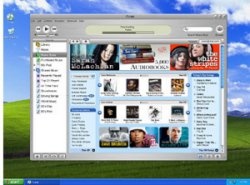
MyTunes allows iTunes to download MP3s from other users American college student, Bill Zeller, has developed an application called MyTunes that "enhances" the user experience of iTunes' Windows version. Software adds a possibility to download non-copy protected music (such as MP3s) from other iTunes users' playlists.

Software doesn't break the copy protection found on iTunes' AAC audio files, but simply allows downloading other types of music, such as P2P-downloaded MP3s, that other iTunes users have in their shared playlists.

"I would like to think they would go after those infringing copyrights and not those abiding by them," Zeller says. "However, although MyTunes can be used for legal ends, I understand how [Apple and/or the RIAA] might have a problem with the software. I would like to think the responsibility to act in accordance with the law is on the user. Authors of software should not have to babysit the user in order to ensure legal compliance."

Source: PC World


AfterDawn: News

Supreme Court denies stay in Madster's case

Written by Petteri Pyyny @ 13 Nov 2003 2:04

Supreme Court denies stay in Madster's case Now-defunct P2P company Madster last week appealed earlier court decision to U.S. Supreme Court and also asked for a stay in its case until the Supreme Court decides whether it will review Madster's appeal.

As Madster as a company has shrinked downed to its owner and founder, Johnny Deep, the case is really just Mr. Deep vs RIAA. Now the U.S. Supreme Court Justice John Paul Stevens has made a decision not to grant a stay for him. Stay would have meant that the injunction against him, granted by the lower court, would have been blocked until the Supreme Court makes up its mind whether to take his case for hearing or not. This would have meant that he could have opened Madster again while waiting for the decision and to collect some advertising revenue for his company.

Source: Newsday.com


AfterDawn: News

Kazaa ad campaign planned

Written by Petteri Pyyny @ 12 Nov 2003 3:08

Kazaa ad campaign planned Sharman Networks, the company which owns Kazaa p2p application, is planning to launch a big scale "offline" advertising campaign next week, running ads in traditional print media.

With the ads, Sharman tries to encourage P2P users and other netizens to defend their rights to use P2P networks (which itself are not illegal, but when a user distributes -- i.e. puts the file in his/her shared folder for people to download -- copyrighted material, that is considered to be illegal in most of the countries) and to also get the decision makers and record labels to understand the message Sharman has been trying to persuade: put it there with reasonable price and people will pay for it.

Sharman and other P2P networks have called lawmakers to change the current entertainment licensing laws in a way that it would force content owners to license their material with fixed price to anyone who's willing to distribute it. It seems that forcing media companies to do this is the only way P2P networks will ever get into legal music and movie distribution business with the major record labels and movie studios.

Sharman's print campaign is scheduled to begin on November 19th in United States.

Read more...


AfterDawn: News

IFPI announces a "global" webcasting license

Written by Petteri Pyyny @ 11 Nov 2003 3:39

International Federation of the Phonographic Industry, which represents most of the world's local music industry lobby groups and collection agencies, including RIAA, announced today that they have developed a so-called "global" webcasting license for Net radio stations.

Previously, at least in theory, if a Net radio station wanted to broadcast to multiple countries, it had to obtain licensing agreement from each individual country. Not that anyone actually did that -- you can listen American or European webcasts from anywhere and normally the webcasters simply ignore the licenses outside their own region. But the very few big players who have wanted to actually physically operate in all of those countries as well, had the legal situation somewhat painful as each country used to have (and still has) their own licensing requirements, etc.

The new initiative for global, one-stop licensing agreement through IFPI is expected to be approved by more than 30 countries' local collection and licensing agencies, including most of the European and American countries agencies.

But there's still a catch: the fee structure wont change and each webcaster would still have to pay licensing fees for the music to each individual country they wish to stream to (again, in theory -- in real life, to all countries where they have an actual physical presence), based on that country's licensing body's fee structure.

Read more...


AfterDawn: News

Comcast plans to distribute Rhapsody

Written by Petteri Pyyny @ 10 Nov 2003 2:08

Comcast plans to distribute Rhapsody Largest American broadband provider, Comcast, has signed a deal with RealNetworks to promote media company's online digital music store, Rhapsody through its services and directly to its customers.

Comcast also plans to launch a nationwide TV advertising campaign for Comcast's Rhapsody offering. This is considered to be very good news for the whole emerging digital music "industry" as it educates people about the fact that there really are legal online alternatives to tradtional CDs.

Source: News.com


AfterDawn: News

McDonald's: No deal with iTunes

Written by Petteri Pyyny @ 09 Nov 2003 2:11

McDonald's: No deal with iTunes After a New York Post article last week told that fast-food giant McDonald's was going to buy 1bn tracks from Apple's iTunes service to use them with its advertising promotions, McDonald's issued almost immediately a statement saying that these rumors weren't true.

According to McDonald's, such deal was "pure speculation" and that there's no deal with Apple. However, company also stated that it "continues to aggressively pursue bold new initiatives in the areas of music, sports, fashion and entertainment to connect with our customers in fresh and relevant ways...You can expect news from McDonald's on a variety of fronts in the coming weeks and months."

Source: Dow Jones via Yahoo!


AfterDawn: News

Madster case headed to Supreme Court

Written by Petteri Pyyny @ 09 Nov 2003 1:00

Madster case headed to Supreme Court The long-running legal case between RIAA and now de-funct P2P company Madster (which was formerly known as Aimster) seems to be headed to U.S. Supreme Court.

Case began in May, 2001 when RIAA sued Aimster over copyright infringements. In September, 2002 federal court granted a preliminary injunction against Aimster/Madster, forcing the company to either filter all illegal material from its network or to be shut down. Aimster/Madster didn't comply and judge ordered a temporary restraining order against the company, asking it to shut down its servers immediately in December, 2002.

Madster eventually complained to the Appeals Court, but Appeals Court upheld the lower court decision, even that the court made some very valid points about non-infringing uses of P2P networks in its decision.

Read more...


AfterDawn: News

McDonald's to give away billion iTunes songs

Written by Petteri Pyyny @ 07 Nov 2003 3:52

McDonald's to give away billion iTunes songs Apple announced a month ago a deal with Pepsi to hand out 100 million iTunes songs for Pepsi's promotional campaign. Now the fast-food giant McDonald's has made a similar deal, but bigger; according to New York Post, McDonald's will give away one billion iTunes songs in its recently-launched global "I'm loving it" advertising campaign.

According to sources, both Pepsi and McDonald's are paying full retail price of $0.99 to Apple for the songs, so theoretically Apple has managed to boost iTunes' revenues by $1.1bn with these two deals. Obviously the reality will be slightly lower as many of the promotion winners wont be using their coupons at all.

So far it is still unclear how McDonald's will spend the purchased free downloads and company refuses to comment the deal at all. Pepsi's campaign will include 300 million specially marked Pepsi, Diet Pepsi and Sierra Mist bottles -- every third of the bottles will include a single song coupon to iTunes.

Source: NY Post


AfterDawn: News

Sony released first specs and pics of PSP

Written by Petteri Pyyny @ 05 Nov 2003 3:40

Sony revealed some details about its upcoming handheld game machine, dubbed as PSP or Playstation Portable.

Current design version, which may or may not look like the final version due by the end of the year 2004, uses storage media dubbed as UMD (Universal Media Disc) which holds appx. 1.8GB of storage space. Each disc will carry a region coding, copy-protection mechanism and each disc will have its own individual identification number as well.

Sony PSP

Device will include two processors, both based on MIPS R4000 core. PSP will support Dolby 7.1 surround audio, AAC, MP3 and Sony's own ATRAC3 as audio formats and will also support MPEG-4 H.264 for video.

Source: TheRegister


AfterDawn: News

Yahoo's Launch has delivered over 1bn music videos this year

Written by Petteri Pyyny @ 05 Nov 2003 2:47

Launch, the music site of Yahoo!, announced last weekend that it has delivered now over one billion music videos over the Net since the beginning of 2003.

This means nearly a 300% increase since 2002 and, according to Yahoo, proves that Net as an on-demand streaming medium has been widely accepted by the music video enthusiasts.

Launch uses Microsoft's WMV format to deliver the music videos. All of its music videos are free to watch online.

Source: BusinessWire (press release)


AfterDawn: News

FCC approves the "broadcast flag"

Written by Petteri Pyyny @ 05 Nov 2003 2:28

Federal Communications Commission approved, as expected, the decision to introduce so-called "broadcast flag" to American digital TV broadcasts. The flag can be used to restrict recording and further distribution of recorded digital TV shows.

American TV companies and content owners have been reluctant to move to digital TV for various reasons -- one of the biggest reasons has been the fear of piracy that perfect-quality TV recordings would possibly spark. This is somewhat different route than that introduced in countries like Germany; city of Berlin switched off the analog TV signals totally in beginning of August this year and further German cities are expected to follow soon.

All American digital TV equipment have to comply with the broadcast flag rules by 1st of July, 2005. With the flag, content providers can decide what programs they wish to "protect" from recording and further distribution -- when the DTV equipment identifies a broadcast flag, it refuses to either play or record it, depending on the source and the flag type.

Source: EE Times


News archive