News written by Petteri Pyyny (January, 2004)
Written by Petteri Pyyny @ 30 Jan 2004 1:59
One of the grocery chains that has tested selling EZ-D discs, disposable DVDs that is, in a trial launched by Disney and EZ-D technology developer, FlexPlay, has decided to stop selling the discs.
According to the Texas grocery chain, H-E-B's representative, the reason for dropping the idea was simply the lack of interest from consumers. "It just wasn't a good fit for us," she said. "It didn't turn out to be an item that our customers were looking for."
This shouldn't surprise anyone -- priced between $6 and $7 per disc, it is far cheaper to rent a movie from Blockbusters and even pay the late fee, if feeling bit lazy.
Obviously environmentalists cheered the news and hailed H-E-B's decision to drop selling the discs that are, even as an idea, an environmental disaster. Disney hasn't decided yet whether it extends its current trials with EZ-D discs to nationwide distribution.
Source: Wired.com
Written by Petteri Pyyny @ 29 Jan 2004 2:04
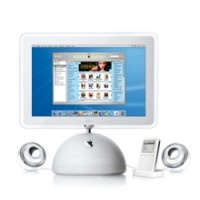 A rebel group that boycotts the major record labels has come up with a neat way of making something good out of the upcoming promotion campaign by Pepsi that will be launched on February 1st during the Super Bowl.
In the promotion, Pepsi will hand out 100 million promotional iTunes downloads -- each Pepsi cap sold in States after February 1st, will have a 1:3 chance of winning a free iTunes download. Unfortunately, says the team behind the idea of TuneRecycler.com, this means ultimately a $65 million to major record labels unless something is done about it.
The Tune Recycler campaign is aimed at people who don't have any intention whatsoever to install iTunes even should they win a free download (or a hundred free songs, if you need bit more caffeine :-) by purchasing a bottle of Pepsi. Tune Recycler urges these people to send their winning code to Tune Recycler, which will then use the code to purchase music from independent record labels that are well-known for treating their artists and fans well (unlike most of the major record labels do).
A short quote from their site: "Every week or so, we'll be choosing independent artists and an album of theirs which we will repeatedly purchase using the donated codes (if we buy enough copies of a single album, we might be able to move it up the charts-- it's not too hard these days). All the artists will be from independent labels with reputations for treating artists fairly. Once we get started on February 1st, we'll list the artists [on our site]."
Read more...
Written by Petteri Pyyny @ 29 Jan 2004 1:41
 Two major Hollywood studios have filed separate lawsuits against the Hollywood actor, who they claim has leaked so-called screener copies of their movies to Internet. Warner Bros., a subsdiary of TimeWarner, sued several people, including the accused source of screener leaks, Hollywood actor Carmine Caridi, for leaking its recent movies "The Last Samurai" and "Mystic River".
According to Warner's lawsuit, Caridi received the screener copies of the movies from Academy of Motion Picture Arts and Sciences, as he is a long-time member of the organization, and then handed them to electrician from Illinois, Russell Sprague, who then made digital copies of the movies and placed them available on the Net.
In its separate lawsuit, Columbia, a subsdiary of Sony, has also sued Caridi for leaking its movies "Something's Gotta Give" and "Big Fish" to Net.
More information:
Fox21.com
Forbes.com
Written by Petteri Pyyny @ 28 Jan 2004 1:58
Consumer electronics organization, The Multiband OFDM Alliance, has announced that they expect to finish standards of Ultra Wideband technology by end of May and expect to deliver first products by early 2005.
The technology allows transmitting much, much larger amounts of data than technologies such as Wireless LAN (even more than WLAN's -- or WiFi's -- upcoming versions that push the bandwidth to over 100Mbps), but within smaller range. Technology is aimed to deliver full TV-quality video and other data wirelessly from consumer electronic products to other consumer electronic products. Typical example being a DVD player that can send video directly to TV without any cables connecting two devices. Such applications for PCs to connect to VGA monitors do exist already and they typically use heavy video compression and 802.11b or 802.11g WiFi technologies, but can't handle in all the circumstances the amount of data that DVD playback requires. And the requirements are much higher for transmitting HDTV quality video that Japan and United States are rapidly shifting to use.
The Multiband OFDM Alliance members include world's largest cell phone manufacturer, Finnish Nokia, Japanese electronics giant Matsushita and American chip maker Texas Instruments.
Read more...
Written by Petteri Pyyny @ 26 Jan 2004 3:24
 Justin Frankel, the founder of Nullsoft, company who developed the de facto MP3 player, WinAMP, has resigned from AOL, the parent company of the Nullsoft. Frankel, announced his resignation last Thursday via his online journal.
Frankel sold Nullsoft, the company he found, to AOL back in 1999 when the MP3 craze peaked and he was just 20 years old. He reportedly got over $100 million from the deal. One of the deal's requirements was that Frankel had to continue working for Nullsoft. Apparently the agreed time limit that he must work for AOL expired a while ago, but he agreed to continue working for AOL until the Nullsoft's latest media player, WinAMP 5, was finished. The product was launched in late December, 2003.
Despite selling his company to AOL and continuing to work for the media giant, Frankel didn't really get adjusted to the "corporate culture" and ran into problems with his bosses over the years. Most controversial clash happened in March, 2000 when Frankel released a P2P application called Gnutella without blessing from AOL. This was obviously a Bad Thing(tm) as AOL was just closing a deal to purchase TimeWarner, which also owned one of the world's largest record labels, Warner Music. The project was immediately shut down, but cat was already out of bag -- thousands and thousands of copies of the original client found their ways to other developers, who reverse-engineered the Gnutella protocol and developed the application further. Nowadays most of the smaller P2P vendors base their applications on variations of original Gnutella network.
Read more...
Written by Petteri Pyyny @ 23 Jan 2004 2:27
 Italian court delivered the first major legal defeat to Sony by ruling that PS2 (Playstation 2) modchips are legal in Italy. Modchips are hardware modifications made to the original console that allow it to play games from other regions (Sony's games are region coded, a bit like DVD movies, meaning that normally you cannot play Japanese import games on a European console, etc), allow it to play game backups, self-made programs -- and also pirated copies of PS2 games.
The court went further than just declaring modchips legal, it also said that Sony's restrictions are "absurd" and said "It's a little like Fiat marketing its cars while banning them from being driven by non-European citizens or outside towns".
The court also stated that as the product, Playstation game console, has been purchased by a consumer, Sony doesn't have any legal ways to state what consumers can or can not do with the device as the consumer owns the device, not Sony.
The decision might prove to be difficult for other console manufacturers as well -- the prime example is Microsoft who doesn't allow users with "modded" Xbox consoles to access its Xbox Live online gaming platform.
Read more...
Written by Petteri Pyyny @ 20 Jan 2004 3:50
Microsoft's European division has settled a lawsuit filed against it by a small company called E-Data. E-Data filed its lawsuit against Microsoft's European division, alongside with British online music service OD2, ISP Tiscali and HMV, claiming that they violate its patent that covers downloading information to a "tangible object", such as CDR.
Music services operated by four sued companies all allow consumers to download music and burn it to CDR discs. Now Microsoft's decision to settle the case has given more validity to E-Data's patent claims. Microsoft has licensed E-Data's patent to be used worldwide, but companies didn't disclose financial terms of their agreement.
E-Data was granted the patent way back in 1985 and its been tested in U.S. courts successfully, when there can be proven a situation where a retailer specifically sells information to be transferred onto a physical media, most notably removable media (which is the case with various music download stores where users pay premium for the right to also burn the purchased track to a CDR). E-Data holds patents in United States and also in Germany, UK, France, Austria, Switzerland, the Netherlands, Italy, Luxembourg, Belgium and Sweden. However, company's patent expired in January, 2003 in States, but is still valid in various European countries.
Read more...
Written by Petteri Pyyny @ 18 Jan 2004 9:19
 We've had it bad today. During the morning hours (GMT), our forum server had crashed and was down just under 2 hours before we managed to pull it back.
And this afternoon at 3pm (GMT), our ad server crashed, making pages to crawl as they tried to load ads from a server that was down. We're still having some problems with the ad serving and have therefor pulled all the ads from the site temporarily to allow the site to run normally.
We apologize for the inconvenience, but also realize that these types of problems are inevitable during the phase where our server farm has just been transferred to a new ISP. We are working overtime to get the system totally robust and to build a failover system that would allow the site to operate even when some of the servers would experience problems.
-Petteri Pyyny
AfterDawn.com
Written by Petteri Pyyny @ 16 Jan 2004 2:17
After a six-month dip, caused by the massive legal action campaign by the RIAA, the number of P2P users in the US has risen again.
According to the study, number of US households using P2P networks rose 6% in October and another 7% in November, pushing the November's figures to 11M households, compared to 10M in September.
According to NPD who made the research, there are various things that might have caused the raising figures. For one, there is the usual boost in new album releases in run-up for Christmas. And also media is getting tired of RIAA's lawsuits and the media coverage of the manhunt has died down dramatically since the summer.
Figures are still way down from spring 2003, when the same survey found that 20 million users downloaded from P2P networks.
But of course this type of studies also attribute to the people's fears -- even if you're downloading your HDD full of music every single night, you aren't very likely to tell that to a person conducting such survey when you've just read from your local newspaper that "RIAA sued yet another gazillion teenagers, promises life in prison" type of stories. But once those headlines aren't as common as they were when the RIAA's legal team got its pay rise in beginning of summer, the "fear factor" is much smaller.
Read more...
Written by Petteri Pyyny @ 15 Jan 2004 3:41
British indie record label, Warp Records, has broken the ranks of music industry by dropping the idea of DRM restrictions on digitally sold music. Typically online music stores like iTunes have DRM restrictions on music which means that you can't transfer the tracks freely to anywhere you want and with majority of stores, you can't burn the tracks without paying a separate fee for that right.
Warp Records is the home for various well-known indie artists, including Aphex Twin. Company sells the MP3 tracks via its own web store for $1.39 per track, which is $0.40 higher than the "industry average" set by iTunes for DRM-restricted tracks.
War Records' FAQ states "At the moment labels have skirted around the whole issue of making their catalogue available, often introducing various poorly-supported formats and DRM (digital rights management) complications in the process. We wanted to be the first to take a big step in what we believe is a positive direction, and see what happens".
More information:
The Register
Warp Records
Written by Petteri Pyyny @ 14 Jan 2004 3:16
 Director of "British RIAA", the BPI (The British Phonographic Industry), warned British P2P users that it will start suing them if they keep on sharing their music via P2P networks.
"We want to increase consumer awareness of the legal implications of file-sharing. We want to introduce new legitimate (online download) services. If these are not working, then there has to be a degree of enforcement," said Andrew Yeates, director general of BPI.
He also said that BPI would follow the RIAA's lead and go after the users who share larger amounts of music online. Yeates also hinted that BPI -- and other European copyright organizations -- might wait until the legal music services, such as Apple's iTunes are available in Europe, before launching any larger scale legal attack against individual P2P users.
In most of the European countries, it is legal to download music from P2P networks, but not to distribute it (or as it states in various countries "to allow public to access the copyrighted works without permission from copyright owners") or share it via P2P networks.
Source: Reuters via Yahoo!
Written by Petteri Pyyny @ 14 Jan 2004 3:05
 The former P2P network, now a legal music service owned by Roxio, the Napster service is now available for Penn State university students for free.
The aim is to curb ever-growing illegal music sharing within university's network and also to curb the increasing external bandwidth requirements the school has to cope with as its students use broadband connections from their dorms to download music from P2P networks such Kazaa.
And apparently, the service has been quite a success. School reported that three days after its launch, service had generated over 100,000 downloads or streaming requests from the students and already 2,600 of school's 17,000 eligible students had registered with the service. School plans to make all of its 83,000 students eligible to the service by this fall.
Of course there's a catch in form of DRM. The deal between Penn State and Napster doesn't allow students to burn the music on CDRs, but need to pay a fee to do so.
Source: CNN
Written by Petteri Pyyny @ 13 Jan 2004 2:42
 Consumer electronic manufacturers are challenging the recent legislation introduced in Canada that would add as much as US $25 per player on top of the MP3 player price.
Canada, much like many European countries, has a "levy" system in use that makes it perfectly legal to download music and movies from Net, copy music from friends, libraries, etc, but on the other hand, copyright owners are being compensated by charging extra for blank recordable media (such as blank CDRs and DVDRs) and now for MP3 players. However, in Canada -- again, just like in many European countries as well -- uploading and sharing music via P2P networks is illegal.
Now the legislation is threatened from both sides. MP3 player and consumer electronic manufacturers, including Apple, HP and Dell argue that introducing a levy charge to MP3 players is illegal and plan to appeal the decision.
But also, the Canadian Recording Industry Association is planning to challenge the legislation -- of course not the levy part, but the downloads-are-legal part (one would assume that they would be more than happy to charge consumers the levy, but not to allow fair use rights to the music). CRIA's opinion is that downloading music is and should always be illegal. They also have hinted their plans to launch similar manhunt that CRIA's American counterpart, RIAA, has had going on during the last year or so.
Read more...
Written by Petteri Pyyny @ 13 Jan 2004 1:19
 U.S. Supreme Court decided yesterday without explanation that it wont take the Madster's case to its reconsideration. This decision closes the first P2P case that had reached the gates of U.S. Supreme Court.
The lawsuit by RIAA against Aimster, that later changed its name, was brought against the P2P service in May, 2001 claiming that the company intentionally violated RIAA's members' copyrights by allowing its users to share illegal music via its network. Later on, in separate lawsuit, AOL sued the company over trademark violations that eventually forced Aimster to change its name in January, 2002.
Eventually, in September, 2002, lower court decided to grant an injunction against Madster, pretty much closing the company with that decision. Madster's owner, Johnny Deep, appealed the case and in July, 2003, appeals court decided to keep the federal court's decision as it is -- Madster had to kept closed. Mr. Deep appealed the case to Supreme Court and now Supreme Court has made its decision. One of the P2P pioneers has vanished.
Read more...
Written by Petteri Pyyny @ 12 Jan 2004 3:42
 According to a Japanese A/V news site, Pioneer has demonstrated dual-layer DVD-R burning at the CES expo in Las Vegas, using the existing single-layer DVDR drive, Pioneer A06.
According to the article, Pioneer used only a modified firmware to achieve the dual-layer burning with no needs to modify the hardware itself at all. But only time will tell whether the company actually decides that it is such a great idea to allow consumers to upgrade their drives to dual-layer by simply switching the firmware and not buying a new drive..
Source: AV Watch (through the Fish)
Written by Petteri Pyyny @ 12 Jan 2004 3:05
There's a war between the Linux open-source multimedia player project, MPlayer, and the Danish DVD player manufacturer, KISS Technology.
MPlayer team claims that KISS's DVD players firmware code includes parts of MPlayer's GPL-licensed code. This means that KISS is violating the GPL license, which states that any product that includes parts from a GPL program, must be GPL as well. And KISS hasn't released its firmware as a GPL or shown its source code to public anyway.
Now, the managing director of KISS claims that MPlayer team is lying and suggests that MPlayer team might have actually stolen code from KISS's firmware, not the vice versa.
More information:
MPlayerHQ
Slashdot
Written by Petteri Pyyny @ 11 Jan 2004 7:45
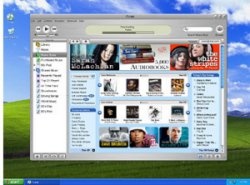 Apple and world's second largest computer manufacturer HP announced this week a rather surprising alliance. According to companies, HP will start selling Apple's hugely successful iPod digital music player as HP-branded version.
HP will also bundle Apple's iTunes music-player-turned-music-store to all of its consumer PCs, taking Apple's online music store potentially to millions of new users. Since its introduction in spring 2003, Apple has sold well over 30 million songs through its online music store and currently sells almost 2M songs per week. In addition to those figures, Pepsi will launch a promotion that will give away 100M iTunes songs in States in February.
HP's upcoming re-branded iPod will also look different from the original sleek white Apple-branded culture icon and the device is expected to be available for consumers in summer 2004.
Source: FT.com
Written by Petteri Pyyny @ 09 Jan 2004 3:34
 RealNetworks and IBM have decided to start offering a complete multimedia management software (and most likely hawrdware as well) solution by joining their multimedia streaming and management products into one huge commercial bundle.
According to the deal, Real's server products, such as Helix Universal Server, will ship with IBM's middleware stack. By joining their product selection into one larger offering provides a complete media management, streaming and digital rights management platform that should be able to compete better with rivals, such as products from Microsoft.
"Together we will enable our global customers to quickly offer secure and high-quality media services to their consumers whenever they want it and wherever they want it -- at their TV, their PC, in their car, or with their phone," said Real's CEO, Rob Glaser.
Source: The Register
Written by Petteri Pyyny @ 09 Jan 2004 3:18
 The Blu-Ray Disc Founders (BDF) consortium vowed to support the blue-laser optical storage format against the competing formats, such as AOD and EVD and also set various milestones for rolling out finalized standards for Blu-Ray's development.
First out of the pipeline will be BD-ROM format which has been jointly developed between BDF consortium and Hollywood studios and is expected to get finalized "early 2004", allowing mainstream commercial products to enter the market by end of 2005. Once-writable BD-R will be finalized mid-2004 and the push for already-existing BD-RE (rewritable Blu-Ray format) will get harder during the 2004.
The consortium also cheered a decision from two PC mega corporations, Dell and HP. Both companies announced officially that they will support Blu-Ray as the format of choice in their products in future over the competing blue-laser products. "HP believes Blu-ray Disc is the most consumer-friendly technology choice for the next generation of removable storage," said John Romano, Senior Vice President, Consumer PC Organization, from HP.
Source: Digital Post Production
Written by Petteri Pyyny @ 07 Jan 2004 2:50
 Macrovision, the company who develops copy protection mechanisms found on most of the DVD-Video discs and commercial VHS tapes, has sued 321 Studios, software company who has developed various DVD backup tools, most notably DVD X Copy series.
Macrovision charges that 321 Studios' DVD X Copy tools infringe with Macrovision's patented copy-protection technology and also violates the DMCA law. The charge under DMCA legislation is interesting as DMCA states that circumventing "effective" copy protection measures is illegal. But when most of the world is buying perfectly legally (not U.S. though) "modded" DVD players that circumvent Macrovision's bit code copy protection (and of course region codes as well, but they don't relate to this lawsuit) and virtually every school kid knows how to use any freely-distributed DVD ripper to get rid of the Macrovision, the claim that their weak bit setting copy protection mechanism could be considered "effective" is bit misleading.
"321 Studios infringes Macrovision's intellectual property by offering products that enable users to make unauthorized copies that contain our patented process and sometimes illegally bypass our copy protection system," says Macrovision CEO Bill Krepick.
Read more...
Written by Petteri Pyyny @ 07 Jan 2004 1:27
RealNetworks has launched a new version of its widely-spread multimedia player, RealPlayer. The new version, RealPlayer 10 includes support for AAC audio and for Real's latest video codec, RealVideo 10.
But the biggest news is definitely the fact that now Real is competing directly against Apple; RealPlayer 10 has integrated music store built into it, exactly like Apple's iTunes has. RealPlayer Music Store (very original, as Apple's music store is called iTunes Music Store) offers a selection of 300,000 songs for $0.99 each. RealPlayer also supports variety of formats and is capable of playing iTunes' tracks as well (after all, they're DRM-equipped AAC tracks as well).
So, nothing dramatic really, but all the signs are telling us that by the end of the year 2004, we'll see some winners and tons of losers in this legal music download hoobla that has quite clear resemblance to the dotcom bubble years in late 1990s.
Source: News.com
Written by Petteri Pyyny @ 06 Jan 2004 2:38
As mainstreaqm consumers around the world are rapidly moving towards recordable DVD standards, the fight for the next generation optical disc winner is already getting more heated than the good olde DVD-R vs DVD+R ever.
We already have Blu-Ray drives in Japanese markets. DVD Forum decided to use AOD in its HD-DVD specs. Then Chinese government-backed royalty evasion scheme EVD was unveiled by group of Chinese consumer electronics companies (who currently dominate most of the DVD player markets around the world, most notably American markets). Now, Taiwanese government-backed standard has been released. FVD or Finalized Versatile Disc has been developed by Taiwanese Opto-electronics & Systems Laboratories and uses Microsoft's Windows Media Video 9 (WMV9) and Windows Media Audio 9 (WMA9) formats to store the video on a disc. News sources don't mention whether the disc will use red or blue laser technology, but the fact that it uses Microsoft's codecs is a significant one as it is likely that Microsoft will start pushing the standard heavily into living rooms, at least in Asia.
Source: Digitimes
Written by Petteri Pyyny @ 03 Jan 2004 1:42
Belgian consumer watchdog, Test-Achats, has sued four out of five world's largest record labels in Belgium. The lawsuit is filed against the EMI, Sony, BMG and Universal because these companies have released so-called copy protected audio CDs in Belgium that fail to work in various CD players, including many leading-brand car stereos and home PCs.
Group says that consumers acting in good faith were victims of an ill-designed attempt by the big record labels to stop piracy. Virtually all CD copy-protection mechanisms function in the same way -- they "break" the standard CD audio disc by artificially manufactured "scratches" or other similiar mechanisms. Regular home CD players typically ignore such "problems" with the disc, since their purpose is to produce music out of audio CDs, not to read the CD 100 percent exactly. But the problems start piling up with computer CD-ROM drives that are meant for totally different purpose; to read 1:1 the data that is stored on the disc -- everybody knows that programs or data files stored on CDs have to be read exactly right in order for them to work. But the problem is that for many consumers, PC is a multimedia device, just like a home stereo, that is meant to play movies and audio CDs correctly. And to make things worse, many "stand-alone" CD player manufactures use nowadays same parts that are used in CD-ROM drives and therefor such CD players aren't capable of handling these "copy protected" discs either.
Read more...
Written by Petteri Pyyny @ 02 Jan 2004 6:21
Next week most of the companies will get back to business and we'll start seeing new headlines popping up as they always do. But before that, maybe we should take a look back and see what happened in digital multimedia during the year 2003.
RIAA manhunt
Probably the most significant single event in the P2P world was the
court order in June that forced
Verizon to hand out its subscriber's personal details to
RIAA who accused that the particular user had shared copyrighted music over the P2P networks. The decision was significant because it allowed RIAA to get personal details of Net users
without suing them first
(and with no requirement to sue them after the details were handed over either).
This decision sparked a
massive legal action by RIAA against individual P2P users
(read: music consumers, RIAA's own customers). Hundreds and hundreds of personal details were handed to RIAA which settled most of the cases out of court, but also sued several users. The manhunt was then stopped or at least limped by
another court order just before Christmas that decided that RIAA has to sue the users before it can get the personal details from ISPs. This decision means that RIAA has to be much more careful in its actions, as it has to take the cases to court rather than just threaten the users to settle their cases out of court.
Read more...